Dental Office Cleaning: What It Includes, What It Costs, and How to Choose
Most dental practices inherit a cleaning arrangement rather than choosing one. Here's what a real dental program covers, where the clinical boundary sits, what it should cost per square foot, and the four questions that tell you everything about a vendor.
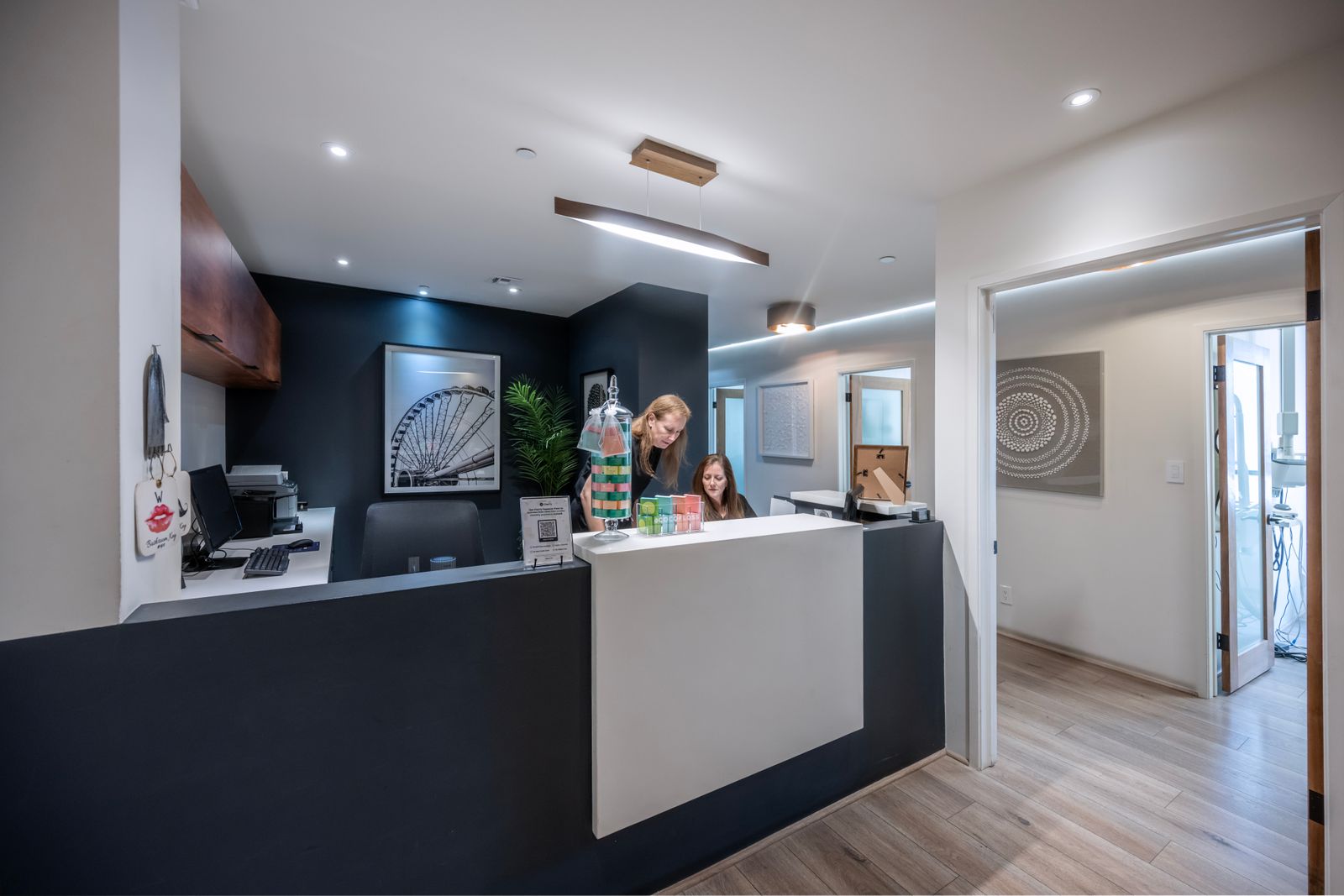
The short answer. Dental office cleaning covers the environmental side of a practice — reception, operatory housekeeping surfaces, restrooms, sterilization-room floors, break areas, glass, floors — on a written schedule with logs. It does not cover clinical contact surface disinfection between patients, which stays with your trained staff. Expect $0.14–$0.29 per square foot per visit (healthcare rates run above the $0.09–$0.17 for general office), and judge vendors on four things before price: employees or subcontractors, dated bloodborne pathogen training, named EPA-registered products with contact times, and written logs.
Why is a dental practice not just a small office?
Because of what happens in the air. A 2020 study in JADA documented dental aerosol and spatter travelling meaningfully across the operatory during routine procedures. That's the whole reason the surfaces around a chair — not just the chair — belong in a written cleaning schedule.
Layer on the regulatory side: OSHA's Bloodborne Pathogens Standard requires a written cleaning and decontamination schedule specific to each area, surface type, and the procedures performed there, plus bloodborne pathogen training for anyone with occupational exposure — including your cleaning contractor's crew. Our companion piece on OSHA cleaning requirements for dental offices covers that in depth.
The practical consequence: a general office cleaning contract, applied to a dental suite, is missing both the scope and the paperwork.
Who cleans what?
This is the single most useful table in the whole conversation, and the one most practices have never written down:
| Area | Who | Frequency | What it means |
|---|---|---|---|
| Reception & waiting | Cleaning company | Every operating day | Seating, glass, check-in surfaces, floors — the first thing every patient judges. |
| Operatory housekeeping surfaces | Cleaning company | Every operating day | Floors, walls, sinks, cabinetry exteriors — everything outside the clinical contact set. |
| Clinical contact surfaces | Clinical staff | Between every patient | Light handles, chair controls, tray tables, switches. Never the cleaning crew. |
| Sterilization area | Both, by written split | Daily | Floors and non-clinical surfaces by the crew; instrument zones by staff. |
| Restrooms | Cleaning company | Every operating day | Full sanitation and restocking; the most-reviewed room in the practice. |
| Floors & carpet | Cleaning company | Daily + periodic | Nightly care, plus machine work and extraction on a schedule. |
What does dental office cleaning cost?
Healthcare facilities price above general office space, and the reason is real work rather than a premium for the word "medical" — compliance, documentation, and EPA-registered disinfection are labor.
- Healthcare / dental: roughly $0.14–$0.29 per square foot per visit (ISSA 2026).
- General office, for comparison: $0.09–$0.17 per square foot.
- A 2,500 sq ft practice, five nights a week: commonly $1,400–$2,900 per month.
- Quoted separately: carpet extraction ($0.08–$0.25/sq ft), hard-floor scrub and recoat ($0.20–$0.40), and any scheduled disinfection layer.
If you want the full pricing picture including how two bids on the same suite can differ by half, our 2026 commercial cleaning cost breakdown has the monthly tables by building size.
What should be in the written scope?
Vague scope lines are where work quietly disappears. A dental scope should name, specifically:
- The high-touch set — reception counter, check-in tablet or pen, door hardware and push plates, light switches, restroom fixtures and dispensers, break-room appliance handles.
- Operatory housekeeping surfaces — floors including under the chair base, sink and faucet, cabinetry exteriors, cabinet pulls, waste receptacles.
- Sterilization area boundaries — exactly which surfaces the crew handles and which stay with staff.
- Restroom detail — base and back of fixtures, underside of the sink rim, the grout line, and confirming dispensers actually work rather than assuming.
- Waiting-room upholstery — spot treatment nightly, extraction quarterly. Fabric seating that looks tired reads as a practice that cuts corners, fairly or not.
- The periodic schedule — vents and high surfaces monthly, carpet and upholstery quarterly, hard-floor care by type.
The four questions to ask before price
- "Are your cleaners employees or subcontractors?" W-2 crews are background-checked, trained, and covered by workers' comp. This single answer explains most of the price gap between bids — and it decides who is liable for what happens in your practice after hours.
- "When was your crew last trained on bloodborne pathogens — can I see dated records?" Not "are they trained." The records. It takes them one email, and it is the fastest way to find the most serious gap.
- "Which EPA-registered disinfectants do you use, and what are their contact times?" A vendor who can't name the product and the number in one sentence is a problem in a clinical setting. Contact time is the difference between cleaning a surface and disinfecting it — see cleaning vs. sanitizing vs. disinfecting.
- "Will I get a written schedule and per-visit logs?" This is what turns "we clean every night" into something you can hand an inspector. A quote without a scope attached is a number without a promise.
What you can do this week
- Print the who-cleans-what table and walk one operatory with your office manager. Mark each surface clinical or housekeeping. The hesitations are your findings, and they're almost always unwritten assumptions rather than neglect.
- Time one disinfection. Read the contact time on the label of what's used in your operatories, then watch a turnover with a stopwatch. If the label says three minutes and the wipe takes fifteen seconds, you've found a live problem that costs nothing but attention to fix.
- Calculate your own bracket. Pull your square footage off the lease and multiply by $0.14 and $0.29. Any quote far outside that range needs an explanation — in either direction.
Want your practice scoped and priced honestly?
A free walkthrough gives you a written schedule, a clear clinical boundary, and a fixed price — usually back within 24 hours.
How we run dental practices
Dental is a distinct program for us, not an office contract with extra disinfectant. Our dental office cleaning service runs through Purity Med: bloodborne pathogen-trained crews, EPA-registered disinfectants held to full label contact times, OSHA and CDC-aligned protocols with logs you can hand an auditor, and biohazard-aware cleaning where it applies — always stopping at the clinical boundary your compliance officer drew.
For the room-by-room task list you can hand a crew today, see our medical office cleaning checklist. You can browse the full service list or see how the operation works — we cover practices across Miami-Dade and Broward, including Miami.
The bottom line
Budget $0.14–$0.29 per square foot, insist on a written scope that names the high-touch set and the sterilization boundary, and ask the four questions before you ask the price. The cheapest dental bid is usually a general office contract wearing a medical label — and the difference shows up on the day someone asks to see your cleaning log.
Quick answers
What does dental office cleaning include?
A professional dental cleaning program covers the environmental side of the practice: reception and waiting areas, operatory housekeeping surfaces (floors, walls, sinks, cabinetry exteriors), restrooms, sterilization-room floors and non-clinical surfaces, break areas, glass, and trash and recycling — on a written schedule with logs. It does not include clinical contact surface disinfection between patients, which stays with your trained dental staff. A good vendor cleans right up to the clinical boundary and never crosses it.
How much does dental office cleaning cost?
Dental and medical facilities price higher than general office space because of compliance, documentation, and EPA-registered disinfection requirements. Industry rate guides put healthcare facilities at roughly $0.14 to $0.29 per square foot per visit versus $0.09 to $0.17 for standard offices (ISSA 2026). A 2,500-square-foot practice cleaned five nights a week commonly lands in the $1,400 to $2,900 per month range. Periodic work — carpet extraction, hard-floor care — is quoted separately.
How often should a dental office be cleaned?
Every operating day at minimum. Operatory housekeeping surfaces, restrooms, reception, and high-touch points need daily attention, with clinical contact surfaces disinfected between patients by clinical staff. Floors get nightly care plus periodic machine work, upholstery and carpet quarterly, and vents and high surfaces on a monthly rotation. Patient volume and the procedures performed move several of those up.
How do I choose a cleaning company for a dental practice?
Ask four questions before price. Are the crew your employees or subcontractors? When were they last trained on bloodborne pathogens, and can I see dated records? Which EPA-registered disinfectants do you use, and what are their contact times? And will you give me a written schedule plus per-visit logs I can hand an inspector? A vendor who answers all four quickly is worth more than one who is 15% cheaper.
Want this handled instead of researched?
A free walkthrough turns everything above into a written plan for your facility — usually quoted within 24 hours.
Let's make your facility spotless & compliant.
Book a free, no-obligation walkthrough. We'll assess your space, answer your questions, and build a quote tailored to your facility — usually within 24 hours.