Cleaning vs. Sanitizing vs. Disinfecting: What You're Actually Paying For
Three words used interchangeably on every cleaning quote you'll ever receive — and three genuinely different processes with different EPA standards and different costs. Here's what separates them, and the one distinction that decides whether your building is protected during flu season.
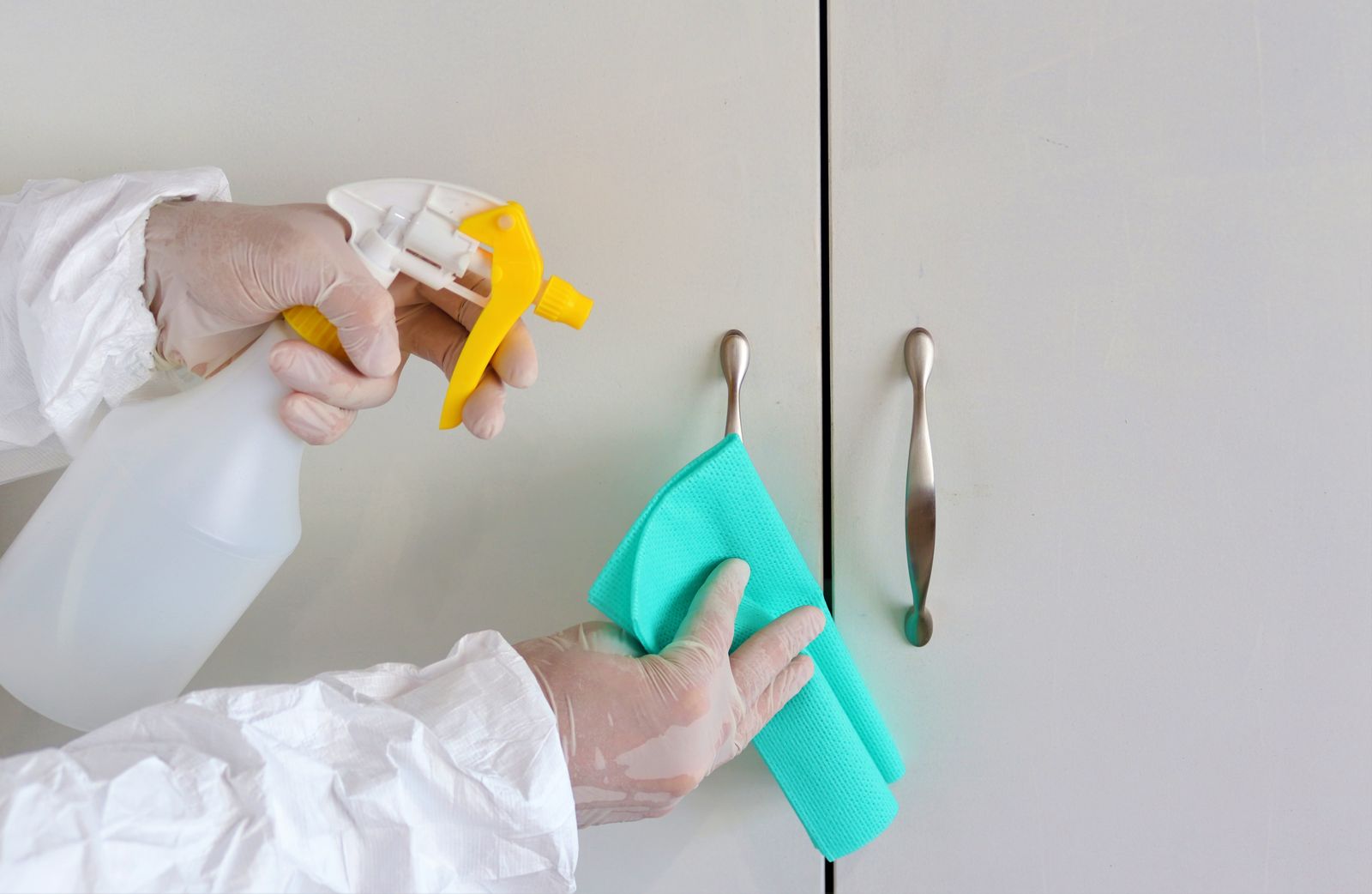
The short answer. They are three different processes, not three words for the same thing. Per the EPA: cleaning "removes dirt and organic matter from surfaces using soap or detergents." Sanitizing "kills bacteria on surfaces using chemicals" and — this is the line that matters — "is not intended to kill viruses." Disinfecting "kills viruses and bacteria on surfaces using chemicals." Disinfectant products face more rigorous EPA testing and must clear a higher bar than sanitizers. If your quote says "sanitizing" and your worry is flu season, you are buying the wrong category.
The three processes, side by side
| Process | What it does | What it kills | Regulatory standard | When you need it |
|---|---|---|---|---|
| Cleaning | Removes dirt and organic matter using soap or detergents | Removes germs — does not kill them | Not EPA-registered | Every visit, every surface, always first |
| Sanitizing | Kills bacteria using chemicals | Bacteria only — not intended for viruses | EPA-registered; ≥99.9% bacterial reduction in 5 min | Food-contact surfaces, low-risk routine |
| Disinfecting | Kills viruses and bacteria using chemicals | Viruses and bacteria | EPA-registered; more rigorous testing than sanitizers | High-touch points, clinical, outbreak response |
Why doesn't cleaning kill germs?
Because it isn't supposed to. Cleaning is a removal process: detergent lifts soil, oils, and the microorganisms living in them off the surface, and the cloth carries them away. Nothing is killed — it's relocated into the trash.
That sounds like a weakness and is actually the foundation of everything else. Disinfectants are tested on clean surfaces. Dirt, grease, and body oils physically shield germs from the chemical, and some soils neutralize the active ingredient on contact. Which means a disinfectant sprayed onto an uncleaned surface is not a stronger version of cleaning — it's a chemical that has been prevented from working.
What does sanitizing actually mean?
Sanitizing sits between cleaning and disinfecting, and it is far more narrowly defined than most buyers assume. The EPA describes sanitizers as products "used to reduce, but not necessarily eliminate, microorganisms from the inanimate environment to levels considered safe as determined by public health codes" (EPA, antimicrobial pesticides).
The number behind that: to be registered as a sanitizer for inanimate hard surfaces, EPA test protocol requires a bacterial reduction of at least 99.9% over the control count within 5 minutes (EPA sanitizer test method).
Read that carefully. Bacterial reduction. Sanitizers are registered against bacteria. The EPA says outright that sanitizing "is not intended to kill viruses." Flu, COVID, norovirus, RSV — the things that actually shut down an office in January — are viruses.
So what makes disinfecting different?
A disinfectant is registered to "destroy or irreversibly inactivate infectious fungi and bacteria but not necessarily their spores" on nonliving surfaces, and the products are tested against specific named organisms including viruses. The EPA is explicit that "surface disinfectant products are subject to more rigorous EPA testing requirements and must clear a higher bar for effectiveness than surface sanitizing products."
That higher bar is why disinfectants cost more, why they carry longer contact times, and why they're the category that belongs on your high-touch points. It's also why the word appearing on a quote should be checked rather than assumed.
Where does each one belong in a commercial building?
- Cleaning — everywhere, every visit. Floors, desks, glass, general surfaces. This is the bulk of what you're paying for and the prerequisite for everything else.
- Sanitizing — food-contact surfaces and low-risk routine. Breakroom counters and food-prep areas, where a food-safe sanitizer is appropriate and often required.
- Disinfecting — high-touch points and anywhere illness is the concern. Door hardware, switches, shared keyboards, phones, restroom fixtures, elevator panels. In clinical settings, disinfection is the default rather than the upgrade.
A properly written scope names which process applies to which surface. If yours just says "clean and sanitize throughout," nobody has decided anything — and during an outbreak that ambiguity is what you'll be trying to reconstruct.
Why does this cost you money?
Three ways, and we see all of them:
- Paying disinfection prices for sanitizing work. The words are used loosely on proposals. Ask which EPA-registered product is used and read its category off the label.
- Buying sanitizing and believing you're covered for viruses. The most consequential version. A building can be diligently sanitized all winter and have no protection registered against the virus going around it.
- Paying for disinfection applied over dirt. The chemistry is real, the invoice is real, and the result is nothing. This is the failure mode behind most "we disinfect but people still get sick" complaints.
What you can do this week
- Read the front label of whatever is in your building right now. It will say sanitizer, disinfectant, or neither, and it will carry an EPA registration number if it's either. Ninety seconds, and most facility managers are surprised by what they find in the supply closet.
- Find the contact time and compare it to reality. The label states how long the surface must stay visibly wet. Watch an actual wipe with a timer. If the label says four minutes and the wipe takes eight seconds, the product category was never the problem.
- Mark up your scope document with the right verb per surface. Go line by line: clean, sanitize, or disinfect. Hand it to your vendor. This single page ends the ambiguity permanently and costs you nothing.
If the answer turns out to be that you need a real disinfection layer, our guide to how electrostatic disinfection works covers when a sprayer beats a wipe, and the 2026 price guide tells you what that layer costs before you call anyone. For the surface-by-surface list itself, start with the office cleaning checklist.
Not sure what your current vendor is actually doing?
A free walkthrough tells you plainly — which surfaces need which process, which products belong on them, and what it should cost.
How we handle it
We write the verb into the scope, surface by surface, so nobody has to guess later. Routine office cleaning handles the removal layer; high-touch disinfection covers the points where illness actually travels, with EPA-registered products held to their full label contact time; and electrostatic disinfection comes in when a whole space needs a fast, even reset. In regulated facilities it all runs inside a documented medical office cleaning program.
You can see how the layers fit on our disinfection services page or the full service list, and our crews cover Miami-Dade and Broward, including Miami.
The bottom line
Clean removes, sanitize reduces bacteria, disinfect kills viruses and bacteria — and only the last one is tested against the things that empty an office in flu season. Get the verb right on each surface, insist the cleaning step happens first, and check the contact time. Those three habits are worth more than any product upgrade a vendor will try to sell you.
Quick answers
What is the difference between cleaning, sanitizing, and disinfecting?
Cleaning removes dirt and organic matter from surfaces using soap or detergents — it does not kill germs, it takes them away with the soil. Sanitizing kills bacteria on surfaces using chemicals, and per the EPA it is not intended to kill viruses. Disinfecting kills both viruses and bacteria. The EPA also notes that surface disinfectant products face more rigorous testing and must clear a higher bar for effectiveness than sanitizing products. They are three different processes with three different legal standards and three different prices.
Does sanitizing kill viruses?
No. The EPA states plainly that sanitizing "kills bacteria on surfaces using chemicals" and "is not intended to kill viruses." Sanitizers are registered against bacteria; disinfectants are tested and registered against viruses and bacteria. If your concern is flu, COVID, or norovirus moving through a building, a sanitizer is the wrong product category — and this is the most common and most expensive mix-up in commercial cleaning.
What percentage of germs does a sanitizer have to kill?
To be registered as a sanitizer for inanimate hard surfaces, EPA test protocol requires a bacterial reduction of at least 99.9% over the control count within 5 minutes. Disinfectants are held to a more demanding standard and are tested against specific named organisms, including viruses. Both figures assume the product is used exactly as the label directs — including staying visibly wet for the full contact time.
Do I need to clean before disinfecting?
Yes, and skipping it is why a lot of disinfection accomplishes nothing. Disinfectants are tested on clean surfaces; dirt, grease, and body oils physically shield germs from the chemical and can neutralize the active ingredient outright. Cleaning first, then disinfecting, is the correct order every time. A vendor who sprays disinfectant over a soiled surface is performing the motion without the result.
Want this handled instead of researched?
A free walkthrough turns everything above into a written plan for your facility — usually quoted within 24 hours.
Let's make your facility spotless & compliant.
Book a free, no-obligation walkthrough. We'll assess your space, answer your questions, and build a quote tailored to your facility — usually within 24 hours.