OSHA Cleaning Requirements Every South Florida Dental Office Should Know
Dental practices live under stricter cleaning rules than almost any office — and the requirements aren't always where practice owners think. Here's what OSHA actually expects, who is responsible for which surface, and the paperwork that settles an inspection.
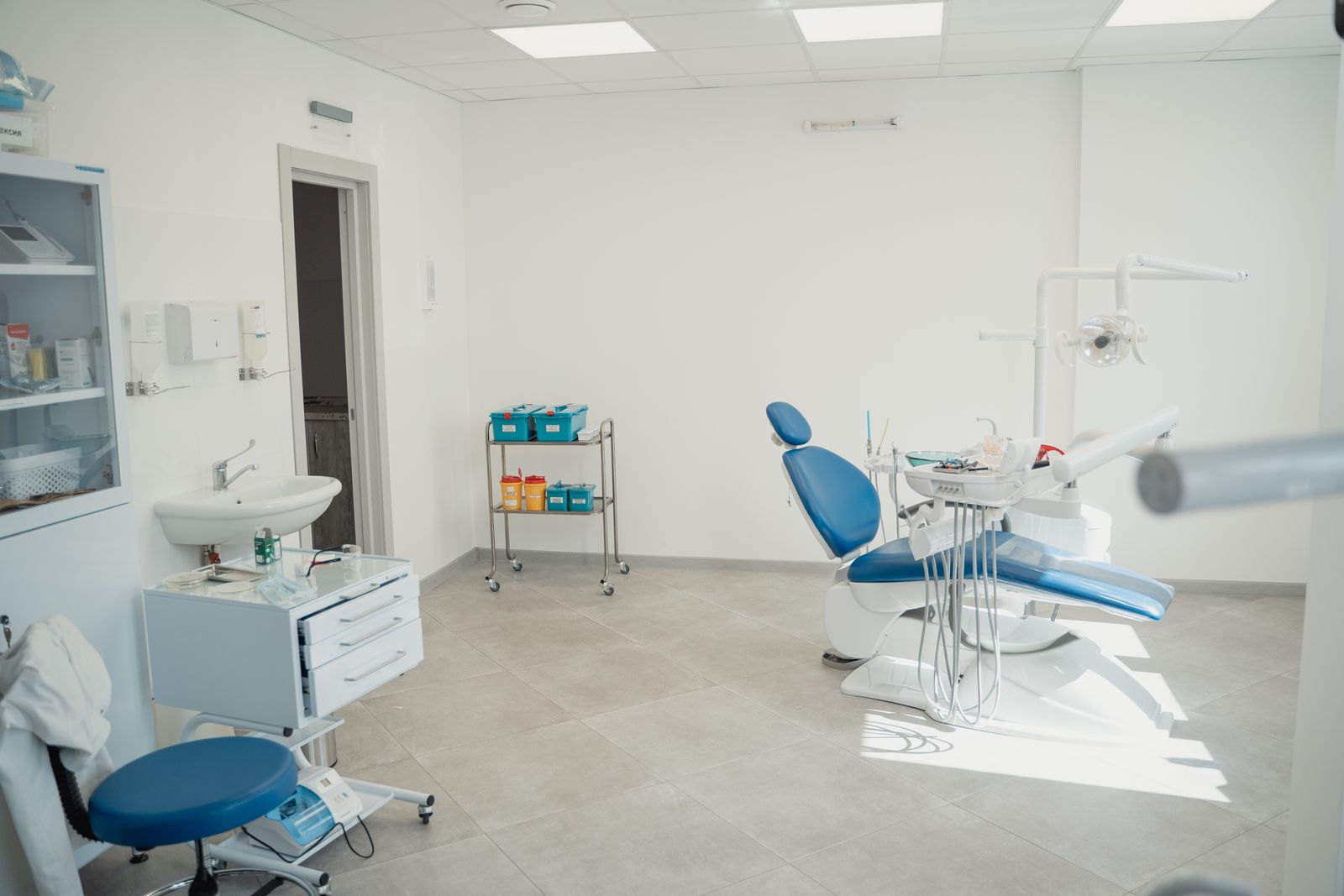
The short answer. OSHA does not set a cleaning frequency for dental offices. The Bloodborne Pathogens Standard (29 CFR 1910.1030) requires something harder: that you determine and implement a written schedule for cleaning and decontamination — specific to the location in the facility, the surface type, the soil present, and the procedures performed there — that contaminated surfaces are decontaminated with an appropriate EPA-registered disinfectant, and that anyone with occupational exposure is trained, including your cleaning contractor's crew. There is no magic number. There is a required, documented, defensible system.
Why are dental offices held to a higher bar?
Every medical setting has cleaning obligations, but dental offices sit in a category of their own. Aerosol-generating procedures, blood and saliva contamination, and a steady flow of patients through tight operatories mean the margin for error is small — and the oversight is real. Between OSHA, the CDC's dental infection-control guidance, and Florida's own board rules, a dental practice's cleaning program is one inspection question away from being tested.
The scale of the aerosol question is not theoretical. A 2020 study published in JADA found dental aerosol and spatter travelling meaningfully across the operatory during routine procedures — which is precisely why the environmental surfaces around a chair, not just the chair itself, belong in a written cleaning schedule.
The good news: the requirements are knowable, and most of them come down to a documented system, executed consistently.
What exactly does the Bloodborne Pathogens Standard require?
The backbone of dental cleaning compliance is 29 CFR 1910.1030. It doesn't publish a "clean X times per day" number. Instead it requires that your facility:
- Maintain a written schedule for cleaning and decontamination, specific to each area, surface type, soil present, and the procedures performed there.
- Clean and decontaminate surfaces and equipment after contact with blood or other potentially infectious materials.
- Use appropriate disinfectants — EPA-registered products effective against the relevant pathogens, applied per label.
- Ensure anyone with occupational exposure — including cleaning personnel working in contaminated areas — receives bloodborne pathogen training.
Who is responsible for which surface?
CDC dental guidance splits environmental surfaces into categories, and the distinction decides who does what. Getting this line wrong in either direction causes problems — a cleaning crew that touches clinical surfaces breaks your protocol, and one that ignores housekeeping surfaces leaves a gap an inspector will find.
| Category | Examples | Who | Frequency |
|---|---|---|---|
| Clinical contact surfaces | Light handles, chair controls, tray tables, switches, air/water syringes | Clinical staff | Between every patient |
| Housekeeping surfaces | Floors, walls, sinks, restrooms, waiting and reception areas | Cleaning company | Documented schedule, at least daily |
| Contaminated equipment | Anything contacted by blood or OPIM | Clinical staff | Immediately after contact |
| Periodic / deep | Carpet, upholstery, vents, high surfaces, hard-floor care | Cleaning company | Scheduled rotation |
A cleaning partner that understands this line is worth a great deal: they clean thoroughly right up to the clinical boundary and never cross it, so your infection-control protocol stays exactly as your compliance officer designed it.
Why does contact time decide whether disinfection worked?
Using the right product matters — but using it correctly matters just as much. EPA-registered, hospital-grade disinfectants only work if they stay visibly wet on the surface for the full contact time printed on the label, frequently several minutes. Wiping a surface and moving on in ten seconds is the single most common way disinfection fails in practice, in every kind of facility we've ever audited.
This is not a technicality. A surface wiped with the correct product for a tenth of the required time has been cleaned, not disinfected — and if an inspector watches a turnover, that is what they are watching for. A trained crew respects contact times and knows to reapply if a surface dries early. A rushed one doesn't know the number exists.
What are the most common violations?
- An untrained cleaning contractor working in contaminated areas.
- No written cleaning schedule — just an informal arrangement with a vendor.
- A schedule that exists but isn't room-specific, when the standard explicitly asks about surface type and procedures performed.
- Disinfectants wiped off well before their contact time.
- No cleaning logs when asked to produce them.
- Restrooms and waiting areas treated as "office cleaning" rather than part of a healthcare environment.
What you can do this week
Three checks, and you will know exactly where your practice stands. None of them require a consultant:
- Ask your cleaning vendor for their BBP training records, in writing. Not "are they trained?" — the dated records. This is the fastest way to find the most serious gap, and the answer arrives within a day or it tells you something.
- Time a real disinfection. Read the contact time on the label of the product used in your operatories, then watch a turnover with a stopwatch. If the label says three minutes and the wipe takes fifteen seconds, you have found a live compliance problem that costs nothing but attention to fix.
- Write down which surfaces belong to whom. Take the table above and mark every surface in one operatory as clinical or housekeeping. Hand it to both your clinical lead and your cleaning vendor. Most "we thought they were doing it" gaps disappear the moment this single page exists.
For a broader look at how frequency and documentation work together across a healthcare facility, our guide to medical office cleaning frequency covers the same principles for non-dental practices, and the room-by-room medical cleaning checklist is the task-level version you can hand a crew.
Want your cleaning program to survive an inspection?
A free walkthrough produces a written, room-specific schedule for your practice — with trained crews and logs you can hand an auditor.
Documentation is your best defense
If there's one theme across every requirement, it's this: write it down. A defensible dental cleaning program keeps a written protocol for each area, per-visit checklists signed by whoever performed the work, cleaning logs available for inspection, product documentation with EPA registration numbers, and training records for everyone who cleans in contaminated areas.
Practices that keep this current turn an inspection into a filing exercise. Practices that rely on "we clean every night" end up negotiating from memory in front of someone who issues citations for a living.
How the right cleaning partner helps
You can't outsource responsibility for compliance — but you can hire a partner built for it: a dedicated dental office cleaning program. That's what Purity Med does for dental practices across South Florida: bloodborne pathogen-trained crews, OSHA and CDC-aligned protocols with cleaning logs you can hand an auditor, and documented operatory-area cleaning that respects the clinical boundary. You can see everything on the full service list, and our crews cover practices across Miami-Dade and Broward.
The result is a dental office where inspection day is boring — which, when it comes to compliance, is exactly the goal.
Quick answers
What does OSHA require for cleaning a dental office?
OSHA's Bloodborne Pathogens Standard (29 CFR 1910.1030) requires dental employers to keep the worksite clean and sanitary and to determine and implement a written schedule for cleaning and decontamination, based on the location within the facility, the type of surface, the type of soil present, and the tasks or procedures performed there. It also requires that contaminated surfaces be decontaminated with an appropriate disinfectant, and that anyone with occupational exposure — including cleaning personnel — receives bloodborne pathogen training. There is no required frequency number; there is a required written, defensible system.
Does my cleaning company need OSHA training to clean a dental office?
If they clean where blood or saliva contamination is possible — which in a dental office is nearly everywhere — then yes. Anyone performing that work should have bloodborne pathogen training under 29 CFR 1910.1030. Ask your cleaning vendor directly when their crew was last trained, and ask for it in writing. A company that cannot answer that question is a liability in a dental setting, and the compliance gap lands on your practice, not theirs.
Who disinfects the operatory — my staff or the cleaners?
Clinical contact surface disinfection between patients is a clinical duty and stays with your trained dental staff. A professional cleaning company handles environmental cleaning: housekeeping surfaces such as floors, walls, sinks and restrooms, waiting and reception areas, and end-of-day cleaning of the broader operatory environment. A good partner cleans right up to the clinical boundary and never crosses it, so your infection-control protocol stays exactly as your compliance officer designed it.
What cleaning records should a dental office keep?
A written cleaning protocol per area, per-visit checklists documenting what was done and signed by whoever did it, cleaning logs you can produce on request, the EPA registration numbers of the disinfectants in use, and bloodborne pathogen training records for every person who cleans in contaminated areas — including contractors. When an inspector asks how the facility is maintained, this paperwork is the answer.
Want this handled instead of researched?
A free walkthrough turns everything above into a written plan for your facility — usually quoted within 24 hours.
Let's make your facility spotless & compliant.
Book a free, no-obligation walkthrough. We'll assess your space, answer your questions, and build a quote tailored to your facility — usually within 24 hours.