What Is Commercial Cleaning? (And What It Actually Includes)
It's more than 'cleaning, but for businesses.' Here's what commercial cleaning covers, how it differs from janitorial and residential work, what it costs, and the questions that separate a real provider from a cheap one.
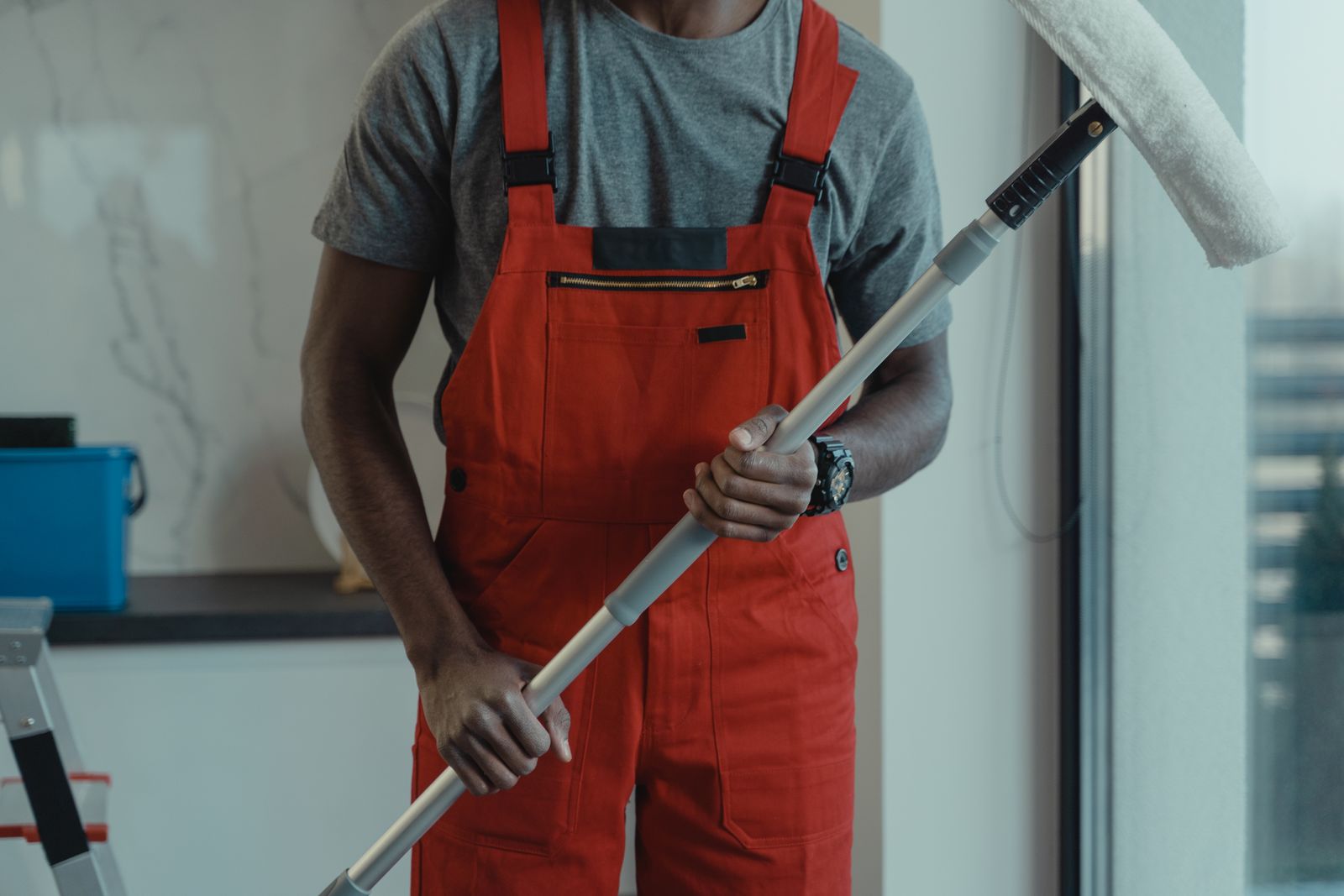
The short answer. Commercial cleaning is the professional cleaning of business and commercial spaces — offices, medical and dental practices, retail, buildings, and industrial facilities — usually delivered on a recurring contract by a trained, insured crew. It covers the routine (desks, restrooms, floors, trash, high-touch disinfection) and the specialized (floor refinishing, carpet extraction, window cleaning, disinfection, medical-grade and post-construction work) — typically under one vendor and one written scope.
What does commercial cleaning include?
The word "cleaning" undersells the range. A commercial cleaning program usually spans four layers:
| Layer | Cadence | What it covers |
|---|---|---|
| Routine cleaning | Daily / nightly | Desks, high-touch surfaces, restrooms, breakrooms, floors, trash and recycling. |
| Floor & carpet care | Scheduled | Vacuuming and mopping daily; extraction, stripping, waxing, and polishing periodically. |
| Disinfection | Ongoing / on demand | EPA-registered disinfection of high-touch points, plus electrostatic and outbreak response. |
| Specialized & regulated | By facility | Medical and dental cleaning, windows, post-construction, and restoration work. |
Most businesses start with the routine layer and add specialized work — a quarterly carpet extraction, a strip-and-wax, a disinfection program — as the building needs it. The advantage of one provider is that all of it runs on one scope, one schedule, and one invoice, and nobody gets to blame the other vendor when something falls through.
Commercial vs. janitorial vs. residential
Three terms get tangled here, so it's worth separating them:
| Term | Scope | What that means in practice |
|---|---|---|
| Residential | Homes | Consumer products, small scale, no compliance dimension, no insurance requirement for the client |
| Janitorial | Routine building upkeep | Nightly offices, restrooms, common areas, day porters — the recurring layer |
| Commercial | The full umbrella | Janitorial plus periodic specialized work: floors, carpet, glass, disinfection, medical, post-construction |
The distinction that matters most to a business owner isn't vocabulary — it's insurance and accountability. A commercial provider carries general liability and workers' compensation, can produce a certificate of insurance for your landlord's vendor portal, and is contractually responsible for what happens in your space after hours. A residential-scale operation typically cannot do any of those three things, which is why the price difference is not the whole story.
Who actually needs commercial cleaning?
- Offices and professional suites — the core case: nightly or several-nights-a-week service on a fixed scope.
- Medical, dental, and clinical facilities — where cleaning is a compliance function with documentation requirements, not just an appearance one.
- Retail and showrooms — where presentation is revenue, and glass and floors carry most of the impression.
- Multi-tenant buildings — common areas, day porters, restrooms, and the coordination that comes with several tenants and one lobby.
- Post-construction and turnover — one-time projects to make a space usable, then usually a recurring program afterward.
Why is it worth doing well?
Commercial cleaning is easy to treat as a commodity until you look at what it's actually managing. The average office desk carries roughly 5,015 germs per square inch — about 400 times more than a toilet seat, in University of Arizona research led by Dr. Charles Gerba (reported study). The same body of research found that contamination introduced at a single doorknob can spread to 40–60% of surfaces and people in an office within four hours.
A real commercial cleaning program isn't about a space that looks tidy — it's about the surfaces people touch all day being genuinely maintained, on a schedule, by people who are trained and accountable for it. The visible part is a byproduct.
How do I choose a commercial cleaning company?
The market ranges from one-person operations to national franchises, and the price spread between them is wide enough to be confusing. Four things separate a provider you can rely on from one you'll be replacing in eight months:
- Employees, not subcontractors. W-2 crews are background-checked, trained, and covered by workers' compensation. Subcontracted labor is cheaper and is why some bids look impossible — until you consider who is liable for an injury in your building after hours.
- Crew consistency. The same people every visit learn your floors, your problem corners, and your access quirks. A rotating cast restarts that learning curve every week and never finishes it.
- A written scope and per-visit checklist. Without one, "did it happen?" is a debate rather than a record. This is the single most useful document in the relationship, and it costs a vendor nothing to provide.
- Insurance you can verify. General liability and workers' comp, with a certificate produced on request — usually required by your landlord's vendor portal anyway.
Notice that none of those four are about products or equipment. Every commercial provider buys from roughly the same chemical suppliers. What differs is who is holding the bottle and whether anyone wrote down what they were supposed to do with it.
What does it cost?
Recurring commercial cleaning generally runs $0.09–$0.17 per square foot per visit for standard office space and $0.14–$0.29 for healthcare facilities (ISSA 2026), with periodic work — carpet, floors, disinfection — quoted separately. Our full 2026 breakdown of commercial cleaning costs in Miami has monthly figures by building size and the reasons two bids on the same space can differ by half.
What you can do this week
- Decide which layers you actually need. Use the four-layer table above and mark what your building requires now versus later. Most people over-buy routine frequency and under-buy periodic floor care, which is the more expensive mistake in the long run.
- Ask any prospective vendor for a certificate of insurance before anything else. It takes one email, and it separates commercial operations from residential ones faster than any sales conversation.
- Write down your scope before you take quotes. Even a rough list of what must happen every visit puts every bidder on the same job — which is the only way a price comparison means anything.
When you're ready for the site visit, what to expect from a commercial cleaning walkthrough covers what a good one looks like, and the office cleaning checklist gives you the scope document to hand over. Exterior work prices separately — see commercial pressure washing prices.
Ready to see what this looks like for your space?
A free walkthrough gives you a written scope and a fixed price — usually back within 24 hours, with no obligation.
How we do it
That's what we run across Miami-Dade and Broward: office cleaning, commercial janitorial at building scale, and the specialized work — carpet, disinfection, medical office cleaning — under one accountable roof, with W-2 crews rather than subcontractors. You can browse the full service list or see how the whole operation works, and we cover Miami and the surrounding cities.
Quick answers
What is commercial cleaning?
Commercial cleaning is the professional cleaning of business and commercial spaces — offices, medical and dental practices, retail, buildings, and industrial facilities — usually delivered on a recurring contract by a trained, insured crew. It covers both the routine work (desks, restrooms, floors, trash, high-touch disinfection) and specialized periodic services (floor refinishing, carpet extraction, window cleaning, disinfection, medical-grade and post-construction work), typically under one vendor and one written scope.
What is included in commercial cleaning?
Routine commercial cleaning covers desks and work surfaces, high-touch disinfection, restrooms and breakrooms, floors (vacuuming and hard-floor care), trash and recycling, and glass. Beyond the routine, commercial cleaning also spans specialized services — medical and dental cleaning, disinfection, floor and carpet care, window cleaning, and post-construction cleanup — usually delivered by the same company under one contract.
What is the difference between commercial cleaning and janitorial services?
They overlap heavily and the terms are often used interchangeably. In practice, "janitorial" usually refers to the routine, recurring interior cleaning of a building — nightly offices, restrooms, common areas. "Commercial cleaning" is the broader umbrella that also includes periodic specialized work: floor refinishing, carpet extraction, windows, disinfection, and restoration. A full-service provider does both, which is why "who cleans the carpet?" and "who does the nightly offices?" can have the same answer.
How is commercial cleaning priced?
Most commonly per square foot for recurring service, with hourly and flat monthly options depending on the job. Price is driven by facility type, frequency, scope, and condition — a medical office and a warehouse of the same size price very differently. Industry ranges run roughly $0.09 to $0.17 per square foot for offices and $0.14 to $0.29 for healthcare. The reliable way to get a real number is a walkthrough rather than a phone estimate.
Want this handled instead of researched?
A free walkthrough turns everything above into a written plan for your facility — usually quoted within 24 hours.
Let's make your facility spotless & compliant.
Book a free, no-obligation walkthrough. We'll assess your space, answer your questions, and build a quote tailored to your facility — usually within 24 hours.