The Office Cleaning Checklist Every Facility Manager Needs
A clean office isn't about doing more — it's about doing the right things on the right frequency. Here's the daily/weekly/monthly checklist we build office programs around, area by area, free to copy.
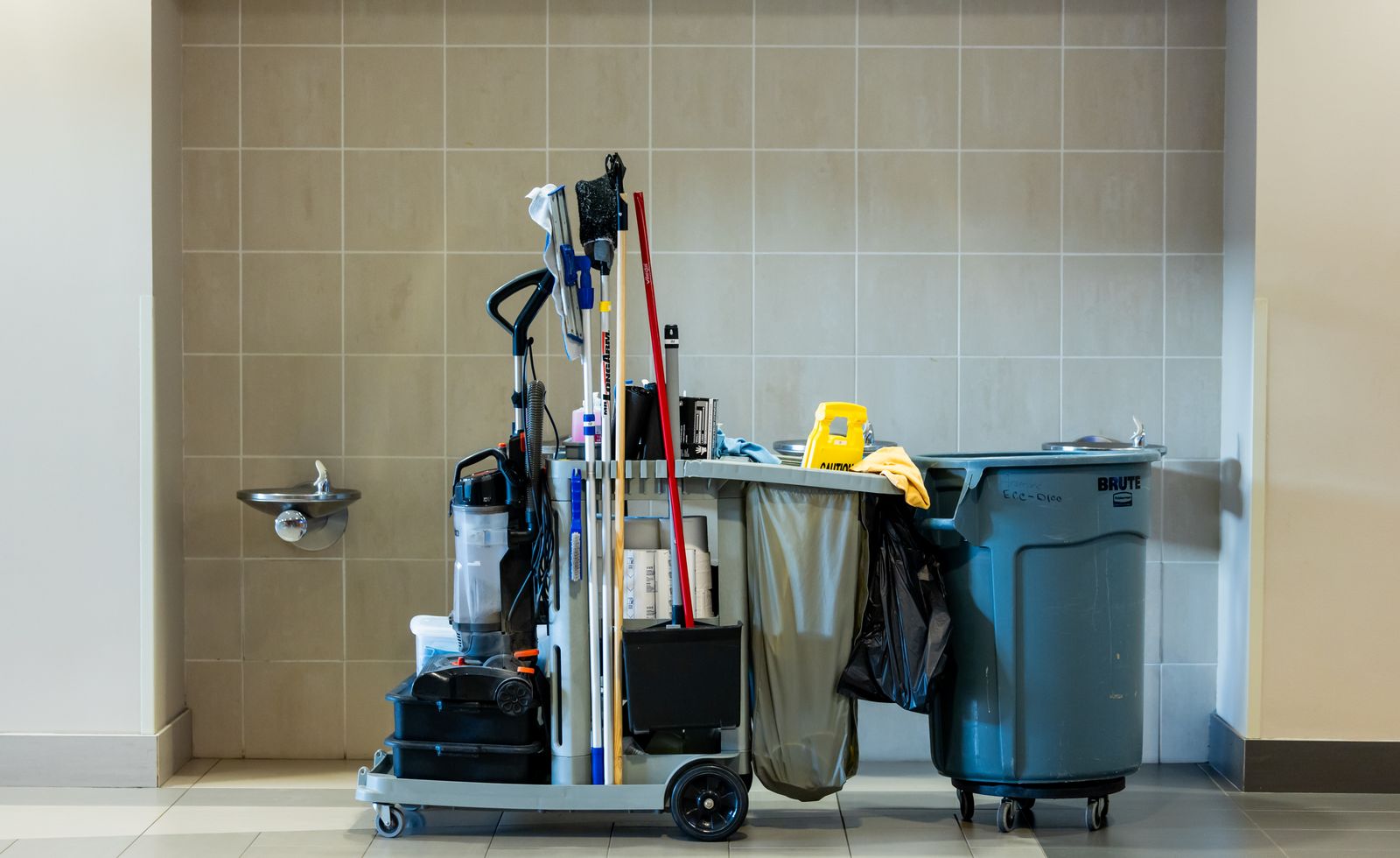
The short answer. A good office cleaning checklist sorts every task by frequency. Daily: high-touch surfaces, restrooms, breakroom, trash and recycling, and visible floors. Weekly: glass and partitions, detailed dusting, edge vacuuming. Monthly to quarterly: high dusting, vent detailing, carpet extraction, and hard-floor care. The point isn't to clean everything every night — it's to make sure nothing important quietly falls off the list.
The daily / weekly / monthly checklist
Here's the framework we build office cleaning programs around. Copy it, then adjust the frequencies to your headcount and traffic — a 12-person studio and a 200-person floor run different cadences.
| Task | Frequency | What it covers |
|---|---|---|
| High-touch surfaces | Daily | Door handles, switches, shared keyboards, and equipment disinfected. |
| Restrooms | Daily | Fixtures disinfected, floors mopped, paper and soap restocked. |
| Breakroom / kitchen | Daily | Counters, tables, appliance exteriors wiped; trash out. |
| Trash & recycling | Daily | All bins emptied, liners replaced, recycling sorted. |
| Floors (visible) | Daily | Carpet vacuumed, hard floors dust- and damp-mopped. |
| Glass & partitions | Weekly | Entry glass, conference partitions, and sidelights cleaned. |
| Detailed dusting | Weekly | Sills, ledges, baseboards, and low horizontal surfaces. |
| Edge & under-furniture vacuuming | Weekly | The perimeter and under desks — where neglect shows first. |
| High dusting & vents | Monthly | Vents, fixtures, and high ledges on rotation. |
| Carpet extraction | Quarterly | Hot-water extraction of common-area and high-traffic carpet. |
| Hard-floor maintenance | Quarterly to annual | Scrub and recoat, or burnish, by floor type. |
The high-touch list, specifically
"High-touch surfaces" is the vaguest line on most cleaning contracts, and vagueness is where work goes missing. Here is what it should actually name in your scope:
- Entry and interior door handles, push plates, and pull bars
- Light switches and thermostat panels
- Elevator call buttons and interior panels inside your suite
- Shared keyboards, mice, copier and printer touchpads, badge readers
- Conference-room table edges, chair arms, remote controls, and AV panels
- Breakroom appliance handles — fridge, microwave, dishwasher, coffee machine
- Restroom door handles, faucet handles, dispenser levers, stall latches
- Reception counter, sign-in tablet or pen, water cooler tap
Every item on that list should be disinfected with an EPA-registered product left wet for its full label contact time. A quick wipe that dries in seconds cleans the surface; it does not disinfect it — a distinction covered in more depth in our guide to how disinfection actually works.
Why can't the high-touch items rotate?
If you cut anything on a tight night, don't let it be the high-touch surfaces. The average office desk carries roughly 5,015 germs per square inch — about 400 times more than a toilet seat — with phones and keyboards higher still, in University of Arizona research led by Dr. Charles Gerba (reported study). Handles, switches, shared equipment, and desks are where illness actually moves through an office, which is why they belong in the daily column, not the weekly one.
The restroom and breakroom detail
These two rooms generate the majority of internal complaints in every office we've taken over, and both fail in predictable places:
- Restrooms: fixtures disinfected inside and out, the base and back of the toilet (not just the bowl), the underside of the sink rim, mirrors streak-free, the grout line at the base of fixtures, then restock — and confirm dispensers actually work rather than assuming.
- Breakroom: counters and tables, appliance exteriors including handles, sink and faucet, the front of cabinet doors, floor including under the table. The microwave interior is worth naming explicitly in your scope, because otherwise nobody owns it.
The gaps we find most often
When we take over an account, the same five items are almost always missing from the prior scope:
- Edges and corners. Vacuum tracks down the middle of the room and a dark perimeter is the single most common tell of a rushed crew.
- Under and behind furniture. Under desks, behind the reception counter, beneath the breakroom table.
- Vertical surfaces. Glass door pushplates, partition smudges, wall marks at chair-back height.
- The overhead layer. Vent grilles and high ledges, which the HVAC then redistributes across everything below.
- Anything without an owner. Microwave interiors, fridge cleanouts, plant trays, and the supply closet itself — tasks that belong to nobody and therefore happen to nobody.
What you can do this week
- Run the edge test. After the next cleaning, look at the perimeter of one carpeted room and under two desks. It takes ninety seconds and tells you more about your vendor's actual standard than any monthly report.
- Turn "high-touch surfaces" into a named list. Copy the list above into your scope document. Vague scope lines are the mechanism by which work disappears without anyone deciding to drop it.
- Ask for a signed checklist per visit. If your vendor doesn't produce one, that's the ask. "Did it happen?" should be a question with a documented answer, not a discussion.
If you're also pricing this out, our 2026 breakdown of commercial cleaning costs in Miami shows what a scope like this should cost per square foot, and what to expect from a walkthrough covers how a real scope gets built. If you want the safer-product version of this program, see green commercial cleaning.
Want this turned into a real program?
A free walkthrough converts this checklist into a scope written for your space — with the same crew every visit and a signed checklist you can actually check.
Make the checklist accountable
A checklist only works if someone signs it. The difference between an office that stays clean and one that drifts is rarely effort — it's whether the program is written down, assigned a frequency, and checked. That's exactly how we run it: a scope built from your walkthrough, the same assigned crew every visit, and a checklist that makes "did it happen?" a question with an answer.
Want this turned into a real program for your space? That's our office cleaning service across Miami-Dade and Broward — with restroom and breakroom detail, high-touch disinfection, and for the deeper layer, commercial carpet cleaning. You can browse the full service list, and our crews cover offices across the region.
Quick answers
What should be on an office cleaning checklist?
Sort every task by frequency. Daily: high-touch surfaces, restrooms, breakroom, trash and recycling, and visible floors. Weekly: glass and partitions, detailed dusting, edge vacuuming. Monthly to quarterly: high dusting, vent detailing, carpet extraction, and hard-floor care. The point is not to clean everything every night — it is to make sure nothing important quietly falls off the list.
How often should an office be cleaned?
Most offices need professional cleaning nightly or several nights a week for high-touch surfaces, restrooms, breakrooms, and floors, with lighter-touch items on a weekly or monthly rotation. Frequency scales with headcount, foot traffic, and whether the space includes a kitchen or client-facing areas. A 12-person studio and a 200-person floor run genuinely different cadences.
What should a nightly office cleaning include?
At minimum: high-touch disinfection (door handles, switches, shared equipment), desk and surface wiping where desks are cleared, restroom cleaning and restocking, breakroom cleanup, trash and recycling, and floor care — vacuuming carpet and mopping hard floors. These are the items that should never rotate; they belong in every visit.
What is the difference between daily, weekly, and monthly cleaning tasks?
Daily tasks are the ones that degrade fast or affect health — restrooms, high-touch points, trash, visible floors. Weekly tasks keep appearance sharp — glass, detailed dusting, edge vacuuming. Monthly or quarterly tasks are deeper maintenance — high dusting, vent detailing, carpet extraction, hard-floor care. A good checklist assigns every task a frequency so nothing silently falls off.
Want this handled instead of researched?
A free walkthrough turns everything above into a written plan for your facility — usually quoted within 24 hours.
Let's make your facility spotless & compliant.
Book a free, no-obligation walkthrough. We'll assess your space, answer your questions, and build a quote tailored to your facility — usually within 24 hours.