Hospital Janitorial Services: What Changes When Cleaning Becomes Infection Control
In a healthcare facility, cleaning stops being housekeeping and starts being a clinical function with a paper trail. Here's what actually changes — the risk zones, terminal cleaning, who owns which surface, and the questions that separate a healthcare vendor from a commercial one.
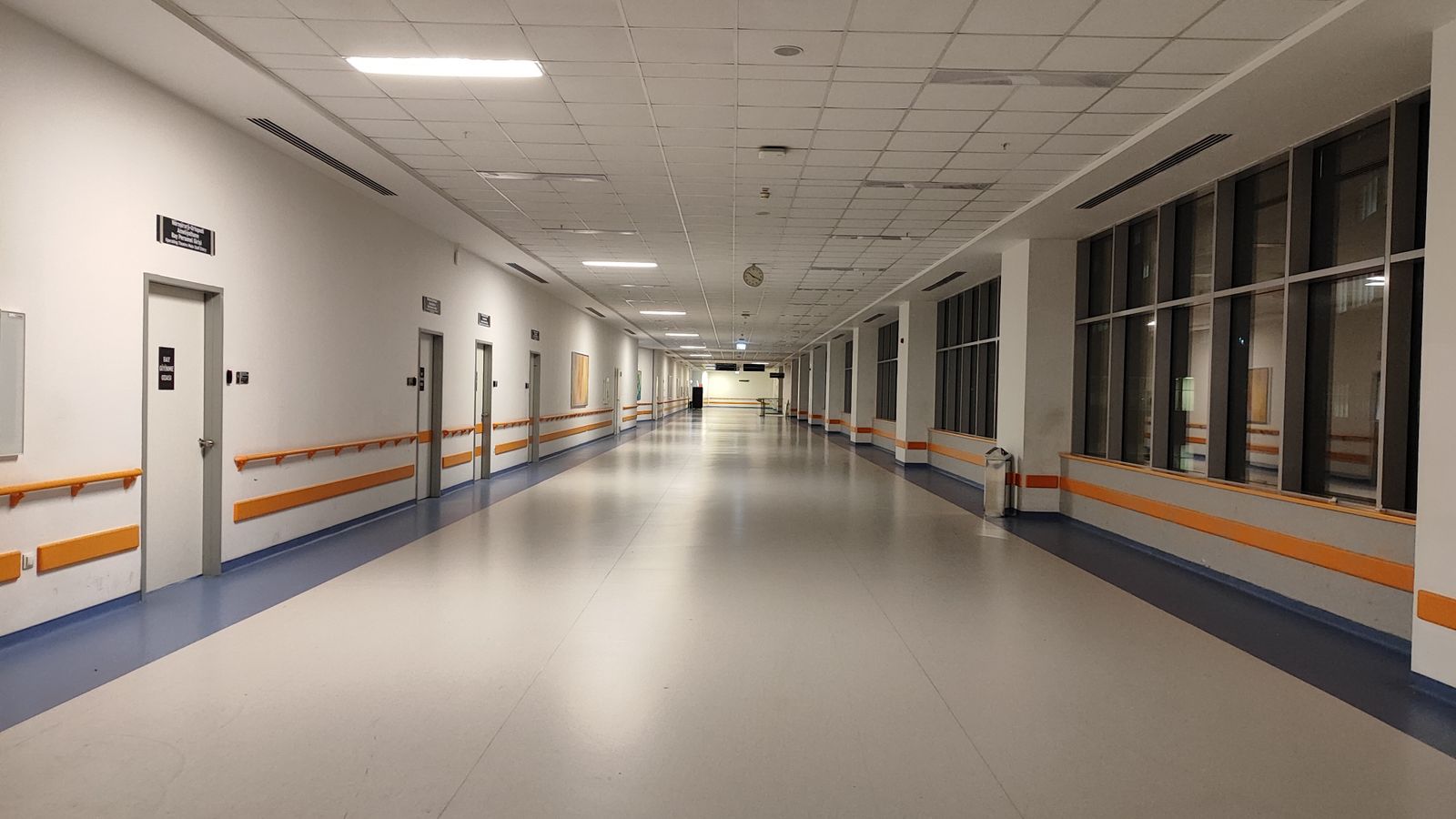
The short answer. Hospital janitorial services are environmental cleaning where cleaning is infection control, not housekeeping. Four things change versus a commercial building: frequency (CDC guidance calls for high-touch surfaces in patient-care areas to be cleaned and disinfected more often than minimal-contact surfaces), method (EPA-registered disinfection held to full label contact time), documentation (written protocols and logs become part of the record), and accountability (every surface is assigned to either environmental services or clinical staff, in advance and in writing). Get those four right and the rest is scale.
Why is healthcare cleaning treated differently?
Because the stakes are measurable. Healthcare-associated infections affect about 1 in 31 patients on any given day (CDC), and contaminated environmental surfaces are a documented transmission route.
The upside is measurable too. A randomized trial published in The Lancet Infectious Diseases — the 2024 CLEEN study — found that an enhanced environmental cleaning bundle reduced healthcare-associated infections by 35% (Lancet, 2024). Not new equipment, not stronger chemicals — a structured cleaning program. That is the entire argument for treating this as a discipline rather than a line item.
The cleaning zones
Healthcare facilities don't clean uniformly. Infection-control practitioners use a risk-assessment approach to identify high-touch surfaces and then set an appropriate schedule with the cleaning staff. In practice that produces tiers:
| Zone | Areas | Frequency | What it means |
|---|---|---|---|
| Low risk | Administrative offices, non-clinical corridors | Daily routine clean | Standard commercial protocol; disinfection on touchpoints. |
| Moderate risk | Waiting areas, public restrooms, cafeterias | Daily + intra-day porter checks | High shared-surface load; restocking and touchpoint passes through the day. |
| High risk | Patient rooms, exam and treatment areas | Daily + terminal clean on discharge | EPA-registered disinfection at full contact time; documented per room. |
| Highest risk | Isolation, procedure and sterile areas | Per clinical protocol | Governed by the facility's infection prevention team; crew works to their direction. |
A vendor who quotes one flat protocol for an entire healthcare property hasn't done this exercise. The zoning is the plan.
What is terminal cleaning?
This is the concept that most separates healthcare janitorial from commercial work, and the one most buyers have never had explained to them.
Terminal cleaning is the cleaning and disinfection performed after a patient is discharged or transferred. CDC guidance describes it as including the removal of organic material and the significant reduction and elimination of microbial contamination — covering all low- and high-touch surfaces, including those that weren't accessible while the room was occupied, such as the patient mattress and bedframe.
Two things follow from that definition. First, terminal cleaning is unschedulable in the ordinary sense — it happens when a room turns over, not at 9pm. Your staffing model has to absorb that. Second, CDC is explicit that terminal cleaning "requires collaboration between cleaning, IPC, and clinical staff to delineate responsibility for every surface and item." Every surface. That conversation happens before the contract starts or it happens during an incident review.
How often do high-touch surfaces get cleaned?
More often than everything else, and CDC names the surfaces specifically: doorknobs, bed rails, light switches, the wall areas around the toilet in a patient's room, and the edges of privacy curtains. These "should be cleaned and/or disinfected more frequently than surfaces with minimal hand contact."
Note what's on that list that a commercial crew would never think of — privacy curtain edges, the wall around a toilet. Those are exactly the surfaces hands touch in a patient room and exactly the ones a general janitorial scope omits. If your current scope was written for an office building and then applied to a healthcare property, this is where the gap will be.
How do you know the cleaning actually happened?
You measure it, and CDC encourages hospitals to develop programs to optimize the thoroughness of high-touch surface cleaning as part of terminal cleaning. In practice that means one of three approaches:
- Direct observation — a supervisor watches the process. Accurate, labor-intensive, and subject to people performing better when watched.
- Fluorescent markers — an invisible gel applied to target surfaces before cleaning, checked with a UV light afterward. Cheap, objective, and it measures whether the surface was physically wiped.
- ATP bioluminescence — a swab reading organic residue, giving a numeric result. More expensive per test, more informative.
You don't need all three. You need one, used consistently, with the results going somewhere. Thoroughness that isn't measured drifts — reliably, and in one direction.
What does a healthcare cleaning crew need?
- Bloodborne pathogen training under OSHA 29 CFR 1910.1030 for anyone with occupational exposure — the cleaning crew included, and this is non-negotiable.
- Contact-time discipline. EPA-registered disinfectants only work if the surface stays visibly wet for the full label time. This is the most common real-world failure in every facility type we audit.
- Order of operations. Clean, then disinfect. Disinfectant over soil does neither job — the difference is covered in our guide to cleaning versus sanitizing versus disinfecting.
- Crew consistency. A healthcare property is not a building a rotating crew can learn. The same people, cleared and trained, every shift.
- Coverage that matches operations. If the facility runs seven days, the program runs seven days, including the discharge turnovers that don't respect a schedule.
What you can do this week
- Ask for dated bloodborne pathogen training records for the crew in your building. Not "are they trained" — the records, with dates. It takes one email and it is the fastest way to find the most serious gap.
- Walk one patient or exam room with the CDC high-touch list. Doorknob, bed rail, light switch, wall around the toilet, privacy curtain edge. Ask who cleans each one. The hesitations are your findings.
- Write the surface-ownership document. One page, every surface in a representative room, one name against each. Share it with both your infection prevention lead and your cleaning vendor. Most "we thought they had it" gaps close permanently the moment this page exists.
For the frequency framework applied to outpatient practices, see our medical office cleaning frequency guide, and the room-by-room checklist is the task-level version you can hand a crew today.
Want your healthcare facility scoped properly?
A free walkthrough produces zoned protocols, a surface-ownership document, and logs your compliance officer can actually use.
How we run it
Hospital and medical janitorial is a distinct vertical for us, not an office contract with extra disinfectant. It runs through Purity Med — bloodborne pathogen-trained crews, EPA-registered disinfectants at full contact times, OSHA and CDC-aligned protocols, and coordination with your compliance officer — delivered at the scale of commercial janitorial. Around it sit high-touch disinfection, biohazard-aware cleaning, and for outpatient properties a documented medical office cleaning program.
You can see the full service list or how the whole operation works — we cover healthcare properties across Miami-Dade and Broward, including Miami.
The bottom line
Healthcare cleaning isn't office cleaning done harder. It's a different job with risk zones, a terminal-clean workflow that ignores your schedule, a named list of high-touch surfaces, trained crews, and a measurement loop proving the work happened. Get the surface-ownership document written and the contact times respected, and most of the rest follows.
Quick answers
What are hospital janitorial services?
Hospital janitorial services are environmental cleaning in a healthcare setting, where cleaning functions as infection control rather than housekeeping. It covers routine daily cleaning of patient-care and public areas, terminal cleaning after a patient is discharged or transferred, high-touch surface disinfection on a more frequent schedule than ordinary surfaces, and documented protocols with logs an inspector can review. Crews require bloodborne pathogen training, EPA-registered disinfectants held to full label contact time, and a clear division of responsibility with clinical staff.
What is terminal cleaning?
Terminal cleaning is the cleaning and disinfection performed after a patient is discharged or transferred. Per CDC guidance it includes removing organic material and significantly reducing microbial contamination, and it covers all low- and high-touch surfaces — including ones that were not accessible while the room was occupied, such as the mattress and bedframe. It requires collaboration between cleaning, infection prevention, and clinical staff so responsibility for every surface and item is spelled out in advance.
How is hospital cleaning different from office cleaning?
Four things change. Frequency: CDC guidance calls for high-touch surfaces in patient-care areas to be cleaned and disinfected more often than minimal-contact surfaces. Method: disinfection with EPA-registered products held to full contact time replaces general wiping. Documentation: written protocols and logs become part of the record rather than a nicety. And accountability: responsibility for each surface must be assigned between environmental services and clinical staff so nothing sits in a gap.
Do hospital cleaning crews need special training?
Yes. Anyone with occupational exposure to blood or other potentially infectious material needs bloodborne pathogen training under OSHA 29 CFR 1910.1030 — which in a healthcare facility includes the cleaning crew. Beyond that baseline, crews need to understand cleaning-zone risk levels, the difference between cleaning and disinfecting, contact times, correct order of operations, and where the clinical boundary sits. Ask any vendor for dated training records, not assurances.
Want this handled instead of researched?
A free walkthrough turns everything above into a written plan for your facility — usually quoted within 24 hours.
Let's make your facility spotless & compliant.
Book a free, no-obligation walkthrough. We'll assess your space, answer your questions, and build a quote tailored to your facility — usually within 24 hours.