What Does Electrostatic Disinfection Cost? A 2026 Price Guide
Nobody publishes real numbers for this service — they just say 'call for a quote.' Here are the actual per-square-foot ranges, worked examples by building size, and the four variables that decide where your facility lands.
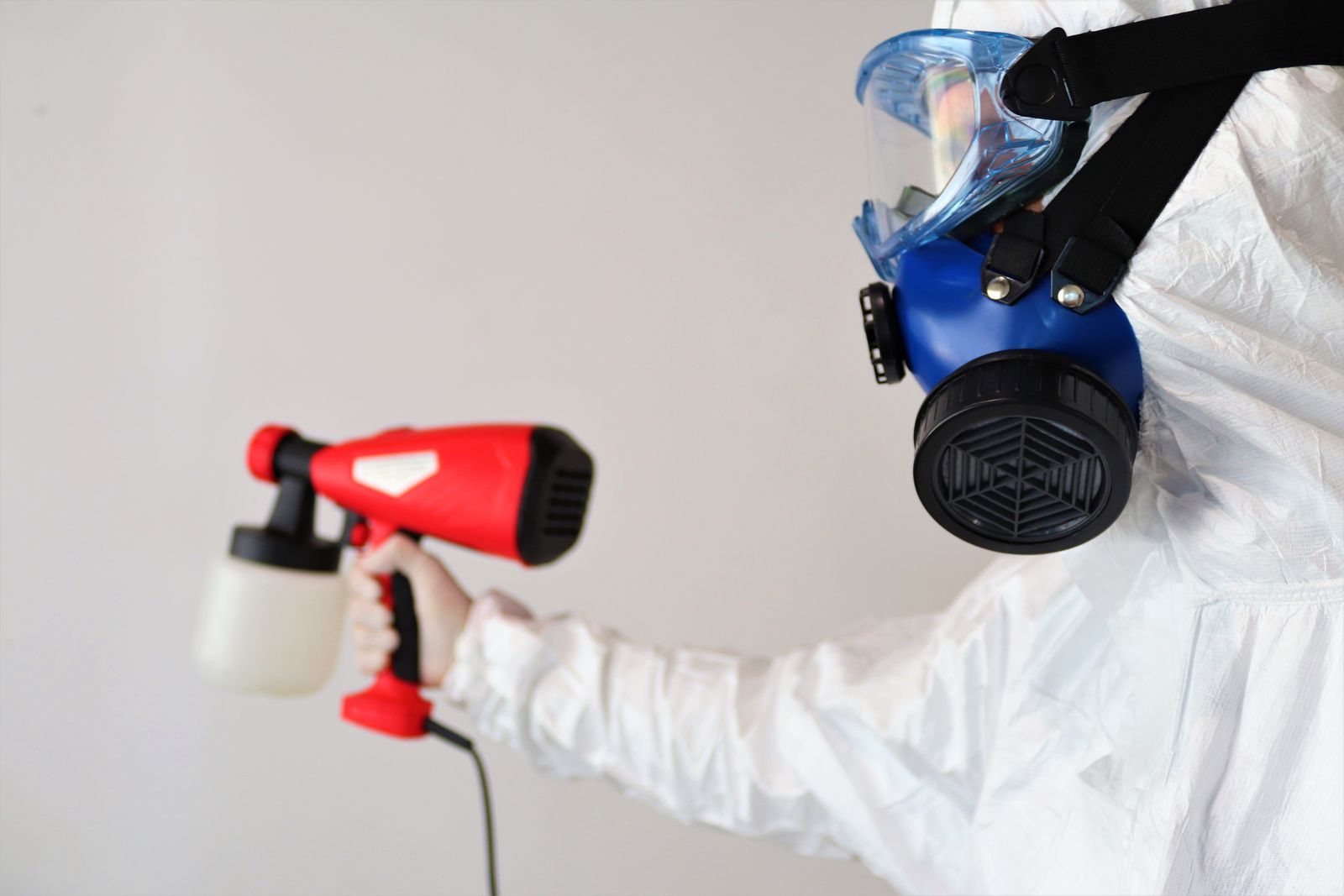
The short answer. Electrostatic disinfection is priced per square foot, and industry rate guides put it at $0.10 to $0.30 per square foot (ISSA), with some sources quoting up to $0.35 for dense or complicated spaces (EMist). In practical terms, a 5,000-square-foot office runs about $500 to $1,500 per treatment as a one-time service, and less per visit on a recurring program. Where you land inside that range comes down to four things: how many touchpoints you have, which EPA-registered product is used, whether cleaning is included in the price, and when we can get in the building.
Why is electrostatic disinfection priced per square foot?
Because the machine covers area, not items. An electrostatic sprayer puts an electrical charge on the droplets so they're attracted to surfaces and wrap around the back and underside of objects instead of only landing on the top. That means the cost driver is how much space a technician has to walk and coat — not how many individual desks somebody has to wipe. Square footage is the honest unit.
Hourly pricing exists for very small jobs, and flat monthly pricing is where recurring accounts usually settle. But every one of those numbers is built from the same square-foot math underneath. If a vendor can't tell you the per-square-foot rate their flat price implies, that's worth asking about.
What does electrostatic disinfection cost by facility type?
Rates move with how dense the space is. A surgery center and a warehouse of identical size are not the same job, and the price shouldn't pretend otherwise. These are 2026 industry ranges for one-time service — a starting frame, not a quote:
| Facility type | Typical range | Why |
|---|---|---|
| Open office / general commercial | $0.10 – $0.18 / sq ft | Fewer touchpoints per square foot; fast, clean sprayer passes. |
| Medical, dental, clinical | $0.18 – $0.30 / sq ft | Dense high-touch surfaces, longer dwell products, documentation. |
| Schools, daycare, gyms | $0.12 – $0.25 / sq ft | Heavy shared-surface load; often scheduled around occupancy. |
| Warehouse / industrial | $0.08 – $0.15 / sq ft | Large open area, low touchpoint density per square foot. |
| Outbreak / emergency response | Premium over base rate | Same-day mobilization, PPE, and after-hours access. |
For comparison, ISSA puts general recurring janitorial at $0.09–$0.17 per square foot for offices and $0.14–$0.29 for healthcare facilities. Electrostatic disinfection prices in the same neighborhood as a full cleaning visit — which tells you something important: it is a real, labor-and-chemical-bearing service, not a $50 add-on somebody sprays on the way out the door.
What does it cost for a building my size?
Running the $0.10–$0.30 range against common commercial footprints:
| Building size | Low end | High end | Note |
|---|---|---|---|
| 1,500 sq ft suite | $150 | $450 | Often lands at the provider minimum instead. |
| 5,000 sq ft office | $500 | $1,500 | The most common commercial footprint we quote. |
| 10,000 sq ft clinic | $1,000 | $3,000 | Clinical spaces sit at the top of the range. |
| 25,000 sq ft facility | $2,500 | $7,500 | Recurring contracts price well below one-time rates. |
Two things this table won't tell you. First, minimums: almost every provider has one, because sending a technician, a machine, and a drum of EPA-registered product to a 1,200-square-foot suite costs nearly what sending them to a 3,000-square-foot one does. Small spaces effectively pay a higher rate. Second, frequency: a quarterly or monthly program almost always prices below a one-time emergency call, because the mobilization cost gets spread across visits and the building never falls far behind.
What actually moves the price up or down?
- Touchpoint density. This is the biggest one and the least intuitive. Ten thousand square feet of open warehouse is a fast job. Ten thousand square feet of exam rooms, waiting-room chairs, keyboards, phones, and door hardware is not. Density, not area, is what a technician's time is really spent on.
- The disinfectant and its contact time. Products differ in cost and in how long the surface has to stay visibly wet to actually work. A longer required dwell means more product, more passes, and more time in the building. Cheap quotes sometimes hide a short-dwell or wrong-label product.
- Whether cleaning is included. Disinfectant applied over dust, grease, and body oils doesn't disinfect. If surfaces haven't been cleaned first, the spray is theater. A quote that includes the cleaning step will always look higher than one that doesn't — and it's the only one worth comparing.
- Access and timing. After-hours, weekend, and same-day outbreak response all carry a premium, because the building has to be empty during application and for the re-entry interval afterward.
How do I compare two electrostatic disinfection quotes?
Two bids on the same building can differ by 3x, and it's almost never because one company is greedy. It's because they're quoting different jobs. Line them up on these five points and the gap usually explains itself:
- Is cleaning included, or disinfection only? The single most common reason one bid is half the other.
- Which EPA-registered product, and does its label cover electrostatic application? Ask for the product name. A vendor who can't answer this in one sentence is a problem.
- What's the required contact time, and how do you meet it? If the surface dries first, the treatment didn't happen. The answer should involve reapplication, not a shrug.
- What's the re-entry interval? How long before staff can come back in. This affects your operations as much as the price.
- What do I get in writing afterward? Areas treated, product used, technician, date, time. In a regulated facility this documentation isn't a nicety — it's the thing an inspector asks for.
What you can do this week — before you call anyone
You can narrow your own number down considerably without a vendor involved. Three steps, maybe twenty minutes:
- Get your real square footage. Off the lease, not off memory. Then multiply by $0.10 and by $0.30. That's your honest bracket, and any quote wildly outside it needs an explanation.
- Count your touchpoints, room by room. Walk the space and write down every surface multiple hands touch daily — door hardware, light switches, shared keyboards, phones, break-room appliance handles, restroom fixtures, waiting-room armrests, elevator buttons. That list tells you whether you're at the bottom or the top of the range, and it becomes the scope document you hand every bidder so they're all quoting the same job.
- Read the label on what's being used in your building right now. Find the contact time — the number of minutes the surface must stay visibly wet. Then watch how long your current crew actually leaves it. If the label says four minutes and the wipe takes eight seconds, you don't have a pricing problem, you have a protocol problem, and no amount of electrostatic spraying fixes it.
If you want the reasoning behind the method itself before you spend anything, our companion piece on what electrostatic disinfection is and when it's actually worth it covers where it beats a wipe and where it doesn't. And if you're budgeting the whole facility rather than one service, the 2026 breakdown of commercial cleaning costs in Miami puts this line item in context.
Want a real number for your building?
A free walkthrough turns your square footage and touchpoint list into a written, fixed price — usually back to you within 24 hours.
How we price it at Purity Services
We quote electrostatic work by walking the building, not by guessing over the phone — the same way we handle every service across our Miami-Dade and Broward operation. The walkthrough is where touchpoint density, floor types, access windows, and compliance requirements stop being assumptions and become a number you can hold us to.
Electrostatic application is one tool inside a broader program, and for most facilities it works best paired with something else. Our electrostatic disinfection service is usually scheduled alongside high-touch surface disinfection — the wipe-and-dwell work on the surfaces that matter most — and, when something has already spread through a facility, outbreak response cleaning. Clinical facilities typically fold all of it into a documented medical office cleaning program rather than buying it as a one-off.
You can see how the disinfection services fit together on our disinfection services page, or browse the full service list if you're scoping more than one line item. We cover Miami and the surrounding Miami-Dade and Broward cities, and the crew that quotes your building is the crew that shows up to it.
The bottom line
Budget $0.10 to $0.30 per square foot for electrostatic disinfection, expect to land in the upper half if your facility is clinical or touchpoint-dense, and expect a minimum charge on anything under about 2,000 square feet. Then judge the quotes on what's actually in them — cleaning included or not, which EPA-registered product, what contact time, what documentation. The cheapest bid on this service is very often the one where the least is happening, and with disinfection, "the least" and "nothing" can be the same number.
Quick answers
How much does electrostatic disinfection cost?
Electrostatic disinfection is typically priced per square foot. Industry rate guides put it at $0.10 to $0.30 per square foot (ISSA), with some sources quoting up to $0.35 for dense or complex spaces (EMist). For a 5,000-square-foot office that works out to roughly $500 to $1,500 per treatment as a one-time service. Recurring service prices lower per visit than a one-time call, and most providers apply a minimum charge — commonly a few hundred dollars — so very small suites cost more per square foot than the range suggests.
Is electrostatic disinfection cheaper than wiping every surface by hand?
Per square foot of surface covered, usually yes — a sprayer coats a room in minutes where hand-wiping takes an hour, so the labor line is smaller. But it is not a replacement for cleaning. Disinfectant applied over dust, grease, or body oils does not work, so a proper electrostatic treatment still needs the surfaces cleaned first. The honest comparison is "clean plus spray" versus "clean plus wipe every touchpoint," not "spray" versus "everything."
Why do electrostatic disinfection quotes vary so much for the same building?
Four things move the number: touchpoint density (a call center packed with desks and phones costs more than an open warehouse of the same area), the disinfectant used and its required contact time, whether the price includes the cleaning step that has to happen first, and scheduling — after-hours or emergency turnaround carries a premium. A quote that is dramatically lower than the others usually excludes the cleaning step, uses a shorter-dwell product, or is quoting a single pass with no verification.
Does electrostatic disinfection require a special disinfectant?
Yes. The EPA requires that a product carry electrostatic spray directions on its own label before it can legally be applied that way, and those directions can specify a different contact time than the same product used with a cloth. EPA guidance notes labels for electrostatic use should specify a droplet size of at least 40 micrometers and instruct the applicator to reapply if the surface dries before the contact time is met. Ask any vendor which EPA-registered product they use and whether its label covers electrostatic application.
Want this handled instead of researched?
A free walkthrough turns everything above into a written plan for your facility — usually quoted within 24 hours.
Let's make your facility spotless & compliant.
Book a free, no-obligation walkthrough. We'll assess your space, answer your questions, and build a quote tailored to your facility — usually within 24 hours.