Electrostatic Disinfection: What It Is and When It's Worth It
Charged-mist disinfection sounds futuristic, and the marketing leans into it. Here's the plain-English version — how it works, how it differs from fogging, when it beats a wipe, and the one detail that decides whether it does anything at all.
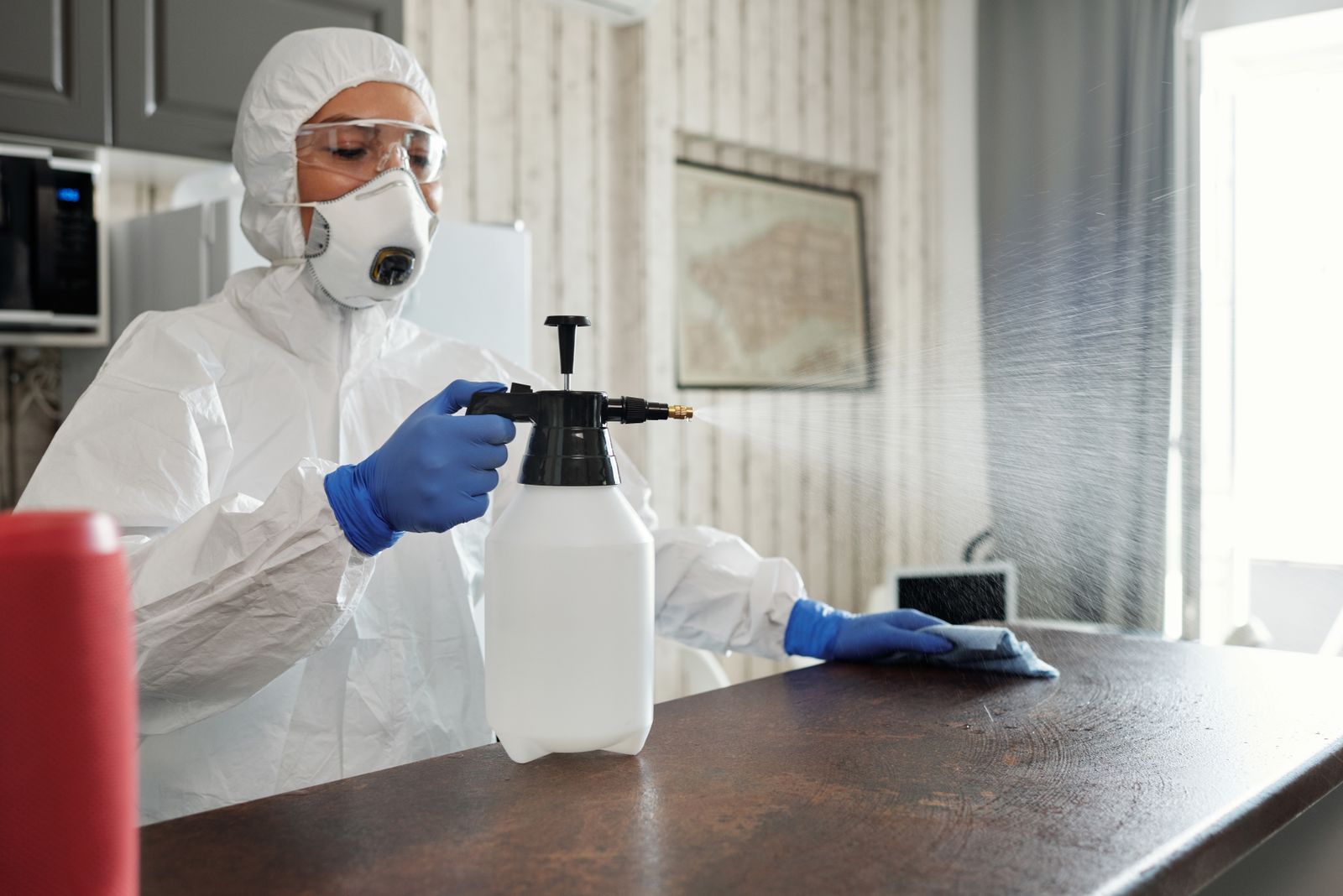
The short answer. Electrostatic disinfection applies an electrical charge to disinfectant droplets as they leave the sprayer. Those charged droplets are attracted to surfaces and wrap around them — coating the front, back, and underside of things a cloth never reaches. It's a fast, even way to disinfect large or complex spaces. But it only works if the disinfectant stays visibly wet for its full label contact time — the same rule that governs every other method, and the one that decides whether you bought disinfection or theater.
How does electrostatic disinfection actually work?
A standard sprayer just pushes droplets forward; gravity and aim decide where they land. An electrostatic sprayer adds a small electrical charge as the disinfectant passes through the nozzle. Because the positively charged droplets are drawn to negatively charged surfaces, they "seek out" and cling to whatever's in the room — and because like charges repel, they spread into an even coat instead of pooling. The CDC describes the result as droplets that "adhere easier and stick to environmental surfaces," wrapping around objects for improved coverage on hard, non-porous surfaces.
The practical upshot: a chair, a keyboard tray, a bank of lockers, or a waiting room gets disinfectant on all its faces, quickly. The part worth internalizing is that the charge changes distribution, not chemistry. The disinfectant is doing exactly what it would do out of a spray bottle. The sprayer has only solved the problem of getting it everywhere.
How is it different from fogging?
People use the two words interchangeably, and vendors are not always careful about correcting them. They are not the same process, and the difference matters when you're comparing quotes:
| Method | Strength | Limitation | Best for |
|---|---|---|---|
| Manual wipe | Precise, verifiable, cheapest per surface | Slow; misses undersides and complex geometry | Daily high-touch points |
| Fogging | Covers a room quickly with little labor | Gravity-driven; poor coverage on undersides and vertical faces | Open volumes, limited use |
| Electrostatic | Wraps all sides of objects, fast and even | Uses less liquid, so surfaces can dry before contact time is met | Large or complex spaces, resets |
Fogging releases a fine mist and lets it settle. Gravity does the distributing, which means horizontal top surfaces get treated well and the underside of a desk gets very little. Electrostatic spraying charges the droplets so they are actively pulled toward surfaces and wrap around objects — that wrap is the entire reason to pay for it. If a vendor is quoting "fogging" at an electrostatic price, that is a question worth asking out loud.
The catch nobody mentions: contact time
Here's the part the glossy demos skip. Because an electrostatic sprayer uses less disinfectant to cover an area, the surface can dry before the product has finished working. The EPA only permits electrostatic application for products whose labels specifically authorize it — and the label's contact time still applies. EPA guidance for those labels calls for a droplet size of at least 40 micrometers and instructions to reapply if the surface dries before the contact time is achieved.
As the CDC puts it plainly: with less disinfectant applied, "the disinfection process may not actually work if the surface does not stay wet for the required contact time." So the machine is only as good as the crew running it. A trained operator uses a label-approved product, applies enough to keep surfaces wet for the full contact time, reapplies where a surface flashes dry, and treats the space when it's empty. A rushed one produces a fine mist and a false sense of security.
Which surfaces does it actually work on?
Electrostatic application is designed for hard, non-porous surfaces — desks, chairs, door hardware, equipment housings, fixtures, lockers, handrails. That is where EPA-registered disinfectants are tested and where the efficacy claims on the label apply.
It is not a solution for porous materials. Carpet, upholstery, cubicle fabric, and acoustic panels absorb liquid rather than holding a wet film on the surface, so a contact time can't be maintained and the label claim doesn't apply. Those materials need a different process entirely — hot-water extraction and fabric-safe sanitization, which is a separate service with separate chemistry. A vendor who tells you a sprayer pass "handles" your waiting-room upholstery is either confused or hoping you are.
When is it worth it — and when isn't it?
Electrostatic disinfection isn't a replacement for everything, and honest providers say so. The CDC notes that for most routine situations, traditional methods — wipes, sprays, and mopping — are sufficient. Electrostatic earns its keep when the geometry or the stakes change:
- Large or high-occupancy spaces — gyms, schools, waiting rooms, open offices — where wiping every surface by hand is impractical.
- Complex surfaces — chairs, equipment, cable runs, lockers — where "all sides" is the whole point.
- After an illness event — flu, COVID, or norovirus in the building, when you want a comprehensive reset fast.
- Scheduled deep-disinfection layers — a monthly or quarterly pass on top of daily cleaning to keep baseline bioburden down.
And when it isn't: a small suite with twelve touchpoints, a space that hasn't been cleaned first, or any situation where somebody is selling the sprayer as a replacement for the daily work. For everyday high-touch points, manual disinfection is often the more precise tool. The right program usually uses both.
What you can do this week
Before you buy this service from anyone — including us — three things worth doing:
- Read the label of the disinfectant already in your building. Look for two things: the contact time in minutes, and whether the directions mention electrostatic or spray application at all. Most facilities discover their current product was never authorized for the method they're paying someone to use.
- Walk your space and mark what is porous. Upholstered chairs, cubicle panels, carpet, curtains. Everything on that list is outside what an electrostatic pass can claim to disinfect, and knowing it before you get a quote stops you from paying for coverage you won't get.
- Ask your current vendor the one-sentence test question. "What's the contact time on what you spray?" You will learn more from the speed of the answer than from the answer itself.
When you're ready to talk numbers, our 2026 electrostatic disinfection price guide has the per-square-foot ranges and worked examples by building size, so you can budget before you call anyone.
Not sure whether your building actually needs this?
A free walkthrough tells you honestly — including when a scheduled wipe program would serve you better than a sprayer.
The bottom line
Electrostatic disinfection is a genuinely useful technology — when it's paired with a label-approved disinfectant, full contact times, and a crew that understands both. That's how we run it: electrostatic disinfection as a scheduled or on-demand layer within our broader commercial disinfection services, alongside high-touch surface disinfection for the daily work and outbreak response cleaning when something has already moved through a building. For regulated settings, it folds into our medical office cleaning program with the documentation inspectors expect.
You can see how it all fits on the full service list, and our crews cover Miami-Dade and Broward — including Miami and the surrounding cities.
Quick answers
What is electrostatic disinfection?
Electrostatic disinfection applies an electrical charge to disinfectant droplets as they leave the sprayer. The charged droplets are attracted to surfaces and wrap around them, coating the front, back, and underside of objects a cloth never reaches. It is a fast, even way to disinfect large or complex spaces — but it only works if the disinfectant stays visibly wet for its full label contact time, the same rule that governs every other disinfection method.
What is the difference between electrostatic spraying and fogging?
Fogging releases a fine mist and relies on the droplets settling out of the air onto whatever is below them — gravity does the distributing, so undersides and vertical faces get much less. Electrostatic spraying charges the droplets so they are actively drawn to surfaces and wrap around objects, which is why it covers the back of a chair leg that a fog would miss. Both still depend entirely on contact time, and both require a product whose EPA label authorizes that application method.
Is electrostatic disinfection safe for occupied buildings?
Yes, when done correctly — but the space should be empty during application. Crews use EPA-registered disinfectants that carry electrostatic application directions on the label, applied after hours with the ventilation and re-entry intervals the label specifies. EPA guidance is explicit that bystanders and pets must not be in the room during application. The space is treated when empty and ready by the time people return; that scheduling is part of doing it right.
Does electrostatic spraying replace regular cleaning?
No — it is a disinfection layer, not a substitute for cleaning. Disinfectants work poorly on soiled surfaces, so you clean first, then disinfect. The CDC also notes that for routine situations, traditional methods like wipes and spray bottles are often sufficient. Electrostatic earns its place on large, complex, or higher-risk spaces where wrapping every surface quickly is the actual advantage.
Want this handled instead of researched?
A free walkthrough turns everything above into a written plan for your facility — usually quoted within 24 hours.
Let's make your facility spotless & compliant.
Book a free, no-obligation walkthrough. We'll assess your space, answer your questions, and build a quote tailored to your facility — usually within 24 hours.