Church & Community Facility Janitorial: What It Takes to Keep One Clean
A church building gets used harder in four hours than an office does in a week, then sits empty. That rhythm changes everything about how it should be cleaned — and where volunteer help genuinely works versus where it quietly fails.
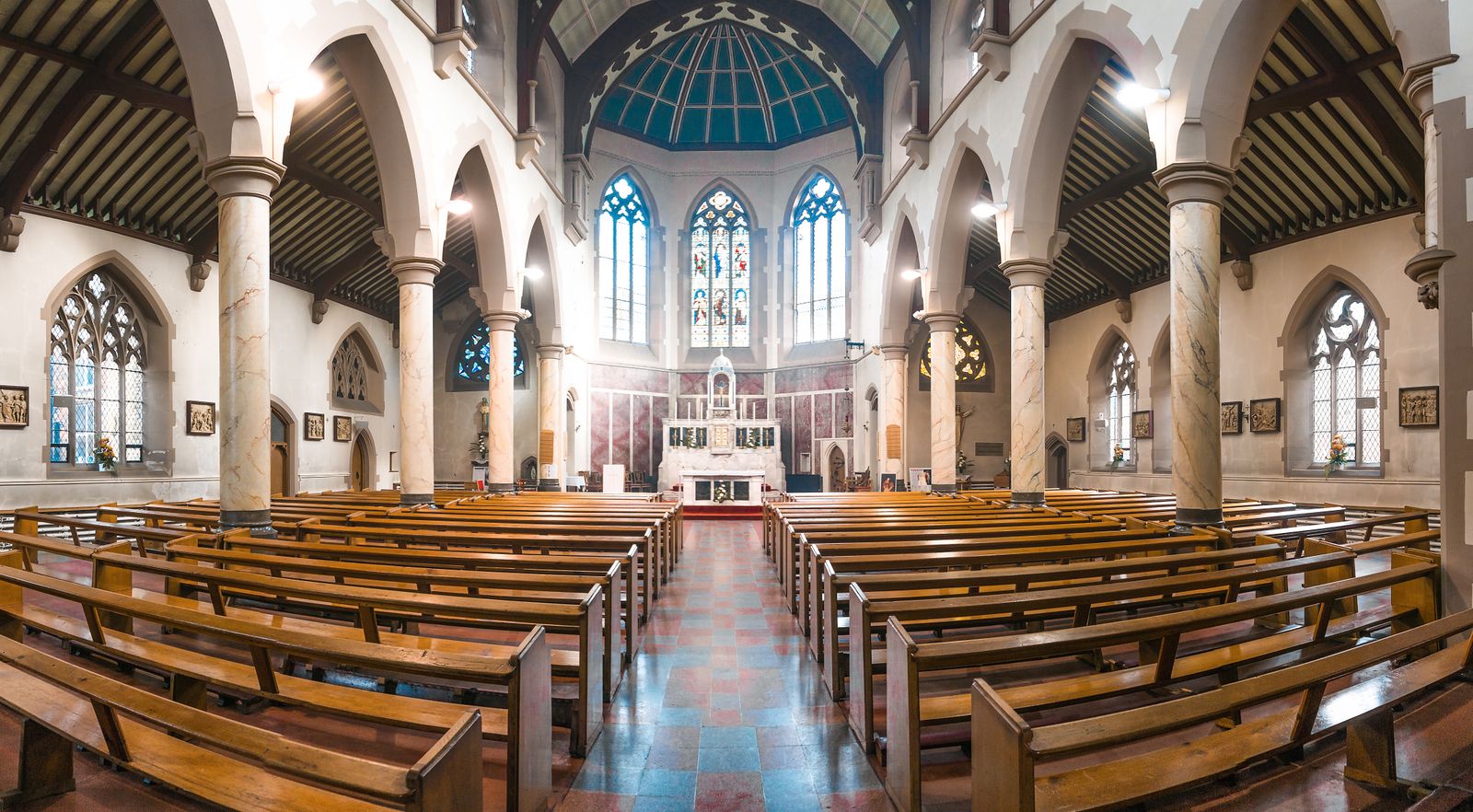
The short answer. Church janitorial covers the sanctuary, restrooms, fellowship hall and kitchen, classrooms and nursery, entries, and offices — but on a rhythm no office contract matches. The building takes its entire week's wear in a few concentrated hours, then sits empty. So the program is built around a post-service reset plus a mid-week visit, with nursery and food areas on their own use-driven schedule. Volunteers can carry real parts of it; the failure is never volunteers, it's an unwritten split where both sides assume someone else has the restrooms.
Why a church isn't an office building
Three things make the difference, and a scope copied from a commercial contract misses all of them.
- The load is concentrated. Several hundred people through one set of restrooms in ninety minutes is a different problem from forty people over eight hours. Fixtures and supplies need to survive a peak, not an average.
- The building is empty most of the week. That's an advantage — floor work, machine scrubbing, and deep tasks can happen without working around anyone, which is the opposite of most commercial buildings.
- Children are in the building. Nursery and children's rooms carry requirements a commercial scope never contains: toys and anything that reaches a mouth need sanitizing, on a schedule and after use. Our guide to school and daycare cleaning covers that standard in full, and it applies here.
The area-by-area standard
| Area | Cadence | What it covers |
|---|---|---|
| Sanctuary / worship space | After main services | Pews or seating, aisles, altar and platform area, floors. Large area, cleans fast when it is empty. |
| Restrooms | After services + mid-week | Peak-load fixtures. Full sanitation and restocking; the most-complained-about room in any building. |
| Fellowship hall & kitchen | After each use | Food-contact surfaces sanitized; floors degreased. Use-driven rather than calendar-driven. |
| Nursery & children's rooms | After each use | Toys and mouthed items sanitized, touchpoints disinfected. The highest-care space in the building. |
| Entries & lobbies | After services | Glass, matting, floors. The first ninety seconds of every visitor's impression. |
| Offices & classrooms | Weekly / mid-week | Standard commercial scope on a weekday rhythm. |
| Floors & carpet | Scheduled rotation | Machine work and extraction timed between seasons of heavy use. |
Where volunteers work — and where they don't
This is the real question most congregations are actually asking, and the honest answer is a split rather than a verdict.
Volunteers are genuinely good at reset work: straightening seating, clearing trash, wiping fellowship tables, tidying classrooms after use. It's visible, it's finite, it happens right after the event, and it builds ownership of the building.
What benefits from a professional program:
- Restroom sanitation — peak-load fixtures, health implications, and the room that generates the most complaints.
- Nursery and children's areas — sanitizing with appropriate products for child-occupied space, which is a product-knowledge question rather than an effort question.
- Floor and carpet care — machine equipment, chemistry matched to the floor type, and technique that doesn't damage what's there.
- Consistency — the part that quietly decides everything. A program that depends on who showed up is a program that degrades in the exact weeks the building is busiest.
Scheduling around services instead of through them
The single biggest operational advantage a church has over a commercial building is that it's empty most of the week — and most congregations never use it. Floor machine work, carpet extraction, and deep tasks that a normal office can only get on a weekend night can happen on a Tuesday afternoon here, with nobody to work around and no overtime premium attached.
The practical version: put the reset immediately after peak use while the mess is fresh, put the mid-week visit before your busiest weekday activity rather than after it, and stack all periodic work into the quiet days. That sequencing alone often buys a congregation a noticeably cleaner building at the same price.
What does it cost?
Church buildings usually sit at the lower end of the commercial range, because a large share of the square footage is open sanctuary that cleans quickly. Industry rate guides put general commercial and institutional space at roughly $0.07 to $0.17 per square foot per visit depending on facility type (ISSA 2026).
What moves your number: restroom count relative to attendance, whether there's a working kitchen, how many classrooms and nursery rooms are in active use, and floor type. Periodic work — carpet extraction, hard-floor machine care — is quoted separately, and in a church it's easiest to schedule because the building is empty six days a week. Our 2026 commercial cleaning cost breakdown has the full pricing picture.
What you can do this week
- Write the split. One page, every area, one owner. Volunteer team or crew. Share it with both. This is the highest-value hour anyone in your building can spend on this problem.
- Count your restrooms against your attendance. If the ratio is tight, the answer is usually a mid-service check rather than more cleaning afterward — the complaint happens during the peak, not after it.
- Ask who cleans the nursery toys, and get a name. In most buildings this lives in an assumption between the children's ministry team and whoever cleans. Whichever answer you get, write it down.
Want the parts volunteers shouldn't carry, covered properly?
A free walkthrough produces a written area-by-area split and a fixed price — scheduled around your services, not through them.
How we work with congregations
Community and faith facilities sit inside Purity Care: recurring commercial janitorial sized to the building, restroom and breakroom detail built for peak load, high-touch disinfection on the surfaces that matter, and floor and carpet programs scheduled into the quiet days of the week.
Crews are W-2 employees, background-checked before they ever enter a building with children in it — which in this setting is the first question, not the fifth. Browse the full service list or see how we work across Miami-Dade and Broward, including Miami and Hialeah.
The bottom line
Build the program around the rhythm: a real reset after peak use, a mid-week pass, and periodic floor work on the empty days. Write down who owns what. And put the restrooms and the nursery on the professional side of that line — those are the two rooms where "we thought someone had it" turns into a phone call from a parent.
Quick answers
What do church janitorial services include?
A church cleaning program normally covers the sanctuary (pews or seating, aisles, altar area, floors), restrooms, fellowship hall and kitchen, classrooms and nursery, entries and lobbies, offices, and trash and recycling. What separates it from an office contract is the rhythm: the building is heavily used for a few concentrated hours and empty for most of the week, so the work is scheduled around services rather than nightly. Nursery and children's areas add sanitizing requirements most commercial scopes never mention.
How often should a church be cleaned?
For most congregations, a full reset after the main weekend services plus a mid-week visit covers it. The reset handles the sanctuary, restrooms, fellowship space, and entries after peak use; the mid-week visit keeps offices, classrooms, and restrooms serviceable for weekday activity. Buildings hosting daycare, school, or multiple weekly gatherings move toward daily service, and nursery toys need sanitizing on their own schedule regardless of the building rhythm.
How much does church cleaning cost?
Church buildings usually price at the lower end of the commercial range because much of the square footage is open sanctuary that cleans quickly, and industry rate guides put general commercial and institutional space at roughly $0.07 to $0.17 per square foot per visit depending on facility type. The variables that move it are restroom count, whether there is a kitchen, how many classrooms and nursery spaces are in use, and floor type. Volunteer-supplemented programs cost less but need a clear written split of who does what.
Should volunteers or a cleaning company handle it?
Usually both, with the line written down. Volunteers are well suited to reset tasks — straightening, trash, wiping tables after fellowship. What benefits from a professional program is anything with health, liability, or equipment implications: restroom sanitation, nursery sanitizing, floor care and periodic machine work, and consistent coverage that does not depend on who showed up. The failure mode is not volunteers; it is an unwritten split where both sides assume the other has the restrooms.
Want this handled instead of researched?
A free walkthrough turns everything above into a written plan for your facility — usually quoted within 24 hours.
Let's make your facility spotless & compliant.
Book a free, no-obligation walkthrough. We'll assess your space, answer your questions, and build a quote tailored to your facility — usually within 24 hours.