Pollen Season in Florida: What It Leaves on Your Building, and Why It Matters More Than Dirt
The yellow film on every walkway, screen and window each spring is more than a looks problem. It is the outdoor half of the allergy season, and most of what ends up indoors starts there.
The short answer. Pollen season in South Florida peaks from February to May, with March and April the worst of it, and trees produce about 80% of the airborne pollen in the state (UF/IFAS). Across North America, seasons now start about 20 days earlier and carry about 21% more pollen than in 1990 (PNAS, 2021). With 25.7% of U.S. adults reporting seasonal allergies (CDC), the yellow film on a building’s entrances, glass, screens and patios is not just dirt. It is the pollen that gets carried inside next.
When is pollen season in Florida?
Florida’s season peaks from January to June. It starts in North Florida and works its way south, peaking in South Florida from February to May. A UF/IFAS extension agent puts the height of it in March and April, after which it eases off in early summer and then climbs again as grasses take over.
| Pollen | Peak in South Florida | What to know |
|---|---|---|
| Trees (oak leads; also pine, melaleuca) | February – May; height in March and April | About 80% of Florida’s airborne pollen. This is the yellow film on cars and walkways. |
| Grasses | Spring, summer and fall | Bermudagrass can release pollen year-round in South Florida. |
| Weeds (ragweed is the most important) | Can pollinate in any season | Smaller share, but it keeps the season from ever fully ending. |
Sources UF/IFAS News, March 2026 · UF/IFAS Gardening Solutions: Pollen and Allergies
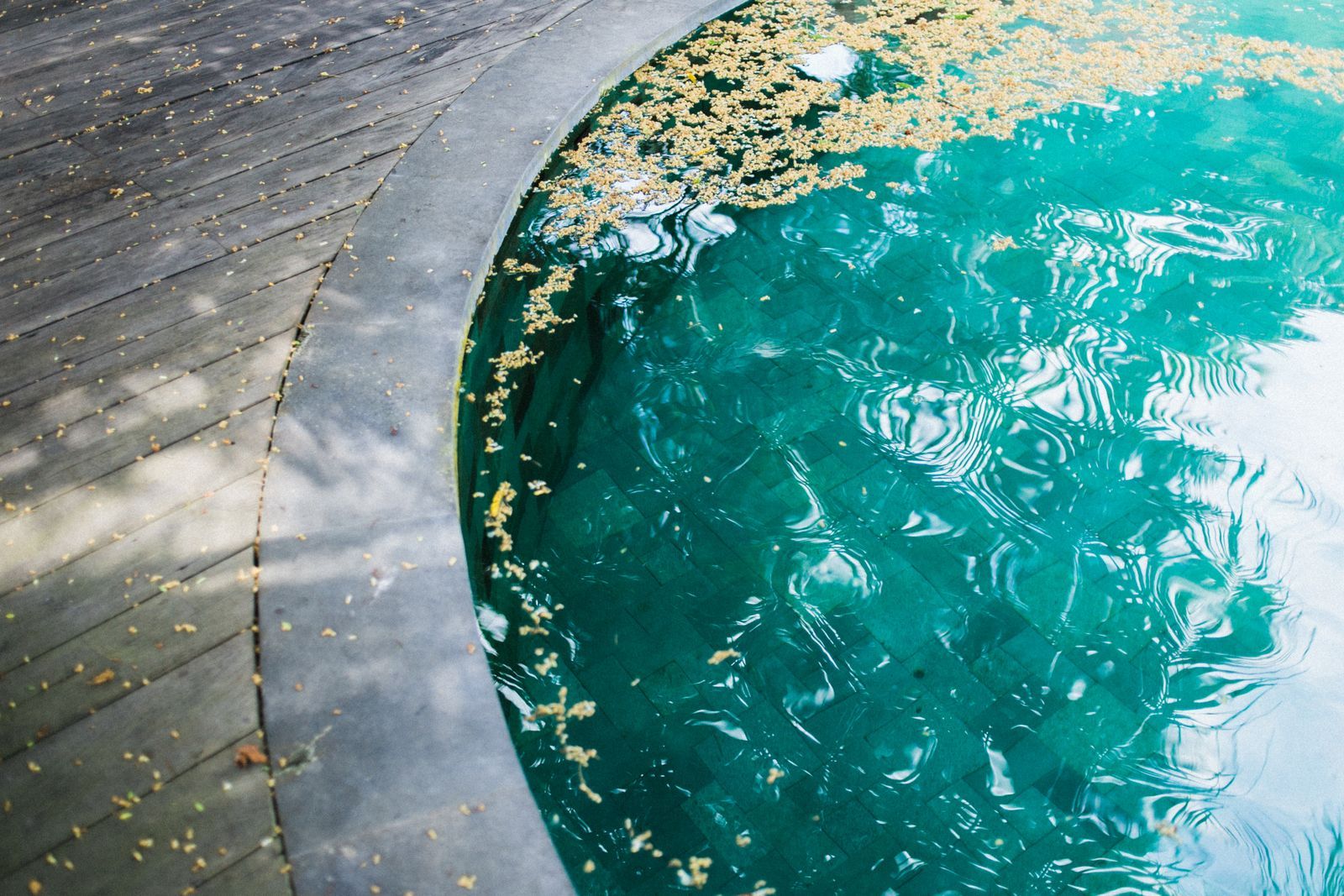
Florida has eleven species of oak, and UF/IFAS calls February to May their peak pollinating season. That is the window when walkways turn yellow, pool water grows a film, and every screened enclosure looks dusted. Broward County’s extension office notes that oaks, pines and melaleucas produce lightweight grains that travel miles. You do not need an oak on your lot to get oak pollen on your building.
Is pollen season getting worse every year?
Yes, and it is measurable. Researchers studying 60 pollen stations across North America from 1990 to 2018 found seasons arriving earlier and running longer, about 20 days of change, and annual pollen concentrations up about 21%. They attributed roughly half of the shift in season timing to human-caused climate change (Anderegg et al., PNAS 2021).
For a property, that means more pollen per season and a season that opens earlier. A wash schedule built around a short spring window keeps falling behind.
Why is pollen on the outside of a building more than a cleaning problem?
Because the outside is where indoor pollen comes from. The EPA says outdoor particles, pollen among them, come indoors through open doors and windows and through small cracks. The Asthma and Allergy Foundation of America adds that pollen comes in on clothes and pets. A coated entrance walkway, a dusty storefront and a yellow patio set are all supply.
And the people downstream of that supply are not a small group:
- 25.7% of U.S. adults and 18.9% of children had seasonal allergies in 2021 (CDC, adults; CDC, children).
- Pollen is a listed asthma trigger, alongside sinus infections and allergies (CDC).
- Allergy symptoms disrupt sleep, and the American College of Allergy, Asthma and Immunology lists fatigue, poor concentration and missed days of work or school among the effects of hay fever (ACAAI).
- A 2006 study of 8,267 employees found allergic rhinitis cost employers $593 per employee per year in lost productivity, more than any of the ten other conditions measured, including stress, migraine and depression (Lamb et al., 2006).
Clean exteriors will not cure anyone’s allergies, and nothing here is medical advice. Anyone with persistent symptoms should talk to their doctor. But the property owner controls one thing: how much of the season’s pollen is sitting at the door waiting to come in.
Doesn’t the rain wash pollen away?
Not reliably. Pollen is fine, a little sticky, and it keeps falling for months. UF/IFAS puts it plainly: rinse it off your car in the morning, and by afternoon it’s back. A peer-reviewed study of five utility-scale solar plants found that spring pollen cut output by more than 15%, and the recovery did not track rainfall. Manual cleaning won back 5 to 11% (Bessa et al., IEEE Journal of Photovoltaics, 2024).
A South Florida downpour moves pollen around more than it removes it. Some rinses off, some ends up in the corners, the screen tracks and the pool skimmer, and the rest stays bonded to textured surfaces like pavers and stucco.
Which exterior surfaces should be washed during pollen season?
Start with what people touch and walk through, then work outward. For homes and commercial properties alike:
- Entrances and walkways. The main path in. Every shoe that crosses it carries some indoors.
- Entry glass, storefronts and windows. The film is visible from inside and out, and window tracks and sills hold a reservoir of it.
- Screens and screened enclosures. Pool cages, lanais and porch screens trap pollen like a filter that never gets changed.
- Patios, pool decks and pavers. Textured surfaces hold pollen in the pores long after the visible yellow is gone.
- Outdoor furniture, railings and outdoor kitchens. Surfaces people sit on, lean on and eat at.
- Building walls and soffits. Lowest priority for allergens, but the season leaves them dull, and South Florida humidity does the rest.
Pressure washing or soft washing: which is right for pollen?
Pollen sits on the surface, so it almost never needs force. Concrete walkways and pavers handle a standard pressure wash. Stucco, painted walls, screens, outdoor fabric and older finishes need a low-pressure soft wash with the right detergent, because full pressure tears screens, etches soft finishes and drives water where it shouldn’t go. Our commercial pressure washing price guide breaks down what each method costs by surface, and why the wash water on a commercial site usually can’t go down the storm drain.
What you can do this week
- Walk your entrances at eye level and at shoe level. Look at the glass, the door tracks, the mat and the first few feet of floor inside. If the floor just inside the door is yellow, the outside is feeding it.
- Put down, or clean, a real entry mat. EPA notes that doormats at exterior doors and leaving shoes at the door can reduce tracked-in dust (EPA). A mat is only as good as its last cleaning.
- Keep doors and windows closed on high-pollen days. That is EPA’s advice too. A propped-open door during an oak bloom is an open intake.
- Rinse screens and outdoor furniture gently. A garden hose and a soft brush handle light pollen. Save pressure for the concrete.
- Check your HVAC filter. EPA recommends a filter rated at least MERV 13, or as high as your system can accommodate (EPA). Ask your HVAC technician what yours will take.
The indoor half of the season has its own playbook. Our guide to indoor allergy symptoms at work covers how pollen gets inside, what it does to a workday, and the cleaning methods that remove it instead of stirring it up.
Want your property ready before the oaks bloom?
A free walkthrough looks at the entrances, glass, screens and surfaces, and comes back with a written plan and a fixed price.
How we handle it
For businesses, condos and HOAs, our commercial pressure washing covers walkways, entrances, pool decks and building exteriors, with soft washing where pressure would cause damage. Commercial window cleaning takes care of storefronts and entry glass. Property managers can fold both into a recurring property management cleaning program, so the pollen-season washes are on the calendar before February instead of after the complaints.
For homes, our house washing service covers the exterior: stucco and painted walls soft-washed at low pressure, plus screened enclosures, pool decks, pavers and driveways. Our luxury home cleaning program runs exterior glass, railings, loggias and outdoor kitchens on a fixed rotation, and near the water that rotation runs shorter than it does inland. You can browse the full service list or see how Purity works across Miami-Dade and Broward.
The bottom line
South Florida’s pollen peaks from February to May, it is heavier and earlier than it was a generation ago, and rain does not take care of it. The yellow film outside is the source of much of the pollen inside, and about a quarter of the adults walking through your door are allergic to it. Wash the entrances, glass, screens and patios on a schedule built around the oak peak, and you take a real share of the season off the people inside.
Quick answers
When is pollen season in Florida?
Florida’s pollen season peaks from January to June, starting in North Florida and moving south. In South Florida the peak runs from February to May, with March and April the height of it, according to UF/IFAS. Oak trees drive most of that peak: trees account for about 80% of the airborne pollen in the state. Pollen tapers in early summer, then grasses push it back up, and in subtropical South Florida Bermudagrass can release pollen all year.
Is pollen season getting worse?
Across North America, yes. A 2021 study in PNAS that analyzed 60 pollen stations from 1990 to 2018 found seasons starting about 20 days earlier and annual pollen concentrations up about 21%. The authors attributed roughly half of the shift in season timing to human-caused climate change.
Does rain wash pollen off a building?
Less than you would think. Pollen is sticky and fine, and it keeps falling. UF/IFAS describes pollen you rinse off a car in the morning being back by the afternoon, and a 2024 study of solar plants found spring pollen cut output by more than 15% with recovery that did not track rainfall. Walkways, screens, glass and outdoor furniture usually need an actual wash.
Should pollen be pressure washed or soft washed?
Match the method to the surface, not the soil. Pollen sits on top, so it rarely needs high pressure. Concrete walkways and pavers tolerate a standard pressure wash; stucco, painted walls, screens and outdoor fabric need low pressure and the right detergent, because full pressure can damage them. A screen or a painted wall blasted with too much pressure costs more to repair than the cleaning did.
Why does pollen outside a building matter for the people inside?
Because outside is where indoor pollen comes from. EPA says outdoor particles, including pollen, come indoors through windows and doors, and AAFA notes pollen also rides in on clothes and pets. About 1 in 4 U.S. adults has seasonal allergies, and pollen is a listed asthma trigger, so the film on an entrance or a patio is part of what ends up in the office or the living room.
Want this handled instead of researched?
A free walkthrough turns everything above into a written plan for your facility — usually quoted within 24 hours.
Let's make your facility spotless & compliant.
Book a free, no-obligation walkthrough. We'll assess your space, answer your questions, and build a quote tailored to your facility — usually within 24 hours.