Commercial Pressure Washing in Miami-Dade & Broward
South Florida grows things on concrete: mildew, algae, gum, grease shadows. Every month outdoors adds a layer, and the building's first impression quietly goes gray.
Purity Restore's pressure washing takes it back — entryways, sidewalks, plazas, dumpster pads, and exterior surfaces cleaned with pressure and chemistry matched to each material.
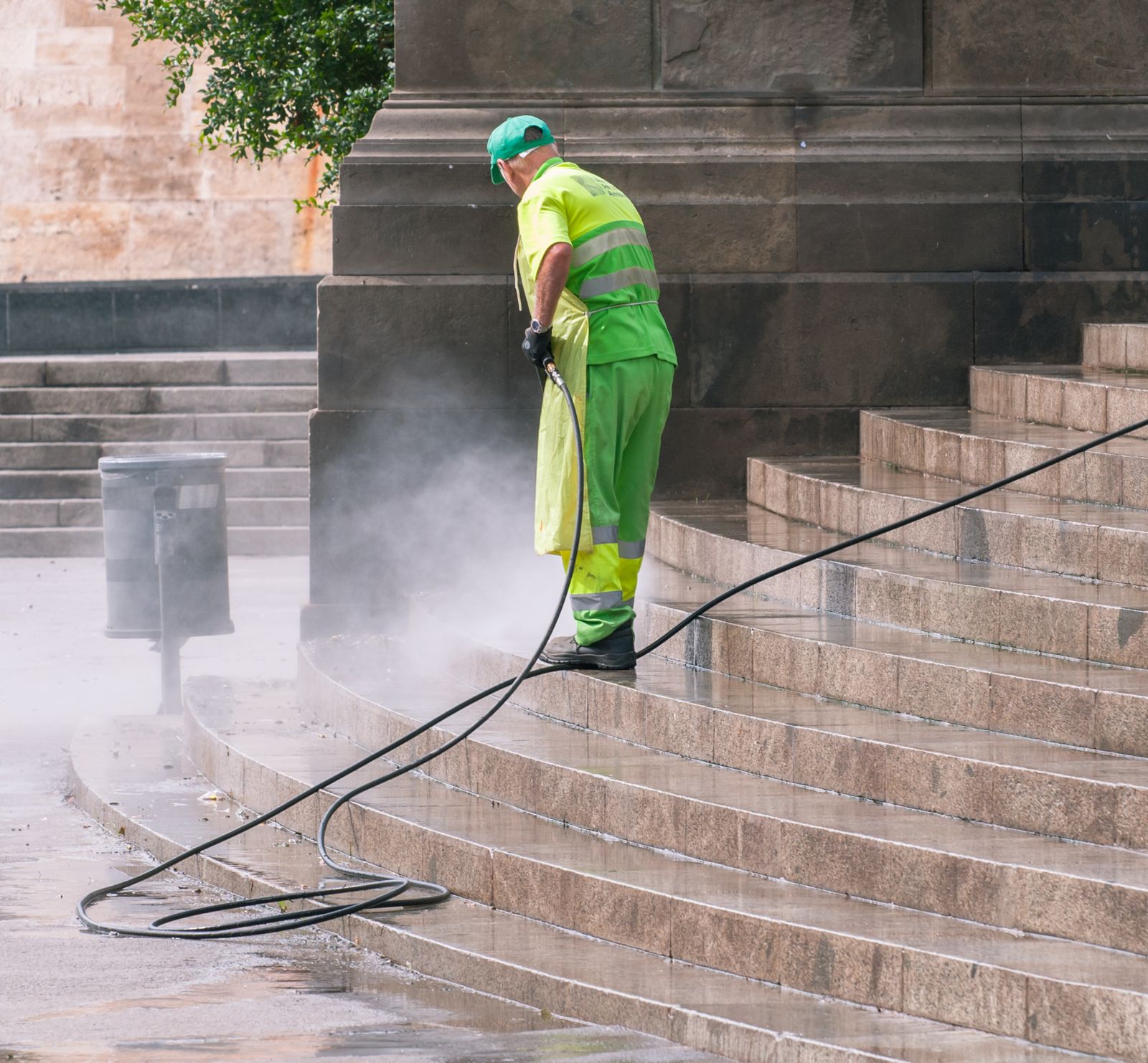
What's included
The approach every visitor walks before they reach your door, cleaned of grime and mildew.
Details Dumpster pads and service areasThe corner that decides how a loading area smells, degreased rather than merely rinsed.
Details Gum, grease and stain removalSpot work with heat and dwell time, because pressure alone drives a stain deeper.
Details Parking structures and garagesDeck levels, stair cores and ramps on a rotation that keeps oil film from building.
Details Concrete, paver and tile surfacesChemistry and pressure set per surface, so pavers do not lose their joint sand.
Details Building faces and awningsSoft washing where the substrate cannot take pressure — stucco, paint, signage, canvas.
DetailsWhy it matters
The approach to the building stops discounting what's inside.
Pavers, stucco, and concrete each get appropriate pressure — no etching, no scarring.
Treatment chemistry slows the mildew's return, not just its appearance.
- Entryways, sidewalks, and walkway runs
- Building approach and plaza hardscape
- Dumpster pads and loading areas degreased
- Mildew and algae treatment, not just blasting
- Surface-safe pressure and chemistry per material
What pressure your building's surfaces can actually take
The single most expensive mistake in exterior cleaning is treating every surface as concrete. A tip that is right for a dumpster pad will etch stucco, strip paint and blow the sand out of a paver joint in one pass — and none of that is repairable with more washing.
How we set the approach before anything is turned on. Yours is confirmed at the walkthrough.
| Surface | Approach | What it prevents |
|---|---|---|
| Concrete sidewalk & entry | High pressure with a surface cleaner | Wand striping — the zebra pattern a careless pass leaves behind |
| Dumpster pad & loading area | Degreaser, dwell, then hot-water rinse | Driving grease into the slab so the smell returns in a week |
| Pavers | Moderate pressure, joints re-sanded after | Loss of joint sand, which leads to shifting and weed growth |
| Stucco & painted walls | Soft wash — chemistry, low pressure | Etching, paint stripping, water driven behind the finish |
| Awnings & canvas | Soft wash with a fabric-safe solution | Seam damage and permanent stretch |
| Parking garage decks | High pressure with recovery | Oil film spread across the deck rather than lifted off it |
| Roof tile | Referred to a licensed roofing contractor | Broken tile and voided roof warranties |
Where the water goes is part of the job. The EPA is blunt about this: storm drains lead directly to local waterways rather than to treatment facilities. Detergent-rich wash water sent down the nearest inlet ends up in the bay. We contain and direct recovery, which is a line item some bids quietly leave out.
EPA — vehicle maintenance & washing BMPsHow often a South Florida property needs washing
More often than the same building would in a dry climate. Humidity, salt air and summer rain make mildew a maintenance item here rather than an event — a north-facing wall in permanent shade will re-green in months regardless of how well it was cleaned.
For most properties the sensible rhythm is entries and high-traffic walkways quarterly, dumpster pads and service areas monthly to quarterly depending on volume, and building faces annually or semi-annually. Restaurants and anything with a grease trap sit at the frequent end of every one of those ranges.
Pressure is the last dial we turn, not the first. Most exterior soiling in South Florida is biological — mildew and algae fed by humidity — and it responds to chemistry and dwell time. Turning the pressure up instead is how stucco gets etched, paint gets stripped and paver joints get blown out.
What commercial pressure washing costs, and why quotes vary so much
Two quotes for the same building can differ by a factor of three, and it is usually not greed — it is scope. The variables that actually move the number are water access and whether we have to haul it, power availability for hot water, containment and recovery requirements, surface type and condition, and whether the work has to happen after hours.
Ask any bidder those five questions. A quote that arrives without a site visit has guessed at all five, and the difference shows up later as a change order.
Where do you provide pressure washing in Miami?
Across Miami-Dade and Broward, with most of the volume where the weather hits hardest. Pressure washing in Miami and along the coastal corridor means salt film and algae on facades, walkways and rails. Pressure washing in Hialeah and pressure washing in Doral mean the industrial side — dock aprons, service-drive oil, dumpster pads and loading walkways. Both belong on a schedule rather than a phone call, because letting a surface go turns a wash into a restoration bill.
Power washing in Miami is also a seasonal argument. The wet season grows organic film on shaded pavers and north-facing walls fast enough that a quarterly cycle beats a reactive one, and storm debris means entrance walkways need attention before a tenant or a customer notices. We schedule against your season rather than ours.
Two boundaries worth stating. Surface selection matters — pavers, painted stucco, coquina and older concrete each take a different pressure and tip, and getting that wrong does permanent damage. And where the water goes is part of the job: detergent-rich runoff belongs in containment and recovery, not in the nearest storm inlet, which is a line item some bids quietly leave out.
Commercial pressure washing across Miami-Dade & Broward
We wash exteriors throughout South Florida — retail and industrial frontage in Hialeah, corporate parks and warehouse rows in Doral, storefronts across Miami and Coral Gables, plus Fort Lauderdale, Pembroke Pines, Miramar and Miami Lakes.
Common questions
How often does South Florida hardscape need pressure washing?
Quarterly for entries and shaded, mildew-prone zones; semi-annually for broader hardscape. After storm season, almost everything benefits from a pass.
Do you pressure-wash building facades?
Low-rise facades and ground-level surfaces, yes — with soft-wash methods where stucco or paint demands it. High-rise exterior work requires rigging specialists we're happy to coordinate with.
How much does commercial pressure washing cost?
It is priced by surface and access, not by the hour — hardscape by the square foot, parking decks by the space, and industrial work by the day. Height, water source, drain protection and whether the area has to stay open while we work all move the number.
What's the difference between pressure washing and soft washing?
Pressure removes what is sitting on the surface. Soft washing uses low pressure and the right chemistry to kill the organism causing the staining. Blasting alone strips the visible layer and the growth returns in weeks — which is why the cheap quote is usually the one you pay twice.
Where does the wash water go — is it legal to send it to the storm drain?
Wash water carrying detergent, oil or grease is generally not permitted to enter a storm drain, and it is enforced locally. We dry-sweep first so the runoff is closer to water than slurry, protect drains with mats or berms, and recover and dispose of what needs recovering. Most quotes never mention this; it is the part that turns into a fine.
Can you pressure wash while our tenants are open?
Usually, in sections, with wayfinding and wet-surface signage — entries and walkways are typically done before opening or after close so nobody walks a wet threshold. Loading and back-of-house areas can run mid-day.
Related reading: what commercial pressure washing costs · what to expect from a walkthrough · what commercial cleaning actually covers
Let's make your facility spotless & compliant.
Book a free, no-obligation walkthrough. We'll assess your space, answer your questions, and build a quote tailored to your facility — usually within 24 hours.