School Cleaning Services in Miami for Private, Charter & Daycare Campuses
The short answer. School cleaning services in Miami are priced at roughly $0.07 to $0.14 per square foot per month for recurring service (ISSA), driven by enrolment, restroom count, cafeteria service and building count rather than floor area. The standard is two-tier: cafeteria and food-contact surfaces are sanitized, everything children touch is disinfected with an EPA-registered product held wet for its full label contact time — the distinction the EPA draws between the two — and the contract carries a written outbreak response with electrostatic disinfection inside 24 hours. Every crew member is a W2 employee with a Level 2 background screening under Florida Statute 435.04.
School cleaning is a recurring programme built around a school day: classrooms and restrooms disinfected every night, cafeterias sanitized after every service, gyms and play areas on a rotation, and a written plan for the week half the third grade comes down with something. Purity Pro provides school cleaning services in Miami for private schools, charter schools, early-learning centers and university buildings — background-checked W2 crews, EPA-registered disinfectants held to full dwell time, and the documentation a head of school can hand to a parent or an inspector.
Schools are judged on two things a commercial office is not: the restrooms at child height, and what happens in an outbreak. Both are written into the scope before the first night, not negotiated in February.
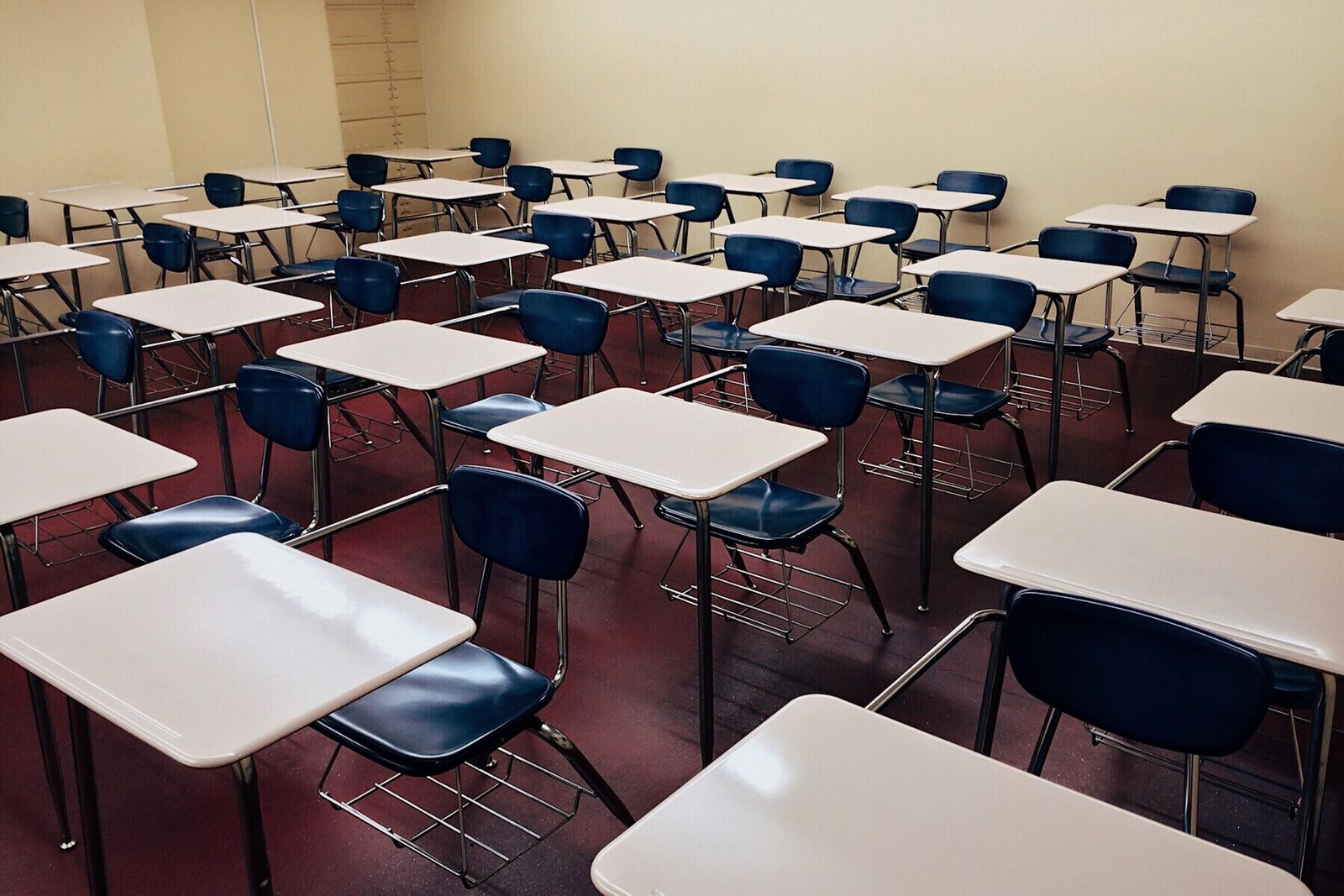
What do school and university cleaning services in Miami include?
Every zone a campus has, on one contract with one account manager.
Desks, chairs, door handles and shared supplies wiped and disinfected nightly; floors vacuumed or mopped; trash pulled.
Details Restrooms on a child-height standardFixtures, partitions, floors and the low surfaces adults forget — disinfected every school day and restocked.
Details Cafeteria & food areasTables, seating, floors and drains after service; food-contact surfaces sanitized, not just disinfected.
Details Gyms, locker rooms & play areasMats, equipment touchpoints, benches and lockers on a documented rotation.
Details Electrostatic disinfectionWhole-room charged-mist disinfection for illness spikes, before breaks and for summer resets.
Details Summer & break deep cleansFloors stripped and refinished, carpets extracted, high dusting, furniture pulled — the reset a school year needs.
DetailsWhat is the difference between sanitizing and disinfecting a school?
Cafeteria tables and food-prep surfaces are sanitized — bacteria reduced to a safe level with a food-safe product. Desks, door handles, restroom fixtures and shared supplies are disinfected — pathogens on the product label killed, which only happens if the surface stays wet for the full label dwell time. Most school cleaning fails on the second half of that sentence: a spray-and-wipe that dries in 20 seconds disinfects nothing. Our crews are trained on dwell time, log it, and use EPA-registered products chosen for child spaces. Read the detail in our school and daycare cleaning guide and on cleaning vs. sanitizing vs. disinfecting.
Sanitizing "reduces the bacteria identified on the product's label on surfaces"; disinfecting "destroys or inactivates both the bacteria and viruses identified on the product's label." Neither happens if the surface dries before the labelled contact time.
U.S. EPA — the difference between products that disinfect, sanitize and cleanHow often should a school be cleaned?
Every school day for anything a child touches; every break for the floors; within 24 hours for an outbreak. The framework we start from:
| Area | Frequency | What that means |
|---|---|---|
| Restrooms | Every school day (+ mid-day porter where enrolment is high) | Disinfected at label dwell time and restocked; low surfaces included. |
| Classrooms & high-touch points | Every school day | Desks, handles, switches, shared supplies; floors nightly. |
| Cafeteria | After every service | Sanitize food-contact surfaces; disinfect seating; floors and drains. |
| Gym, locker rooms, play equipment | Daily to 3×/week | By schedule of use; mats and touchpoints disinfected. |
| Offices & front desk | Nightly | Office standard — the room parents see. |
| Carpet extraction & hard-floor care | Each break | Winter and spring breaks; full strip-and-refinish in summer. |
| Outbreak response | Event-driven | Electrostatic disinfection within 24 hours of a reported cluster. |
What does educational facility cleaning cover?
Educational facility cleaning is the whole campus rather than the classrooms: teaching space, corridors and lockers, cafeteria and servery surfaces, gym and locker rooms, libraries and labs, administration, and the restrooms that take an entire school's traffic in four short bursts a day. Cleaners for schools are scoped around the bell schedule, because almost nothing can be done while it is running and everything has to be finished before it starts again.
That rhythm is what makes school facility cleaning its own discipline. Restrooms and high-touch surfaces are held through the day by a porter; classrooms, corridors and the cafeteria run on the nightly programme; and a school deep cleaning takes the building apart during the long breaks — winter, spring and summer — when floors can be stripped and refinished, carpet extracted and furniture moved without losing a teaching day. Booking that work early is the difference between doing it properly and doing it in a weekend.
Purity Pro also runs school building maintenance services alongside the cleaning scope: consumables held at par, entry matting managed, and an outbreak protocol written in advance rather than improvised in February. That plan is the piece most campuses do not have until they need it, and it is why a nurse's call at 8 a.m. can become a targeted disinfection by lunch instead of a conversation about availability.
Where do you provide school cleaning in Miami?
Private and charter campuses in Coral Gables, Kendall, Doral, Miami Lakes and Miami, and Broward from Pembroke Pines to Fort Lauderdale. Church with a school attached? See our note on church janitorial services.
What heads of school and facilities directors ask us.
Do you clean private schools, charter schools and daycares in Miami?
Yes. Purity Pro runs recurring school cleaning contracts for private and charter schools, early-learning centers and daycares, and individual university and college buildings across Miami-Dade and Broward. Public district schools are typically cleaned in-house; we serve the independent sector.
Are your crews background-checked for work around children?
Every crew member is a W2 employee with a Level 2 background check, and we will provide the documentation your school requires for vendors working on campus. The same crew is assigned to your school so faces are familiar to staff. Crews work after dismissal or on a schedule that keeps them out of occupied classrooms.
What is the difference between sanitizing and disinfecting in a school?
Sanitizing reduces bacteria to a safe level and is what food-contact surfaces in the cafeteria need. Disinfecting kills the pathogens on the product label and is what desks, restrooms and high-touch surfaces need — but only if the product stays wet for its full label dwell time, which is the step most vendors skip. Our guide on cleaning vs. sanitizing vs. disinfecting explains it; our crews are trained on it.
How do you handle a flu or norovirus outbreak?
The scope includes an escalation plan in writing: on a reported cluster we bring electrostatic disinfection to the affected rooms and shared spaces within 24 hours, shift to an EPA List N or List G disinfectant as appropriate, and increase high-touch frequency until the school clears it. You should not have to negotiate this during an outbreak; it is already in the contract.
How much does school cleaning cost?
On labour hours, driven by enrolment, restroom count, cafeteria service and how many buildings are on the campus. A 150-student private school and a 600-student charter with a gym and a cafeteria are very different jobs. We quote in writing after a walkthrough, with summer deep cleans and outbreak response priced as line items so nothing is a surprise in February.
Let's make your facility spotless & compliant.
Book a free, no-obligation walkthrough. We'll assess your space, answer your questions, and build a quote tailored to your facility — usually within 24 hours.