Electrostatic Cleaning & Disinfection Services in Miami
Electrostatic disinfection services cover what wiping can't. Where a cloth reaches only the surfaces a hand can touch, Purity Med's charged disinfectant mist wraps around chair legs, cable runs, undersides, and the crevices in between — full-surface coverage for facilities across Miami-Dade and Broward.
It's the deep-disinfection layer smart facilities schedule monthly or quarterly — and the reset button before inspections, flu season, or reopening after an event.
Source EPA, Pesticide Labeling Questions & Answers
What's included
Wall to wall, top down, wrapping the backs and undersides a cloth never reaches.
Details EPA-registered products at full dwellThe product, its registration number and the contact time held all go in your written scope.
Details Outbreak and emergency responseThe chemistry changes with the pathogen. Same equipment, different product, different plan.
Details Clinical and exam-room settingsScheduled around patient hours with a do-not-touch list agreed in advance.
Details Company-wide disinfection programsThe same layer applied across offices, common areas and shared facilities.
Details Inside your janitorial contractA scheduled line item on the building program rather than a separate vendor call.
DetailsWhy it matters
The mist wraps surfaces — front, back, and underside — that wiping physically can't.
Applied after cleaning, never instead of it, so the disinfectant meets a clean surface.
A monthly or quarterly layer that keeps baseline bioburden down.
- Full-room electrostatic application, wall to wall
- EPA-registered disinfectant matched to your setting
- 360° coverage of complex surfaces and undersides
- Scheduled programs or one-time applications
- Safe for electronics-adjacent application when scoped
What the charge actually does to a droplet
The disinfectant is given an electrical charge as it leaves the sprayer. Charged droplets are attracted to surfaces that are neutral or grounded — which is nearly everything in a room — and because they repel each other, they spread out rather than pooling, then wrap around edges to reach the back and underside of what they land on.
That is the whole advantage, and it is worth being precise about it: this is a coverage gain, not a kill-power gain. It is the same EPA-registered disinfectant you would apply with a cloth, placed where a cloth and a trigger sprayer routinely miss — chair frames, cable runs, equipment undersides, the crevices between things.
If a quote for electrostatic disinfection does not include a pre-clean, it is a quote for a different job. Spraying a soiled surface consumes the disinfectant before it can work — the result looks identical and achieves far less.
What an electrostatic sprayer is, and what the label has to allow
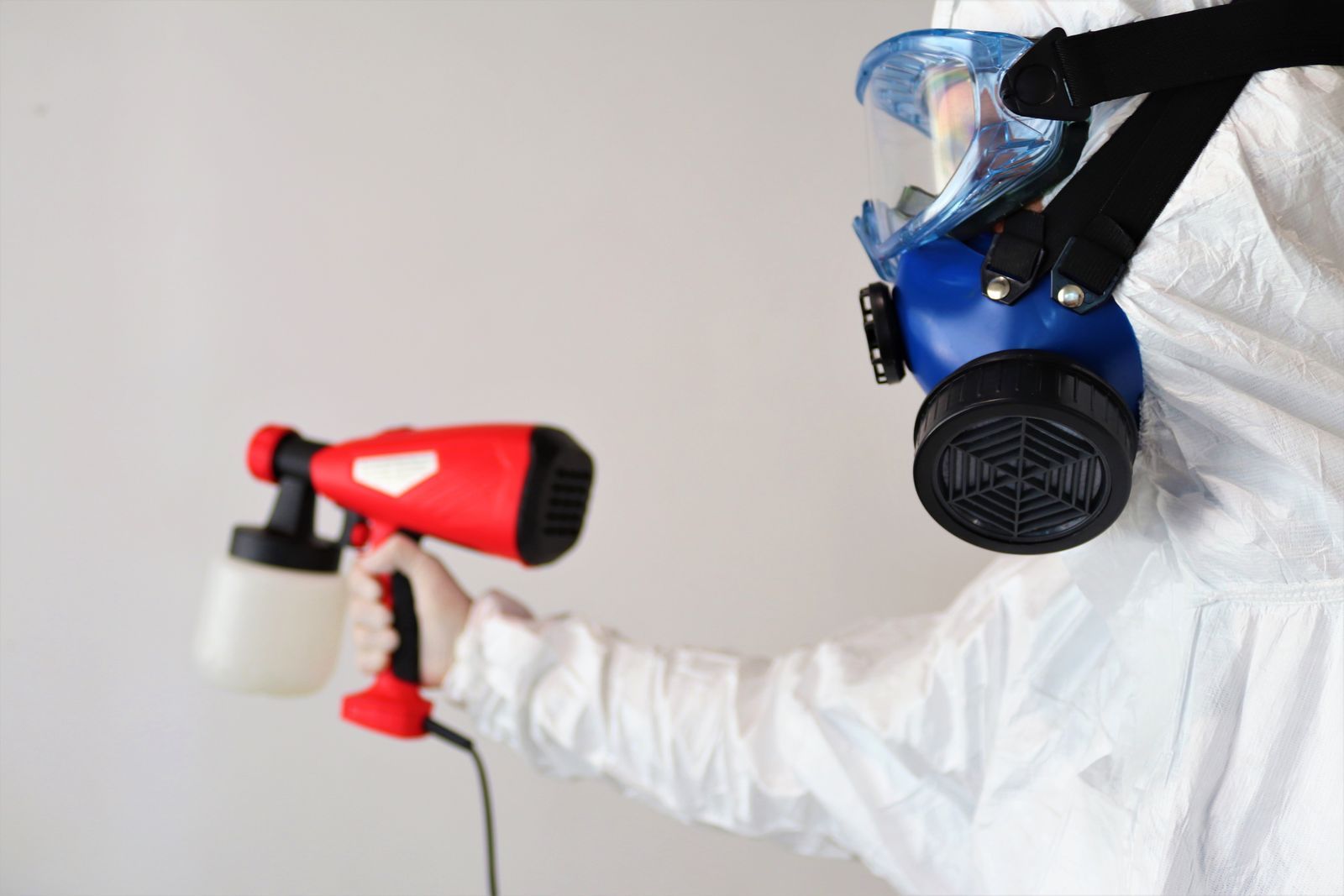
An electrostatic sprayer is a handheld or backpack unit that charges the disinfectant at the nozzle. The machine is the easy part to buy. What decides whether the spray is legal and effective is the product in the tank: EPA considers adding electrostatic directions to a disinfectant’s registration only when specific conditions are met, and the label amendments it lists call for droplets with “a volume median diameter (VMD) ≥40 µm” and “instructions to reapply if the surface dries before the contact time is achieved” (EPA). Droplets that size are also what separates an electrostatic sprayer from a fogger in EPA’s own terms.
That is why electrostatic cleaning is a service rather than a gadget. The crew has to pre-clean, choose a product whose label covers electrostatic application, watch the surface stay wet for the full contact time and re-spray where it flashes dry — then hold the room empty for the label’s re-entry interval. Owning the sprayer does none of that on its own.
Electrostatic spraying, fogging and wiping are not interchangeable
Vendors use the words as if they mean the same thing. They do not, and the difference decides whether the work is worth buying.
One rule governs all three: the product must be labeled for the method being used. Applying a disinfectant by a route its label does not cover is off-label use, whatever the equipment can physically do.
| Method | What it does | Pre-clean needed | Where we use it |
|---|---|---|---|
| Wiping | Mechanical removal plus disinfection, but only where a hand reaches | Yes | Every visit, on high-touch surfaces |
| Electrostatic spraying | Drives charged droplets onto surfaces and wraps them around edges | Yes | Periodic amplifier over routine wiping |
| Fogging | Fills the air with suspended droplets and lets them settle | Yes | Rarely — coverage is uncontrolled and settling is uneven |
Note How Purity Services does this work; our method, not an industry standard.
Why we clean first, and why that makes us the more expensive quote
Soil shields organisms from the disinfectant and consumes the active ingredient before it can do anything. That is why cleaning comes first and disinfection second, always — and why electrostatic application replaces neither.
A crew that walks in and sprays is faster and cheaper than a crew that cleans, then sprays, then holds the surface wet for the full label contact time. It also achieves substantially less. We would rather explain the gap than win on a number and deliver theatre.
Where electrostatic disinfection is worth it — and where it isn't
Worth it: after a confirmed illness or outbreak in the space; through flu season in waiting rooms and shared offices; anywhere the geometry is complex enough that wiping genuinely cannot reach — exam chairs, equipment banks, cable runs; and as a reset before an inspection, a reopening or a new tenant.
Not worth it: as a substitute for nightly wiping, which is the layer that actually removes soil; on porous or soft surfaces, where extraction is the right tool and a mist is not; or on a calendar with no reason behind it. If your building does not have one of the situations above, we will say so.
Electrostatic disinfection across Miami-Dade & Broward
We run electrostatic programs for medical practices, offices and shared facilities throughout South Florida — clinical suites in Miami, Coral Gables and Kendall, corporate and flex space in Doral and Hialeah, and multi-tenant property up through Fort Lauderdale.
Common questions
Is electrostatic spraying safe for a medical office?
Yes — we use EPA-registered disinfectants applied per label with appropriate ventilation and re-entry intervals, scheduled after hours so the space is ready by open.
How often should we schedule it?
Most medical clients run monthly or quarterly, increasing frequency during flu season or after illness events in the office.
What is electrostatic disinfecting cleaning?
The disinfectant is given an electrical charge as it leaves the sprayer, so the droplets are attracted to surfaces and wrap around to the back and underside of what they land on. It is a coverage advantage, not a stronger chemical — the same EPA-registered disinfectant, placed where a cloth and a trigger sprayer routinely miss.
Is electrostatic sanitization the same as fogging?
No, and the difference matters. Fogging fills a room with suspended droplets and lets them settle. Electrostatic application drives charged droplets onto surfaces and wraps them around edges. The product must also be labeled for the method being used — applying a disinfectant by a route its label does not cover is off-label use, whatever the equipment can physically do.
Do surfaces have to be cleaned before electrostatic disinfection?
Yes, and anyone who tells you otherwise is selling equipment rather than results. Soil shields organisms from the disinfectant and consumes the active ingredient before it can work. Cleaning comes first, disinfection second — electrostatic application replaces neither. It is why our price is not the lowest quote you will get.
Can we buy an electrostatic sprayer and do it ourselves?
You can buy the machine; the hard part is everything around it. The disinfectant must be one whose EPA label covers electrostatic application, surfaces have to be cleaned first, the product has to stay wet for its full contact time with re-spraying where it dries early, and the room has to stay empty for the label's re-entry interval. Facilities that run it in-house successfully treat it as a trained, logged procedure rather than a quick spray.
How much does electrostatic disinfection cost?
It is scoped by the space rather than sold by the room — square footage, how much of the area is high-touch and geometrically complex, whether a pre-clean is included, and how often you want it. A one-off outbreak response and a standing seasonal programme price very differently. The walkthrough produces a written number.
Related reading: how electrostatic disinfection works · what electrostatic disinfection costs · cleaning vs sanitizing vs disinfecting
Let's make your facility spotless & compliant.
Book a free, no-obligation walkthrough. We'll assess your space, answer your questions, and build a quote tailored to your facility.
Official sources
Each source was opened and checked against this page on November 18, 2026.