Laboratory Cleaning Services in Miami for Clinical and Research Labs
The short answer. Laboratory cleaning services cover the housekeeping side of a lab: floors, restrooms, offices, break rooms, high-touch points and shared surfaces away from the bench. CDC recognises four biosafety levels, BSL-1 to BSL-4, and at every one of them "routinely decontaminating work surfaces" is a standard practice of the lab itself (CDC), so bench decontamination and regulated waste stay with your staff under your exposure control plan. A contract crew's job is everything around that work, done to your protocol and on your schedule.
Purity Med is the medical department of Purity Services, cleaning clinics, dental practices, surgery centres and labs across Miami-Dade and Broward. For lab cleaning services that means clinical and diagnostic labs, specimen-collection and draw sites, research and teaching labs, and the offices and corridors around them. We are family-owned, woman-owned and bilingual in English and Spanish. Crews are bloodborne-pathogen trained W-2 employees with Level 2 background checks, never subcontractors, and the scope is written after a walkthrough with your lab manager or biosafety officer, so it matches your exposure control plan rather than a generic janitorial checklist.
Most laboratory cleaning companies quote a lab like an office with sinks. It is not one. The questions that set the scope are which rooms are restricted while work is under way, which surfaces your staff decontaminate and when, what happens to each waste stream, and which products your protocol allows. We settle those before the first visit and write them into the contract.
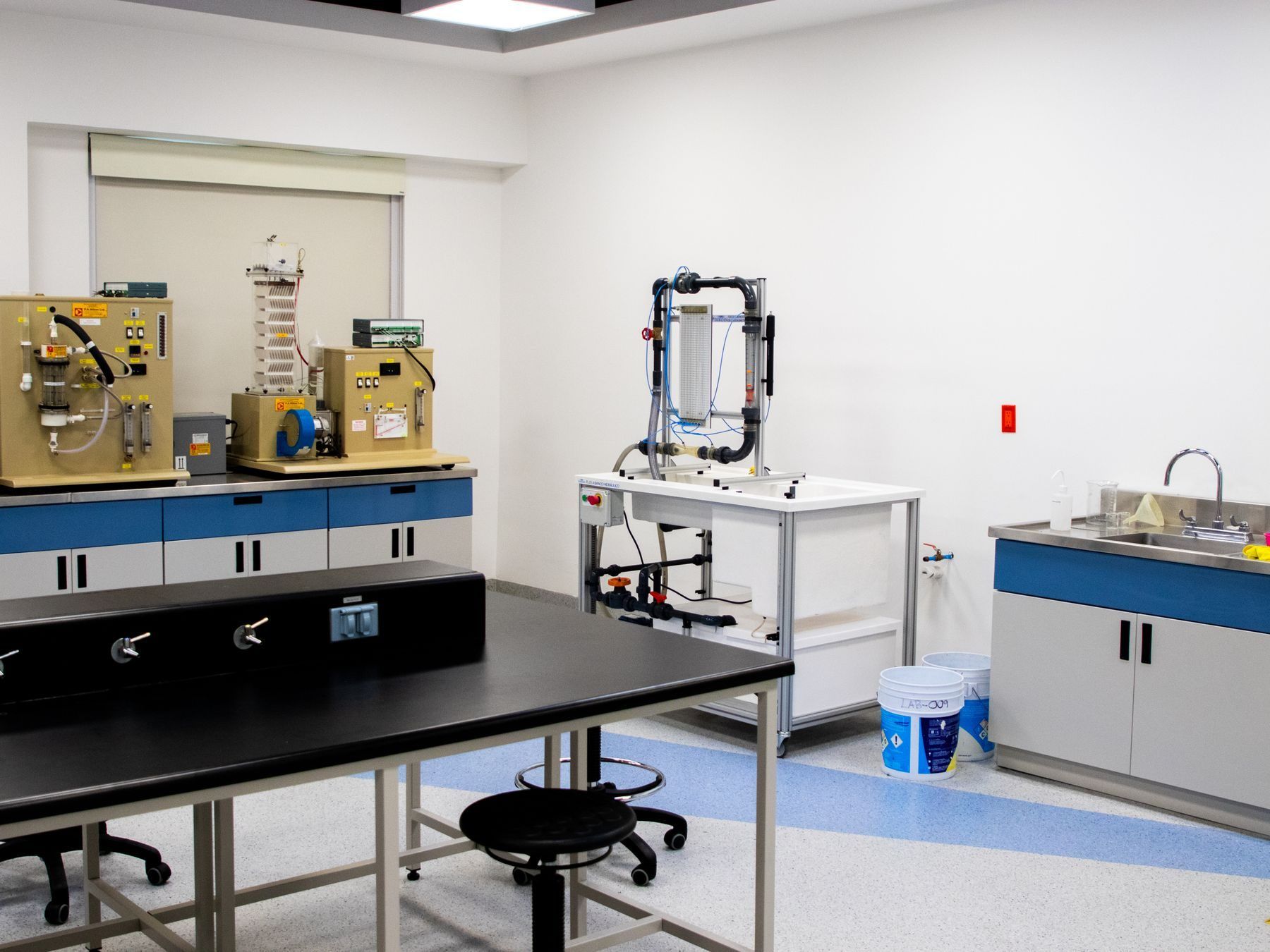
What do laboratory cleaning services include?
Six zones of work outside the bench. Bench decontamination, instruments and regulated waste stay with your team; everything here is ours, on one Purity Med contract.
Resilient and sealed floors damp-mopped with the product your protocol names, worked after staff have cleared and decontaminated the benches.
Details Restrooms & changing roomsFixtures disinfected at full contact time, dispensers restocked, floors and partitions cleaned every service day.
Details High-touch pointsDoor hardware, push plates, light switches, badge readers, elevator buttons and break-room fixtures, every visit.
Details General-waste linersTrash and recycling liners changed per your facility protocol. Red-bag, sharps and chemical waste stay with your staff.
Details Offices, write-up areas & break roomsDesks, glass, floors and kitchens on an office standard, so the lab team is not cleaning its own break room.
Details Common-area disinfectionEPA-registered disinfectant held for its full label contact time on corridors, reception and the shared surfaces in scope.
DetailsWhat does a lab cleaning crew clean, and what stays with your staff?
The line is drawn by who does the work, not by how dirty a surface looks. OSHA's Bloodborne Pathogens Standard requires contaminated work surfaces to be decontaminated after procedures are completed, immediately or as soon as feasible after any spill of blood or other potentially infectious materials, and at the end of the shift if they may have become contaminated (29 CFR 1910.1030(d)(4)(ii)(A)). Those moments are set by the assay or the experiment, and the people who know what was on the bench are the people who ran it. So benches, biosafety cabinets, centrifuges and instruments, specimen storage, sharps containers and regulated waste stay with lab staff.
"The employer shall determine and implement an appropriate written schedule for cleaning and method of decontamination based upon the location within the facility, type of surface to be cleaned, type of soil present, and tasks or procedures being performed in the area."
OSHA 29 CFR 1910.1030(d)(4)(i) — Bloodborne Pathogens, HousekeepingThat written schedule is yours, and a contract crew should work inside it rather than replace it. Our part is the rest of the building (floors, restrooms, offices, break rooms, corridors and high-touch points), done to the products, sequence and timing your plan sets. OSHA itself notes that housekeeping personnel in some industries may be at risk of exposure to bloodborne pathogens (OSHA), which is why Purity Med crews are bloodborne-pathogen trained. Our guide to OSHA cleaning requirements walks through the same standard as it applies to a dental practice.
How does a cleaning crew follow your lab's protocol?
It starts at the walkthrough. We walk the lab with your manager or biosafety officer and map three kinds of space: areas we clean every visit (offices, corridors, restrooms, break rooms), lab rooms we enter only in agreed windows and only after benches are cleared, and areas we do not enter at all. CDC's description of BSL-2 labs is that "access to the laboratory is restricted when work is being conducted" (CDC), so lab rooms are scheduled after the work, not during it. We agree the disinfectant and its contact time, the PPE your site requires, how a crew reports anything found out of place (a spill, an uncapped sharp, a damaged bag) and who on your team takes it from there. Then it goes into a written scope and a per-visit checklist. The reference behind your program, the CDC and NIH's Biosafety in Microbiological and Biomedical Laboratories, has been "the cornerstone of biosafety practice in the United States since its initial release in 1984" (CDC, BMBL 6th edition). Your biosafety program is built on it, and our scope is built on your program.
What does a lab need beyond a cleaning service?
Some lab work looks like cleaning and is not ours to do. A significant spill of blood, cultures or chemicals is a response under your exposure control plan or spill plan, and biohazard cleanup after an incident is a specialist trade we do not perform. Regulated medical waste is collected by your licensed hauler, not by a janitorial crew. Containment suites at BSL-3 and above, and certified cleanrooms, run their own entry, gowning and training rules; whether any outside crew goes in is your biosafety officer's decision, and we scope only what the lab authorises. And if your lab is small, say a single draw room inside a practice, it may not need a separate lab contract at all: it fits inside a medical office cleaning programme, and we will tell you so at the walkthrough. Dental labs and sterilization areas are covered the same way under dental office cleaning.
How often should a laboratory be cleaned?
A clean laboratory runs on several clocks at once. Restrooms and high-touch points follow headcount; lab floors follow the work schedule; the bench follows the procedure, and that clock belongs to your staff. Here is the framework we start from, then tune to your hours, rooms and protocol at the walkthrough. Where the difference between cleaning, sanitizing and disinfecting matters for a surface, our plain-English guide sets out which one the job calls for.
| Area | Frequency | What that means |
|---|---|---|
| Lab floors (non-containment rooms) | Nightly or by shift pattern | Damp-mopped with the agreed product after staff have cleared and decontaminated the benches. |
| Benches, biosafety cabinets, instruments | Lab staff, per procedure | After procedures, after spills, and at shift end if contaminated, under OSHA 1910.1030(d)(4)(ii)(A). Not a cleaning-crew task. |
| Restrooms & changing rooms | Every service day | Disinfected at full contact time and restocked; a mid-day check where headcount calls for one. |
| High-touch points | Every visit | Door hardware, switches, badge readers, elevator buttons and shared break-room fixtures. |
| Offices, write-up areas, break rooms | Nightly or 3×/week | Office standard: desks, glass, floors, trash and recycling. |
| General waste & recycling | Every visit | Liners changed per facility protocol. Regulated waste stays with your staff and your licensed hauler. |
| Floor deep scrub & refinish | Quarterly | Scheduled to a shutdown window so no lab room is entered while work is under way. |
Where do you provide laboratory cleaning in Miami?
Across Miami-Dade and Broward. In Miami, the clinics and labs around the Health District; in Doral and Miramar, the lab and flex suites of the business parks; in Kendall and Plantation, the diagnostic labs and draw sites that sit beside the area's hospitals and practices. The same Purity Med crews cover Coral Gables, Hialeah, Fort Lauderdale and the cities between.
What lab managers ask us.
What do laboratory cleaning services include?
The housekeeping of the lab and the building around it: lab floors once the benches are cleared, restrooms and changing rooms, offices, write-up areas and break rooms, corridors and reception, high-touch points such as door hardware and badge readers, and general-waste liners per your facility protocol. Bench decontamination, biosafety cabinets, instruments and regulated waste are not included; they stay with your staff under your exposure control plan.
Do your crews clean lab benches or biosafety cabinets?
Not as part of a standard scope. OSHA ties work-surface decontamination to the procedures themselves (after the work, after spills and at shift end), and CDC lists routine work-surface decontamination as a standard practice of the lab. The people who ran the work know what was on the surface. If your written protocol assigns a crew a specific, already-decontaminated surface, we follow that protocol in writing; we do not decide it ourselves.
Do you handle biohazard or regulated medical waste?
No. We change general trash and recycling liners as your facility protocol directs. Red-bag waste, sharps containers and chemical waste stay with your staff and your licensed hauler, and biohazard cleanup after a spill or incident is a specialist trade we do not perform. If a crew finds a spill, an uncapped sharp or a damaged bag, they leave it untouched and report it to the contact your protocol names.
Are your crews trained to work in a laboratory?
Purity Med crews are bloodborne-pathogen trained, and every crew member is a W-2 employee with a Level 2 background check, never a subcontractor. Before the first visit we walk the lab with your manager or biosafety officer and agree which rooms we enter and when, the products and contact times, the PPE your site requires and how to report anything out of place. We are licensed, bonded and insured, with a certificate of insurance on request.
How much do lab cleaning services cost in Miami?
They are priced on labour hours, not square footage alone. The number of lab rooms and how they are scheduled around your work, restroom load, office space, floor type and the documentation your protocol requires all move the number. We quote in writing after a walkthrough, and the four-hour visit minimum is what makes a small lab or a single draw site workable as its own contract.
What should I ask laboratory cleaning companies before hiring one?
Five things. Are the crew members employees or subcontractors, and how are they background checked? When was their bloodborne-pathogen training, and can you see the record? Which disinfectants do they use, with what EPA registration numbers and contact times? Will the written scope separate their work from bench decontamination and regulated waste? And can they hand you a current certificate of insurance? A vendor that cannot answer all five in writing is quoting a lab like an office.
Do you clean research labs as well as clinical labs?
Yes, within the same scope. University, biotech and teaching labs get the same line between housekeeping and bench work as clinical and diagnostic labs; what changes is the schedule, because research labs often run late or around the clock. Containment suites and certified cleanrooms have their own entry and gowning rules, and whether any outside crew enters them is your biosafety officer’s call.
Let's make your facility spotless & compliant.
Book a free, no-obligation walkthrough. We'll assess your space, answer your questions, and build a quote tailored to your facility — usually within 24 hours.