Commercial Carpet Cleaning in Miami-Dade & Broward
The short answer. Vacuuming does most of the work and extraction does the rest. The Carpet and Rug Institute — the carpet industry's own trade association — states that “90 to 95% of all dry soil by weight can be removed from carpet by following a routine vacuuming schedule”, and recommends “a deep cleaning every 12-18 months” (CRI). In a commercial building the 12–18 month figure is a floor rather than a target: traffic lanes in an office lobby need extraction two to four times a year, and the rest of the floor rarely needs it that often.
Commercial carpet cleaning is the deep extraction that removes what daily vacuuming can't — the soil, allergens, and odor that live down in the fibers and backing. It matters for more than looks: carpet is a documented reservoir for dust, allergens, dust mites, and pollutants, and ordinary foot traffic and vacuuming can stir them back into the air (American Lung Association). Purity Restore cleans commercial carpet across Miami-Dade and Broward with hot-water extraction that actually empties that reservoir.
As a family-owned, woman-owned company serving Miami-Dade and Broward, we handle everything from a single office to a full building on a program — offices, clinics, retail, and common areas, reset to the fiber.
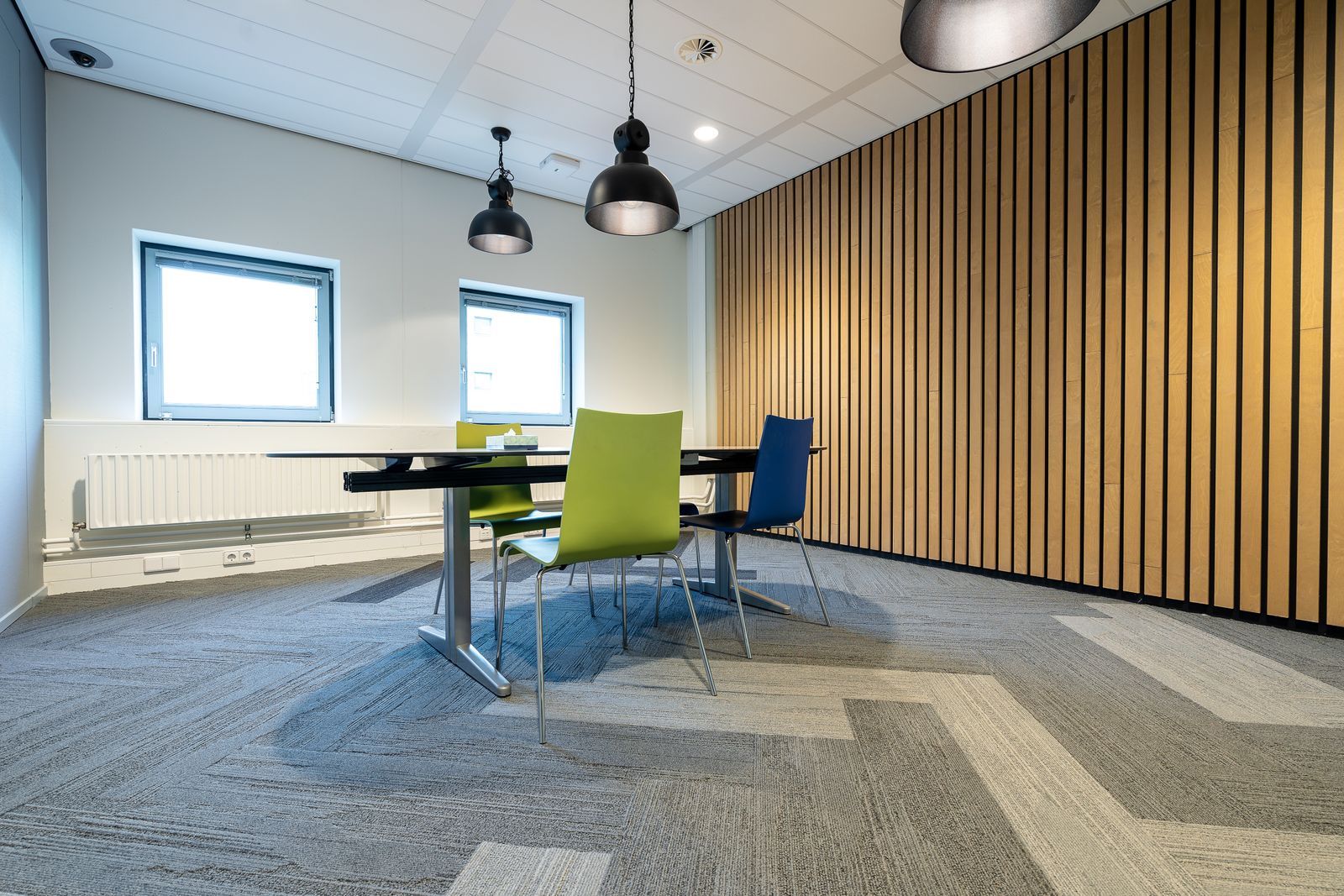
What does commercial carpet cleaning include?
From a one-time extraction to a building-wide program. Each piece links to the service behind it.
Deep extraction that reaches the fibers and backing to pull soil vacuuming leaves behind.
Details Scheduled carpet programsZone-based extraction on a written calendar so building carpet never reaches the gray stage.
Details Spot & stain treatmentTargeted treatment for coffee, ink, grease, and traffic-lane staining.
Details Upholstery & fabric sanitizationWaiting-room seating and fabric extracted and sanitized — the surface everyone touches.
Details Odor & allergen removalExtraction pulls the dust, dander, and odor sources that air fresheners only mask.
Details Post-event & high-traffic resetsA full carpet reset after events, seasons, or heavy wear, folded into a deep clean.
DetailsWhy does carpet need extraction and not just vacuuming?
Worth noting that the two authorities here disagree, and it is useful to know why. The American Lung Association treats carpet as a reservoir that can release dust and allergens back into the air. The Carpet and Rug Institute, which represents carpet manufacturers, argues the opposite — that carpet “acts as a filter by trapping allergens and keeping them out of the breathing zone.” Both have an angle. What they agree on is the part that matters to a facility manager: whatever is in the carpet needs to come out on a schedule, vacuuming removes most of the dry soil, and extraction removes what vacuuming cannot reach.
Vacuuming lifts the loose soil off the top. But carpet works like a filter that never gets changed — it traps dust, dander, pollen, and grit deep in the pile and backing, and every footstep works some of it back into the air you breathe.
Carpet acts as a reservoir for dust, allergens, dust mites, and pollutants — and walking or vacuuming can re-suspend them into the air.
American Lung AssociationHot-water extraction is the answer: heated solution driven into the fibers and immediately recovered, carrying the embedded load out with it. That's the difference between carpet that looks vacuumed and carpet that's actually clean — and it's why we treat carpet care as part of a building's indoor-air-quality picture, not just its appearance.
How often should commercial carpet be cleaned?
By traffic and use. Here's the framework we build carpet programs around, then tailor to your building at the walkthrough.
| Area | Cadence | Notes |
|---|---|---|
| Common-area carpet (high traffic) | Quarterly | Lobbies, corridors, and entries take the most soil and show it first. |
| Office & tenant suites | Semi-annually | Adjusted by use — call centers and clinics move up. |
| Spot & spill treatment | As needed / on rounds | Fast treatment keeps a spill from setting into a permanent stain. |
| Full building reset | Annually or event-driven | A property-wide extraction that resets the baseline. |
Ongoing building carpet is best handled on our commercial floor & carpet programs; one-time and restoration-grade work runs through floor deep restoration.
Which carpet cleaning method does your building actually need?
Three are in common commercial use and they are not interchangeable. Hot-water extraction is the deep clean: hot solution injected under pressure, agitated, then recovered along with the suspended soil. It removes the most and it is the method the manufacturer warranty usually names. The trade-off is dry time — typically a few hours with good airflow, which is why it runs overnight or over a weekend.
Encapsulation uses a polymer that crystallises around soil so the next vacuum pass lifts it out. It dries in under an hour, which makes it the right tool for an occupied corridor or a lobby that cannot be closed, and it is genuinely effective on light to moderate traffic soil. What it does not do is empty the backing. Run on its own indefinitely, it postpones extraction rather than replacing it.
Bonnet cleaning — an absorbent pad spun over damp carpet — is a surface appearance method. It has a legitimate place as a fast touch-up before a visit or a showing. It is not a deep clean, and used as a building's only programme it drives soil down into the pile and shortens the carpet's life. Any vendor selling bonnet work as their primary commercial service is selling you a schedule, not a result.
What we usually put in front of a facility manager is a blend: encapsulation on the traffic lanes at a short interval to hold appearance, extraction on the whole floor two to four times a year depending on traffic, and a written interval per zone rather than one number for the building.
Do you clean upholstery, cubicle panels and fabric partitions?
Yes, and they are usually the most neglected soft surface in a building. Upholstery cleaning in Miami offices tends to get requested only once a chair is visibly marked, by which point the soil has been ground into the weave for a year. Reception seating, conference chairs, waiting-room furniture and breakroom banquettes all take body oils and hand soil continuously, and they respond far better to a scheduled interval than to a rescue.
Fabric-panel cubicle systems are the other one. They collect airborne dust and, in a building with any humidity problem, they hold odour long after the source is fixed. Panels get a low-moisture method rather than extraction, because saturating a panel core is how you create the smell you were trying to remove.
Method follows the fabric code, not the schedule: W-coded fabrics take water-based cleaning, S-coded take solvent only, and the wrong one bleeds colour or leaves rings that no second attempt fixes. We check the tag before anything touches the piece, and where a fabric is unmarked or delicate we test in a hidden area first and tell you if we think it should be left alone.
How much does commercial carpet cleaning cost in Miami?
Industry rate guides put carpet cleaning at $0.08 to $0.25 per square foot as a specialised service priced separately from a janitorial contract (ISSA). The spread is wide because it covers two different jobs: a straightforward extraction of open office carpet sits near the bottom, while heavily soiled traffic lanes, extensive furniture moving, spot and stain work, or a restorative first clean on carpet that has been neglected for years sit near the top.
Three things move a quote more than area does. Furniture — cleaning around a fully furnished open-plan floor is a different job from cleaning a cleared one, and moving workstations is labour. Condition — a first restorative clean costs more than the maintenance visits that follow, and we will tell you plainly when a carpet is past restoring and the honest answer is replacement. And access — overnight or weekend work, freight elevator windows and building COI requirements all carry real cost.
A recurring programme is materially cheaper per visit than reactive calls, for the same reason a floor cleaned nightly costs less per unit of clean than one rescued quarterly: carpet that never falls far behind does not need a restorative clean to catch up. For the wider picture see our Miami commercial cleaning cost breakdown.
Where do you provide carpet cleaning in Miami and Fort Lauderdale?
Purity Restore runs carpet cleaning services in Miami and across Broward: office floors and lobbies in Miami and Brickell, professional suites in Coral Gables and Kendall, corporate parks in Doral and Miami Lakes, plus carpet cleaning in Fort Lauderdale, Plantation, Pembroke Pines and Hollywood. Upholstery cleaning in Fort Lauderdale and Miami runs on the same visit where reception and conference seating is in scope. If you searched for carpet cleaners in Miami and need a building rather than a house, that is what this programme is.
What facility managers ask us.
How often should commercial carpet be cleaned?
High-traffic common areas — lobbies, corridors, entries — benefit from quarterly extraction; office and tenant suites usually run semi-annually, moving up for heavy-use spaces like clinics and call centers. Vacuuming between visits matters too, but only professional hot-water extraction removes the embedded soil and allergens that daily vacuuming can't reach.
What carpet cleaning method do you use?
Primarily hot-water extraction (often called steam cleaning), which injects heated solution deep into the fibers and backing and immediately recovers it along with the loosened soil. It's the method that reaches what vacuuming leaves behind. For specific carpet types or quick-dry needs, we match the method to the fiber and the schedule.
Does commercial carpet cleaning actually improve air quality?
It helps meaningfully. Carpet acts as a reservoir that traps dust, allergens, and pollutants, and normal foot traffic and vacuuming can stir them back into the air. Removing that embedded load with extraction reduces what gets re-aerosolized — which is why carpet care is part of an indoor-air-quality program, not just an appearance one.
How much does commercial carpet cleaning cost?
By square footage, carpet condition, and whether it's a one-time clean or a scheduled program — programs cost less per visit. We quote a written price after a walkthrough that measures the actual area and soil level, usually within 24 hours.
Let's make your facility spotless & compliant.
Book a free, no-obligation walkthrough. We'll assess your space, answer your questions, and build a quote tailored to your facility — usually within 24 hours.