Terrazzo Restoration: Can a 30-Year-Old Floor Really Be Saved?
Short version: yes, and it's rarely close. Here's why terrazzo is one of the only floors that gets better with age, what restoration actually involves, how to tell whether you're standing on it, and why half of South Florida is walking on hidden terrazzo.
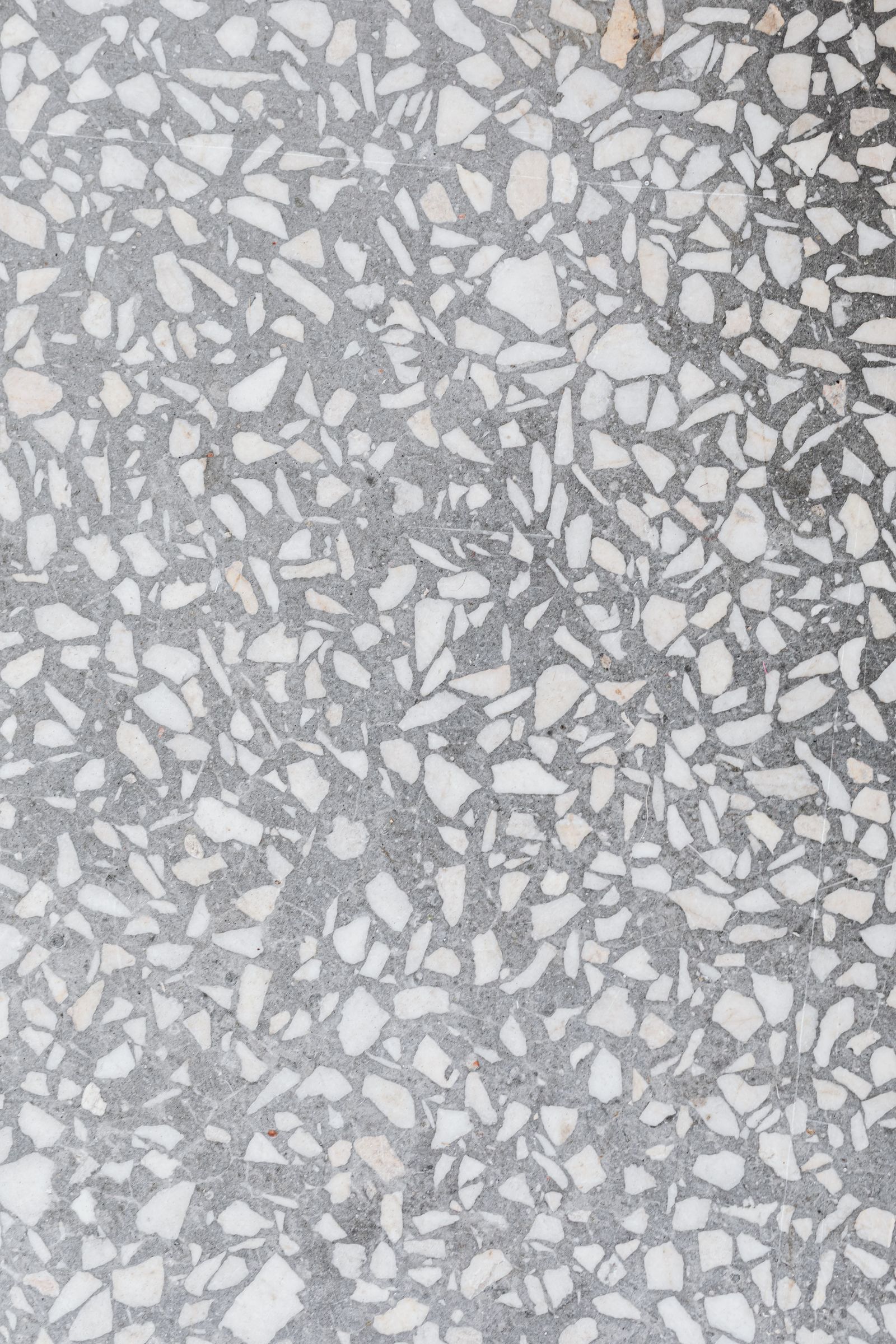
The short answer. Yes — a 30-year-old terrazzo floor can almost always be saved, and usually looks better afterward than the owner ever expected. The dullness you're looking at is rarely worn-out stone; it's decades of wax buildup, coatings, or carpet adhesive sitting on top of a floor that's structurally fine. Strip that away, repair any damage, and progressively polish the terrazzo underneath, and you get the original surface back — no tear-out, no replacement, at a fraction of the cost of new flooring.
Why is terrazzo almost always recoverable?
Terrazzo is unusual among floors: it's a solid, ground composite, not a thin surface layer or a coating that wears through. According to the National Terrazzo & Mosaic Association, a properly installed terrazzo floor is built to last the life of the building — commonly 75 to 100 years. Century-old courthouse terrazzo floors are still in good-to-excellent condition today, needing only chip repairs, occasional resealing, and routine maintenance.
Because the material is ground rather than coated, restoration works by removing a whisker of the surface to reveal fresh terrazzo beneath — which is exactly why it can be renewed again and again.
How do I know if I have terrazzo?
A surprising number of building owners don't, because the floor has been covered or dulled for so long that it reads as "old tile." Four tells:
- No grout lines. Terrazzo is poured as a continuous surface. If you see chips of marble or glass in a field with no repeating tile joints, that's terrazzo — the thin metal divider strips you may see are expansion joints, not grout.
- Visible aggregate. Irregular stone chips suspended in a matrix, in a pattern that never repeats. Printed vinyl that imitates it repeats every few feet; look closely and you'll catch it.
- Age and location. Mid-century South Florida commercial and institutional buildings were poured with terrazzo as standard.
- The closet test. Look inside a closet, under a raised platform, or behind a built-in — anywhere carpet or tile was never installed. That's usually where the original floor survives untouched.
If you find aggregate under a carpet corner, stop pulling and call for an assessment. The adhesive removal is the delicate part, and enthusiastic DIY scraping is one of the few ways to actually damage a terrazzo surface.
What does restoration actually involve?
"Restoration" isn't a mop and a prayer — it's a defined, mechanical process:
| Step | Target | What happens |
|---|---|---|
| Strip the buildup | Wax, coatings, adhesive | Decades of topical finish and carpet glue come off, exposing the actual terrazzo. |
| Repair | Chips, cracks, holes | Damage is filled and color-matched so the finished surface reads continuous. |
| Progressive diamond polish | Coarse → fine grits | Successive polishing steps erase scratch haze and bring back depth and reflection. |
| Seal & protect | Penetrating sealer | The pores are sealed so the restored surface resists staining and stays easier to maintain. |
The progressive diamond polishing is the heart of it: coarse grits cut past the scratch haze, and successively finer grits build the reflection back up. There's no topical shine involved — the polish is the stone itself, which is why it doesn't peel, yellow, or need re-coating like a waxed floor.
That distinction has a maintenance consequence worth understanding. A waxed floor needs its finish replaced on a cycle forever. A polished terrazzo floor needs periodic re-polishing and resealing, but never re-coating — so the long-run cost curve bends the other way. It's also why putting wax back onto restored terrazzo is a mistake: you'd be re-creating the exact problem that took decades to undo.
Miami's hidden-terrazzo goldmine
South Florida is terrazzo country. Mid-century and MiMo-era buildings across Miami-Dade and Broward were poured with terrazzo as standard, and a huge share of that floor is still there — buried under carpet glued down in the 1980s or dulled by decades of janitorial wax. In half the older buildings we walk, the "old tile floor" the owner wants to replace turns out to be original terrazzo waiting to be uncovered. Finding it is often the best flooring news a building owner gets all year, because the alternative they were budgeting for was a full replacement.
When isn't it worth restoring?
Honesty matters here: a small number of floors are past restoration — where the terrazzo topping has been ground too thin over many past refinishes, or where structural movement has caused widespread cracking that repair can't reconcile. A proper assessment tells you which side your floor is on before any money is spent. In the large majority of cases, though, the answer is the happy one.
What you can do this week
- Run the closet test. Find a spot where the original floor was never covered — a utility closet, under a raised counter, behind a built-in. Two minutes, and it tells you what you're actually standing on.
- Check your entry matting. Whatever your floor turns out to be, grit tracked in from outside is what dulls it. Proper walk-off matting at every entrance is the single cheapest thing you can do to extend the interval between polish cycles.
- Get the replacement quote you were already considering — then get a terrazzo restoration assessment. The comparison is usually not close, and knowing both numbers makes the decision take about a minute.
If your floors are VCT rather than stone, the maintenance logic is completely different — see strip and wax versus buff and burnish. And for where floor work sits in an overall budget, our 2026 commercial cleaning cost breakdown shows how periodic floor care is quoted.
Think there's terrazzo under there?
A free floor assessment identifies exactly what you have and what it would take to bring it back — before you budget a replacement you may not need.
Bringing it back
If you've got tired stone or a suspected terrazzo floor hiding under something, our terrazzo floor restoration service starts with an assessment that identifies exactly what you have and what it'll take to bring it back. It sits inside Purity Luster, our floor-care department, alongside deep floor restoration and a scheduled shine program that keeps a restored floor looking restored. Browse the full service list or see how we work across Miami-Dade and Broward, including Miami.
Quick answers
Can a 30-year-old terrazzo floor be restored?
Almost always. The dullness is rarely worn-out stone — it is decades of wax buildup, coatings, or carpet adhesive sitting on top of a floor that is structurally fine. Restoration strips the buildup, repairs chips and cracks, then progressively diamond-polishes the terrazzo underneath to bring back the original surface. Because terrazzo is a solid ground composite rather than a thin surface layer, it can be renewed repeatedly over the life of the building.
Can terrazzo that has been carpeted or waxed for decades be restored?
Yes, and it is one of the most dramatic reveals in floor work. Carpet adhesive and decades of wax hide the terrazzo, they do not damage it — the stone underneath is intact. Restoration removes the buildup, repairs any chips or cracks, then grinds and polishes the original terrazzo back to its installed clarity. Most owners are stunned by what was under there the whole time.
How much does terrazzo restoration cost?
It is priced by square footage and condition — how much buildup has to come off, how many chips or cracks need repair, and the level of polish you want. It is almost always a fraction of the cost of tearing out and replacing the floor, which is a large part of why restoration wins. A written number comes after a walkthrough that measures the actual floor and tests a small area.
How long will restored terrazzo stay looking good?
With entry matting and routine maintenance, one to three years between polish cycles depending on traffic — and scheduled maintenance passes keep it there indefinitely. Terrazzo is designed to last the life of the building; restoration simply resets the clock on its appearance.
Want this handled instead of researched?
A free walkthrough turns everything above into a written plan for your facility — usually quoted within 24 hours.
Let's make your facility spotless & compliant.
Book a free, no-obligation walkthrough. We'll assess your space, answer your questions, and build a quote tailored to your facility — usually within 24 hours.