Strip and Wax vs. Buff and Burnish: Which Do Your Floors Need?
These two floor-care services get confused constantly — and picking the wrong one wastes money or leaves your floors dull. Here's the difference, how to diagnose your own floor in five minutes, and what each one costs.
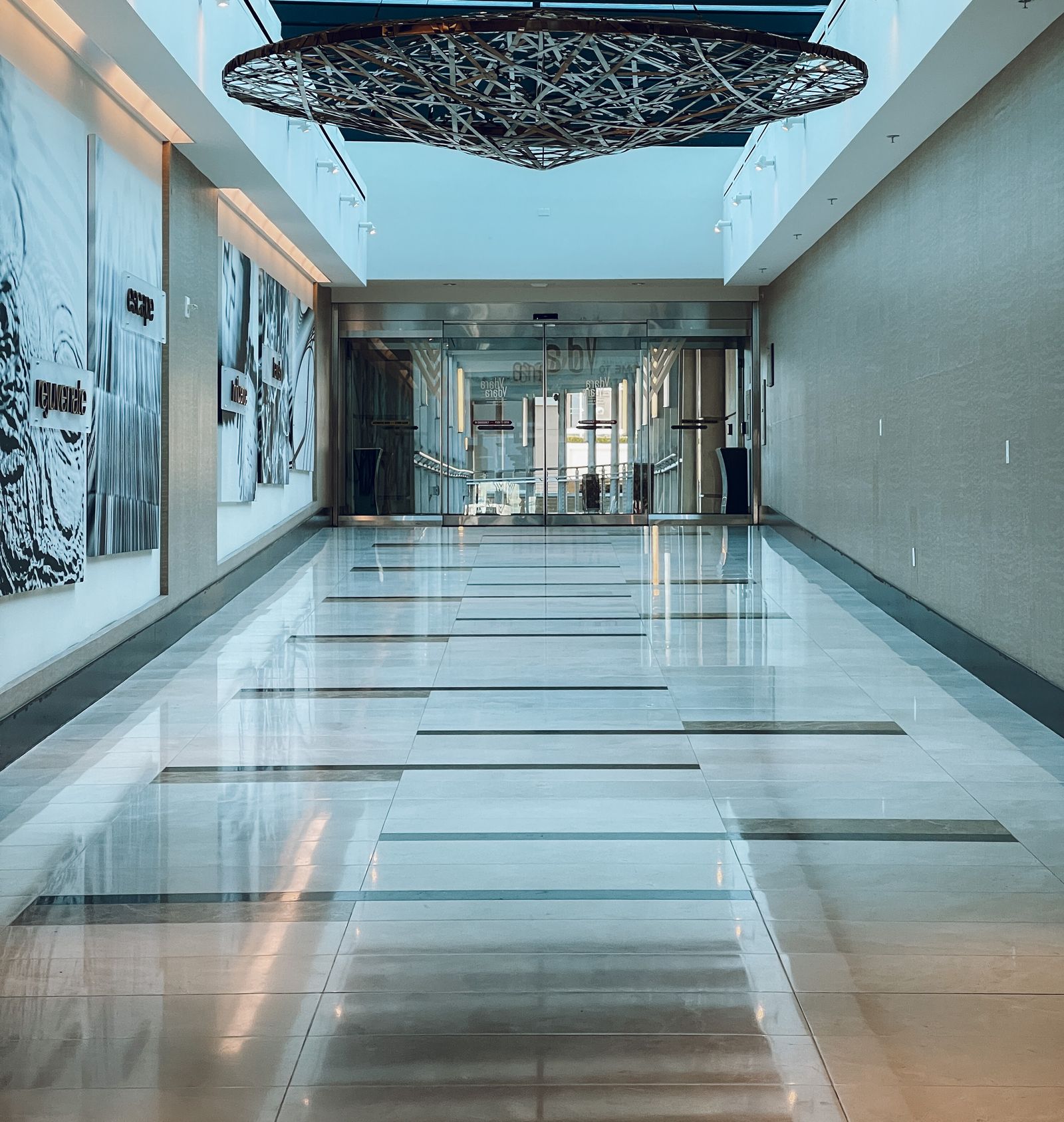
The short answer. Strip and wax removes the old finish entirely and lays down fresh coats — the reset for a floor that's yellowed, worn through, or unevenly built up, typically once or twice a year at roughly $0.30–$0.60 per square foot. Buff and burnish uses heat and friction to re-harden and re-gloss the finish that's already there, with no removal and no downtime, on a monthly-to-quarterly cadence at a fraction of the cost. One replaces the finish; the other maintains it. Burnishing can't rescue a spent finish, and stripping a healthy floor wastes money and a weekend.
Why do these two get confused?
Ask three facility managers the difference and you'll get three answers. It matters, because they solve different problems: one is a full reset, the other is maintenance. Confuse them and you either pay for a heavy reset your floor didn't need, or keep buffing a finish that's beyond saving — and burnishing a failed finish makes it look worse, because heat on degraded coats can amber them further.
What is strip and wax?
When a floor's finish has gone yellow at the edges, dark in the traffic lanes, and dull everywhere, the finish itself is spent — and no polishing brings it back. The fix is a strip and wax: the old finish is completely removed with stripping solution, the floor is rinsed and neutralized, and fresh coats of commercial-grade finish are applied evenly, each allowed to dry before the next.
It's the treatment that makes ten-year-old VCT read like it was newly installed. It's also the more involved job — stripping chemicals, typically four to six coats, and cure time before furniture returns — so it's scheduled after hours or over a weekend. Think of it as replacing the finish, not cleaning it.
The number of coats matters more than people expect. Too few and the floor has no depth and burns through in the lanes within months; too many, applied over a poorly neutralized base, and you get the cloudy, powdery buildup that forces another strip early.
What is buff and burnish?
Burnishing (high-speed buffing) works on the finish that's already there. A high-speed machine uses heat and friction to re-harden and re-gloss the existing coats, restoring that wet-look shine — without removing anything. It's quick, needs no cure time, and floors are back in service immediately.
Done on a schedule, burnishing is the difference between floors that always look polished and floors that look good for one month after each strip and wax. It also physically protects the finish by tightening its surface, which postpones the next full reset — and the cost that comes with it.
There's a middle option worth knowing: scrub and recoat, at roughly $0.20–$0.40 per square foot (ISSA). It removes the top layer of finish rather than all of it and adds fresh coats — for floors too far gone to burnish but not yet requiring a full strip. Used well, it's the single best tool for stretching the interval between strips.
Side by side
| Strip & wax | Scrub & recoat | Buff & burnish | |
|---|---|---|---|
| What it does | Removes and replaces the finish | Removes the top layer, adds coats | Polishes the existing finish |
| Best for | Yellowed, worn, or built-up floors | Finish that's tired but not failed | Healthy finish that's lost its shine |
| Frequency | 1–2× per year | 1–2× per year, between strips | Monthly to quarterly |
| Downtime | Hours to a weekend (cure time) | Several hours | None — back in service immediately |
| Typical rate | $0.30–$0.60 / sq ft | $0.20–$0.40 / sq ft | Fraction of either |
| Think of it as | Replacing the finish | Refreshing the finish | Maintaining the finish |
How do I tell which mine needs?
You can diagnose your own floor in about five minutes, in daylight, without a specialist:
- Dull but clean, finish still intact and even? Burnishing. Your floor has good coats that have just lost their gloss.
- Yellowing at the edges, dark traffic lanes, uneven buildup along walls? Strip and wax. The finish is spent and needs replacing.
- Scuffed and tired in the lanes, but the edges are still clear? Scrub and recoat. You're between the two.
- Bare patches where the tile itself is exposed? Strip and wax, urgently — unprotected VCT absorbs soil and can be permanently stained.
What you can do this week
- Run the corner test in your worst room. Ninety seconds, and it converts "the floors look bad" into a specific diagnosis you can hand a vendor.
- Find out when your floors were last stripped. Most facility managers don't know, and the answer changes the recommendation completely. If nobody knows, that itself is the finding.
- Ask your current vendor whether burnishing is in your contract. A surprising number of buildings pay for annual strip-and-wax with no maintenance program in between — which is the most expensive way to own a floor, because you're buying the reset instead of preventing it.
For where floor care sits in a full cleaning budget, our 2026 commercial cleaning cost breakdown shows how periodic floor work is quoted alongside recurring service. If your floors are terrazzo or stone rather than VCT, the rules are different — the polish is the stone itself rather than a coating. Start with whether an old terrazzo floor can be saved, or go straight to terrazzo floor restoration and polishing.
Not sure which one your floors need?
A free floor assessment gives you an honest read on the finish condition — including when the answer is "wait, and burnish instead."
The real answer: use both, on a program
The gleaming-floor buildings you notice aren't stripping and waxing every month — that would be wasteful and disruptive. They're on a program: regular burnishing to maintain the shine, scrub-and-recoat to extend it, and a full strip and wax only when the finish genuinely needs it. Pairing them means you're never paying for a reset that maintenance could have postponed, and your floors look their best every week of the year, not just the week after a strip.
That's exactly how Purity Luster builds floor care across South Florida: a written per-floor plan combining strip and wax, burnishing, and a scheduled shine program matched to your traffic. Start with a floor assessment and we'll tell you which your floors actually need. You can browse the full service list or see how we work across Miami-Dade and Broward.
Quick answers
What is the difference between strip and wax and buff and burnish?
Strip and wax removes the old floor finish entirely and applies fresh coats — a full reset for a finish that is yellowed, worn through, or unevenly built up. Buff and burnish uses a high-speed machine to re-harden and re-gloss the finish that is already there, without removing anything. One replaces the finish; the other maintains it. Burnishing cannot rescue a spent finish, and stripping a healthy floor wastes money and downtime.
How often should a commercial floor be stripped and waxed?
Most commercial VCT floors need a full strip and wax once or twice a year, depending on traffic. But if you keep the finish healthy with regular burnishing in between, you can often stretch that interval — some well-maintained floors go considerably longer between strips because the finish never gets the chance to fail. Your traffic level sets the honest cadence.
Can burnishing fix a yellowed or worn floor?
No — and that is the key distinction. Burnishing polishes and hardens an existing, healthy finish. If the finish itself is yellowed, worn through, or built up unevenly, no amount of buffing brings it back; that floor needs a full strip and wax to reset. Burnishing keeps a good finish looking new; it cannot resurrect a spent one.
Which is cheaper, stripping or burnishing?
Burnishing is far less labor-intensive per visit and requires no dry or cure downtime. Industry rate guides put strip and refinish at roughly $0.30–$0.60 per square foot and scrub and recoat at $0.20–$0.40, while a burnish pass is a fraction of either. That is exactly why a smart floor program leans on regular burnishing to postpone the more expensive, more disruptive strip-and-wax resets.
Want this handled instead of researched?
A free walkthrough turns everything above into a written plan for your facility — usually quoted within 24 hours.
Let's make your facility spotless & compliant.
Book a free, no-obligation walkthrough. We'll assess your space, answer your questions, and build a quote tailored to your facility — usually within 24 hours.