Warehouse Cleaning in Miami: What OSHA Requires, How Often, and What Drives the Cost
The short answer. Warehouse cleaning is a safety program before it is a cosmetic one. Warehouse workers were injured at 4.8 recordable cases per 100 full-time workers in 2024, more than double the 2.3 rate for private industry, and falls, slips and trips made up about 18% of the industry’s days-away cases. OSHA doesn’t set a cleaning frequency. It sets the outcome: storerooms and walking surfaces kept “clean, orderly, and sanitary,” floors kept dry where feasible, exit routes clear.
Sources BLS Table 1 (2024) · BLS Table R4 (2023–24) · OSHA 1910.22 · OSHA 1910.37
This guide is for operations and facility managers running a distribution center, logistics hub or office-and-warehouse unit in Miami-Dade or Broward. It covers what the federal rules actually say, how many restrooms a shift needs, when dust becomes a fire question, what Miami’s humidity does to a slab, and how often each zone should be cleaned. Purity Pro runs contract warehouse cleaning across Miami’s airport-west industrial belt, from a single 8,000 sq ft unit to nightly crews in a multi-shift building. Use the guide whether or not you hire us.
Recordable injuries and illnesses per 100 full-time warehouse workers in 2024. Private industry overall: 2.3.
Share of warehousing’s days-away injury cases in 2023–24 that were falls, slips or trips (9,600 of 53,090).
The minimum vertical clearance OSHA requires between sprinklers and the material below them.
EPA’s ceiling for indoor relative humidity to limit mold, ideally 30–50%. Miami’s air outside the dock door runs higher.
Sources BLS Table 1 (2024) · BLS Table R4, two-year 2023–24 counts · OSHA 1910.159(c)(10) · EPA Mold Course, Ch. 2
What does OSHA require for warehouse cleanliness?
There is no single “warehouse cleaning standard.” The requirements are spread across OSHA’s general industry rules, and together they describe a building where every walking surface is clean and dry, storage is free of debris, exits are open and sanitation keeps up with headcount. These are the paragraphs that matter, in their own words, and what each means for whoever does the cleaning.
| Rule | What it says | What it means for cleaning |
|---|---|---|
| 1910.22(a)(1) | Places of employment, passageways, storerooms, service rooms and walking-working surfaces are kept “in a clean, orderly, and sanitary condition.” | Every zone of the building, not only the office. Storerooms are named outright. |
| 1910.22(a)(2) | The floor of each workroom is maintained “in a clean and, to the extent feasible, in a dry condition.” | Mop water, condensation and leaks count. Wet cleaning has to be dried or coned off. |
| 1910.22(a)(3) | Walking-working surfaces are kept free of hazards such as “sharp or protruding objects, loose boards, corrosion, leaks, spills.” | Strapping, pallet splinters and shrink-wrap on the dock floor are hazards, not litter. |
| 1910.176(c) | Storage areas are kept free of accumulations that create hazards “from tripping, fire, explosion, or pest harborage.” | Debris behind racking and under pallets is where pests and fire load build up. |
| 1910.37(a)(3) | Exit routes “must be free and unobstructed. No materials or equipment may be placed, either permanently or temporarily, within the exit route.” | Cleaning carts and floor machines can’t be parked in an exit route either, even for a minute. |
| 1910.141(a)(3)(i), (d)(1) | Workplaces are “kept clean to the extent that the nature of the work allows,” and washing facilities are “maintained in a sanitary condition.” | Restrooms and handwashing stations are a compliance item, scaled to headcount. |
| 1910.159(c)(10) | “The minimum vertical clearance between sprinklers and material below shall be 18 inches (45.7 cm).” | High dusting works around sprinkler heads without knocking or coating them, and flags stock that creeps up into the gap. |
Sources 29 CFR 1910.22 · 1910.176 · 1910.37 · 1910.141 · 1910.159. Text current as of November 2026.
Why do warehouse floors cause so many injuries?
Warehousing combines the three things that make floors dangerous: heavy wheeled traffic, constant debris from packaging, and large open areas cleaned less often than an office. The Bureau of Labor Statistics counts the result. In 2024 the warehousing and storage industry recorded 4.8 injury and illness cases per 100 full-time workers, against 2.3 for private industry as a whole. Its rate of serious cases, those that kept someone home from work, was 1.5 against 0.8.
Falls are a large share of those serious cases. Over the two years 2023 and 2024, BLS counted 9,600 days-away cases from falls, slips and trips in warehousing, out of 53,090 days-away cases in the industry. That is 29.9 a year per 10,000 full-time workers, against 22.6 across private industry, and 6,270 of those cases were slips, trips or falls on the same level: a worker on a flat floor, not a ladder.
Sources BLS Table 1, 2024 rates per 100 FTE · BLS Table R4, 2023–24 days-away cases · BLS Table R8, 2023–24 rates per 10,000 FTE
“Falls from heights and on the same level (a working surface) are among the leading causes of serious work-related injuries and deaths.”
OSHA, Walking-Working SurfacesA cleaning program can’t fix a forklift route, but it controls most of what is underfoot: the wet patch by the breakroom, the stretch film on the dock, the dust film on a sealed slab that turns slick when the dock doors bring humidity in. That is why our warehouse scopes start with the floor. See polished concrete maintenance for how sealed and polished slabs are kept clean without making them slippery.
What does warehouse cleaning include?
Six zones, each with its own frequency and its own crew discipline. Together they are one Purity Pro contract with one account manager.
Sweeping and auto-scrubbing of the slab, dock aprons and aisles. Dust and forklift-tire marks are the two things a warehouse floor is judged on.
Details Restrooms & breakrooms by shiftFixture count and headcount per shift set the frequency, not the square footage. Restocked every visit.
Details Front office & showroomThe office side of an office-and-warehouse building runs on an office standard: desks, glass, carpet, reception.
Details Dock, receiving & staging areasDebris, strapping and pallet splinters cleared; dock plates and bumpers wiped; spill residue treated.
Details High dusting & rackingBeams, light fixtures, sprinkler lines and the tops of racking, on a schedule, so dust never settles on product.
Details Disinfection & food-adjacent zonesEPA-registered disinfection at full dwell time for breakrooms, restrooms and any area handling food or pharma.
DetailsHow many restrooms does a warehouse need?
OSHA’s sanitation standard sets a minimum number of toilets by the number of employees, and in a warehouse the number that matters is your largest shift, not the total on payroll. Restroom load is also what sets the cleaning frequency: a building that is at the minimum needs its restrooms serviced more often, because every fixture is working hard.
| Number of employees | Minimum toilets (water closets) |
|---|---|
| 1 – 15 | 1 |
| 16 – 35 | 2 |
| 36 – 55 | 3 |
| 56 – 80 | 4 |
| 81 – 110 | 5 |
| 111 – 150 | 6 |
| Over 150 | 1 more for each additional 40 employees |
Source OSHA 29 CFR 1910.141(c)(1)(i), Table J-1. Where toilets won’t be used by women, urinals may stand in for some of them, but never below two-thirds of the minimum.
The same standard asks for washing facilities “maintained in a sanitary condition.” In practice that means restrooms and breakrooms cleaned and restocked on every shift day, with a mid-shift porter visit once headcount pushes the fixtures hard. Our restroom and breakroom cleaning program is built on that count.
When is warehouse dust more than a housekeeping problem?
Most warehouse dust is a cleanliness and air-quality issue: it settles on product, coats light fixtures and clogs sprinkler heads. Some of it is more than that. OSHA runs a national emphasis program on combustible dust (CPL 03-00-008, revised in 2023), because fine dust from certain materials can burn or explode once enough of it builds up and is stirred into the air. Storage areas are already required to be free of accumulations that create fire or explosion hazards under 1910.176(c).
How much is too much? The industry standard OSHA refers to, NFPA 654, uses a 1/32-inch layer-depth criterion. OSHA’s own guidance notes that the figure assumes a dust with a bulk density of 75 lb/ft³, so the allowable depth is higher for lighter dusts. If your product makes dust, ask your safety lead whether a dust hazard analysis applies. That analysis is specialist work, and it is not what a janitorial contractor does. What a cleaning program can do is make sure dust never gets close to the line: scheduled high dusting of beams, fixtures and racking tops, done with methods that collect dust instead of blowing it into the air.
Sources OSHA CPL 03-00-008 (2023) · OSHA interpretation, April 21, 2015 · OSHA 1910.176(c)
What changes if your warehouse stores food?
If your warehouse holds human food, FDA rules in 21 CFR part 117 set the bar, and they are stricter than OSHA’s. Storage “must be under conditions that will protect against allergen cross-contact and against biological, chemical (including radiological), and physical contamination of food” (117.93). Pest control is absolute: “Pests must not be allowed in any area of a food plant,” and effective measures must keep them out of holding areas (117.35(c)).
Sources 21 CFR 117.93 · 21 CFR 117.35(c). Which subparts apply depends on your facility; confirm with your compliance lead.
For a cleaning program that means debris-free racking bases and wall lines where pests hide, documented sanitation of breakrooms and restrooms, and cleaning chemicals stored and used so they can’t reach product or packaging. We document each visit the same way our medical office program does, so an auditor sees a record, not a promise.
How does Miami’s humidity affect a warehouse?
The EPA advises that “indoor relative humidity (RH) should be kept below 60 percent, ideally between 30 percent and 50 percent, if possible.” A warehouse with dock doors open to Miami air spends much of the year fighting that line. Humid air meeting a cooler slab can leave moisture on the floor. A damp dust film on sealed concrete gets slippery, and corners where water collects are where mold starts.
Source EPA, Mold Course Chapter 2
The cleaning response is mostly about method: dry or low-moisture floor cleaning near the docks, wet cleaning timed so floors dry before traffic, and a sharp eye for standing water at door thresholds and under leaks, which we report rather than mop around. Mold remediation is specialist work and not something we do. Keeping floors dry and reporting moisture early is.
How often should a warehouse be cleaned?
Different zones on different clocks. Restrooms follow the shift count, the slab follows forklift traffic, and high dusting follows the calendar. This is the framework we start from, then tune to your headcount and layout at the walkthrough. It is our working practice, not a regulatory schedule. OSHA sets the outcome, and this is how we reach it.
| Area | Frequency | What that means |
|---|---|---|
| Restrooms & breakrooms | Every shift day | Load per shift decides whether that is once nightly or a mid-shift porter visit as well. |
| Front office | Nightly or 3×/week | Office standard: desks, floors, glass, trash and recycling. |
| Warehouse floor: main aisles & docks | Nightly to weekly | Auto-scrub on the traffic lanes; sweep the rest. Frequency follows forklift traffic and dust load. |
| Warehouse floor: full slab | Monthly | Full-width scrub, including under-rack access where the layout allows. |
| High dusting, racking tops, fixtures | Quarterly | Scheduled to a shutdown window or run above live aisles with a spotter. |
| Exterior dock apron & entries | Monthly | Pressure washing of the apron, dumpster pad and entry walks. |
| Deep clean / audit reset | Annually or before an audit | Top-to-bottom reset ahead of a customer, insurer or regulatory inspection. |
Note Purity Pro starting framework. For regulatory basis see OSHA 1910.22 and 1910.141.
A 30-minute warehouse self-check you can do today
None of this needs a contractor. Walk the building with a flashlight and a notepad, at the busiest point of your largest shift.
- Walk every exit route. From the farthest corner of the racking to each exit door. Anything parked in the route, even a pallet jack or a cleaning cart, fails 1910.37(a)(3).
- Look up at the sprinklers. Stand at the end of each aisle and check that stock on the top beam sits at least 18 inches below the sprinkler heads, and that the heads are not furred with dust.
- Count your toilets against your biggest shift. Use the table above. If your peak shift has grown since the lease was signed, the building may have fallen behind the minimum.
- Check behind and under the racking. With a flashlight, at floor level. Shrink-wrap, food wrappers and cardboard back there are the “pest harborage” 1910.176(c) is written about.
- Put a hygrometer by the dock. An inexpensive humidity meter tells you whether the air near the doors is staying under EPA’s 60% line. If it isn’t, damp floors and musty stock follow.
- Watch how the floor is wet-cleaned. Is the floor left wet in a live aisle? Are cones out? 1910.22(a)(2) asks for a dry floor “to the extent feasible”, and that is mostly a question of method and timing.
If more than one of these turns something up, the building has outgrown its cleaning schedule. That is the moment a walkthrough is worth your time.
How much does warehouse cleaning cost in Miami?
ISSA, the worldwide cleaning industry association, lists industrial and manufacturing facilities at $0.08 to $0.20 per square foot per month in its 2025 rate guide, the closest category to a warehouse. ISSA’s formula is the monthly contract cost divided by the total cleanable square footage, and it calls the ranges general guidelines rather than fixed prices. For a warehouse, the weak point is that word “cleanable”: much of the slab sits under racking, so two quotes can divide by very different numbers.
Source ISSA, Commercial Cleaning Rates per Square Foot (Dec 2025)
A warehouse is priced on the labor it takes. Headcount per shift, restroom fixture count, how much of the slab is reachable under racking, and how hard the forklifts run move the number more than floor area does. A 30,000 sq ft warehouse with eight people in it is a smaller job than a 12,000 sq ft plant running two shifts. We quote after a free walkthrough, in writing, with the office side and the warehouse side as two separate lines so you can see what each costs. For office-side benchmarks see our commercial cleaning cost guide for Miami.
Do you clean small warehouses, or only distribution centers?
Most of the warehouse space in Miami-Dade is not a 200,000 sq ft distribution center. It is a 5,000 to 25,000 sq ft office-and-warehouse unit in a Doral or Medley industrial park: a showroom or a few offices up front, racking and a roll-up door in back, one or two restrooms shared by everyone. Big janitorial companies price those like a rounding error and staff them accordingly. Residential cleaners quote the office and pretend the warehouse is not there.
We built the small warehouse cleaning service around that building. The front office gets an office standard, the restrooms and breakroom get restocked and disinfected, and the warehouse floor gets a scheduled sweep-and-scrub on the traffic lanes: nightly, three times a week or weekly, depending on how the forklifts run. It is one written scope, one invoice and one crew that knows your alarm code and your dock schedule.
How do you clean a warehouse that runs shifts and never closes?
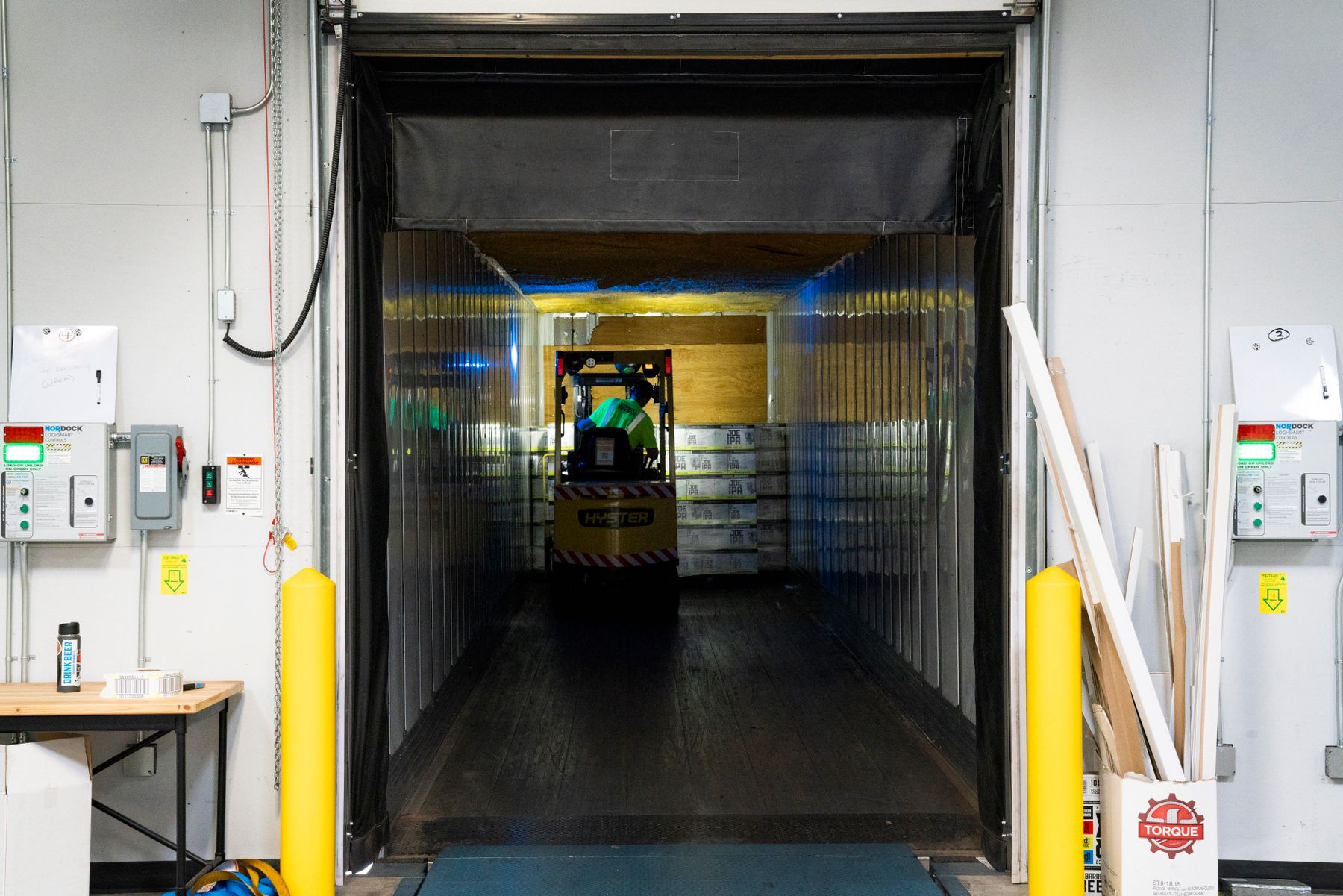
Distribution centers and logistics buildings around MIA run second shifts, night pulls and early receiving. The scope has to be written for that rather than for a building that empties at six. At the walkthrough we map which zones can be worked while the floor is live, which need a shutdown window, where a crew needs an escort, and what PPE the site requires: hi-vis, steel toes, forklift-aware training. Aisles are worked on a spotter system, and nobody crosses an active forklift lane unannounced. Where a customer or insurer audit is coming, we schedule a full reset ahead of it and hand you the checklist afterward.
Is this industrial cleaning, or warehouse cleaning?
Both phrases get searched in Miami, and they mean different jobs. Warehouse cleaning, which this page describes, is janitorial work at industrial scale on a recurring warehouse cleaning contract: floors, restrooms, breakrooms, offices, docks and high dusting. Industrial cleaning services usually means process-related work such as machinery degreasing, tank and vessel cleaning or hazardous residue, which needs specialty licensing and equipment. We do the first for distribution centers, logistics buildings and manufacturing front-of-house. If your plant needs the second, we will say so at the walkthrough and point you to a licensed industrial contractor rather than quote work we should not be doing.
Where do you provide warehouse cleaning in Miami?
The core is the airport-west belt: the logistics headquarters and office-warehouse parks of Doral, the Medley and Hialeah industrial districts, Miami Springs and Miami Lakes. North of that, the Miami Gardens and Opa-locka corridor; in Broward, the distribution parks of Miramar, Pembroke Pines and Fort Lauderdale. Front-office-only building? See office cleaning in Miami. New build-out? Start with post-construction cleaning. All our services are on the services page.
What operations managers ask us.
Does OSHA say how often a warehouse has to be cleaned?
No. OSHA sets the outcome, not the schedule. 29 CFR 1910.22 requires workplaces, storerooms and walking-working surfaces to be kept clean, orderly and sanitary, and floors kept clean and, to the extent feasible, dry. 1910.176(c) requires storage areas to be free of accumulations that create tripping, fire, explosion or pest hazards. How often you clean to meet that depends on traffic, headcount and what you store, which is why a warehouse cleaning schedule is set zone by zone rather than once for the whole building.
How much does warehouse cleaning cost in Miami?
It is priced on the labor the building needs, not on square footage alone. ISSA’s 2025 rate guide lists industrial and manufacturing facilities at $0.08 to $0.20 per square foot per month (monthly contract cost divided by cleanable square footage) as a general guideline. In a warehouse, “cleanable” is the weak point, because much of the slab sits under racking.Headcount per shift, restroom fixture count, how much of the slab is reachable under racking and how often forklifts run all move the number more than floor area does. We quote after a free walkthrough, in writing, with the office side and the warehouse side shown as separate lines.
Do you clean small warehouses, or only large distribution centers?
Both, and small warehouses are most of what we do in Miami. A 5,000 to 20,000 sq ft office-and-warehouse unit in Doral, Medley or Hialeah Gardens is a normal Purity Pro contract. We scope the front office and the warehouse side separately, cost them as two lines on one contract, and most small warehouse clients land on nightly office cleaning plus a weekly warehouse floor program.
Can you clean around a warehouse that runs shifts and never fully closes?
Yes, and the scope is written for that rather than pretending the building empties. At the walkthrough we map which areas can be worked while the floor is live, which need a shutdown window, where crews need an escort, and what PPE the site requires. Crews work aisles on a spotter system and never cross an active forklift lane unannounced.
What is the difference between warehouse cleaning and industrial cleaning services?
Warehouse and distribution-center cleaning is janitorial work at industrial scale: floors, restrooms, breakrooms, offices, docks and high dusting on a recurring contract. Industrial cleaning services usually means process-related work such as machinery degreasing, tank cleaning or hazardous residue, which needs specialty licensing. We do the first. If your building needs the second, we will say so at the walkthrough rather than quote it.
Do you offer warehouse cleaning contracts or one-time cleans?
Both. Most clients are on a recurring warehouse cleaning contract because a warehouse floor gets dirty on a schedule you can predict. One-time deep cleans are common before a customer audit, an insurer inspection, a lease turnover or a move-in. We also do post-construction cleaning for new warehouse build-outs.
Which areas do you cover for warehouse cleaning?
The airport-west industrial belt is the core: Doral, Medley, Hialeah, Hialeah Gardens, Miami Springs and Miami Lakes, plus the Miami Gardens and Opa-locka corridor and Broward logistics parks in Miramar, Pembroke Pines and Fort Lauderdale.
Let's make your facility spotless & compliant.
Book a free, no-obligation walkthrough. We'll assess your space, answer your questions, and build a quote tailored to your facility.
Official sources
Each source was opened and checked against this page on November 18, 2026.
- BLS, Injuries and Illnesses, Table 1: rates by industry (2024)
- BLS, Injuries and Illnesses, Table R4: case counts by event (2023–2024)
- OSHA, 29 CFR 1910.22 Walking-working surfaces
- OSHA, 29 CFR 1910.37 Exit routes
- OSHA, 29 CFR 1910.159 Automatic sprinkler systems
- EPA, Mold Course Chapter 2 (2026)
- OSHA, 29 CFR 1910.176 Handling materials
- OSHA, 29 CFR 1910.141 Sanitation
- BLS, Injuries and Illnesses, Table R8: rates per 10,000 workers by event (2023–2024)
- OSHA, Walking-Working Surfaces
- OSHA, CPL 03-00-008: Combustible Dust National Emphasis Program
- OSHA, Evaluating Hazardous Levels of Accumulation Depth for Combustible Dusts (interpretation, 2015)
- FDA, 21 CFR 117.93 Warehousing and distribution
- FDA, 21 CFR 117.35 Sanitary operations
- ISSA, Commercial Cleaning Rates per Square Foot: Full Pricing Guide (Dec 2025)